Why Korea Fast Trend Cycle Is a Double-Edged Sword for Foreign Brands
The modern global economy recognizes South Korea as a premier destination for technological innovation and high-velocity consumer movements. For many international businesses, the decision to enter this market is driven by the country’s high per capita luxury spending and its position as a global cultural bellwether.
However, the same mechanism that allows a brand to achieve viral stardom overnight also facilitates its rapid obsolescence. This phenomenon, widely known as the Korea fast trend cycle, operates as a double-edged sword that demands a level of agility and cultural fluency rarely required in other markets. Navigating the Korean landscape is not a simple matter of translation but rather a deep integration into a society that values speed, social face, and digital seamlessness above all else.
Pali-Pali Culture
To understand why the fast trend cycle in South Korea is so intense, one must analyze the origins of Pali-Pali culture. Following the conclusion of the Korean War, the nation faced the monumental task of rebuilding from total devastation.
The urgency of this recovery created a national obsession with speed and efficiency, which allowed the country to achieve the “Miracle on the Han River” within a few decades. This mindset has evolved from a tool for survival into a fundamental expectation for every aspect of daily life, including shopping, dining, and digital interactions.
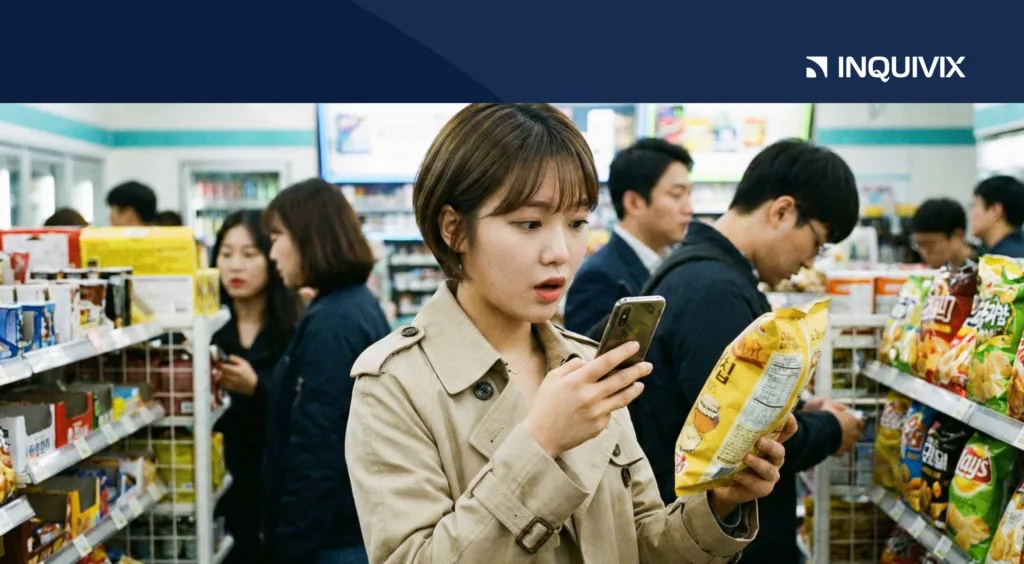
In the contemporary retail environment, Pali-Pali culture translates into a consumer base that has zero tolerance for friction. Whether it is the speed of a website’s loading time or the duration of a delivery, Korean shoppers expect immediate results. This has given rise to the “Zero Click Economy,” where brands like Coupang have revolutionized logistics by providing “Rocket Delivery” services that ensure products arrive within hours of being ordered.
For foreign brands, this means that their localization strategy must prioritize logistical excellence and a streamlined user experience to match local standards.
Table 1: Comparative Features of Pali-Pali Consumerism
| Cultural Attribute | Practical Manifestation | Impact on Trend Cycles |
| National Urgency | Rapid decision-making and instant gratification. | Faster peak and decline of viral trends. |
| Efficiency Focus | Preference for frictionless and automated shopping. | Shortened consumer journey from discovery to purchase. |
| Competitive Sociality | High importance on following collective trends. | Rapid market saturation through FOMO. |
| High Urban Density | Information travels quickly through physical proximity. | Trends spread nationally in a matter of days. |
The impact of this culture on Korean consumer behavior is profound. It fosters a highly adventurous spirit where individuals are eager to try the latest technology or fashion ahead of global curves.
However, it also creates a competitive social environment where “Nunchi,” or the ability to read social cues, plays a vital role in consumption. Consumers often adopt trends not just for personal utility but to maintain social relevance within their groups, leading to a surge in demand that can overwhelm unprepared foreign entrants.
The Digital Infrastructure Catalyst
The fast trend cycle is further accelerated by some of the most advanced digital infrastructure in the world. South Korea consistently ranks at the top of global indices for internet speed and mobile connectivity. With a fiber penetration rate of 90.5%, compared to the OECD average of 46.9%, the entire population is effectively connected in real-time. This technological environment allows information, reviews, and advertisements to circulate with incredible velocity, making it the perfect ecosystem for digital marketing innovations.
The government and private sectors are currently investing billions into the next generation of infrastructure, including AI-specific data centers and 5G networks. For example, the Ministry of Science and ICT is partnering with NVIDIA to deploy over 260,000 GPUs across the country, aiming to support the development of “Sovereign AI” that understands the unique nuances of the Korean language and culture. This level of investment ensures that the Korean digital landscape will remain the primary testing ground for advanced commerce technologies such as live commerce and AI-driven personalization.
Digital Transformation and Real-Time Finance
Beyond connectivity, South Korea is undergoing a structural transition in its financial systems. The expected passage of the Digital Asset Basic Act in 2026 will legalize domestic KRW-backed stablecoins, enabling 24-hour real-time settlement and “Intent-Based Finance.” This shift will further reduce friction in the purchasing process, allowing consumers to transact instantly across various platforms.
For international brands, this means that the window of opportunity to capture a trend is becoming even narrower, requiring a market entry strategy that is backed by real-time data and automated logistics.
Table 2: South Korea Data Centre Market Forecast (2024-2032)
| Year | Market Size (USD Million) | Primary Growth Driver |
| 2024 | 9,664.57 | 5G Integration and Cloud Migration. |
| 2028 | 12,745.30 | AI Data Center Expansion and Edge Computing. |
| 2032 | 16,674.08 | Smart City Initiatives and Hyperscale Infrastructure. |
Source: Credence Research
This robust infrastructure supports the massive amount of data generated by Korean consumer behavior, which is increasingly mobile-first. In the fashion industry alone, 88% of e-commerce transactions occur via mobile devices. This connectivity means that a single viral post on Instagram or a popular thread in a Naver Cafe can shift the entire direction of a market overnight, underscoring the necessity for brands to maintain a constant and active digital presence.
Navigating the Domestic Platform Moat: Naver and Kakao
One of the most significant challenges for foreign brands is the dominance of local platforms that do not follow Western digital conventions. In South Korea, Google and Meta do not hold the same monopoly they do elsewhere. Instead, the digital landscape is centered on Naver, Kakao, and Coupang.
Success in this market requires a specialized approach to Naver SEO and KakaoTalk marketing, as standard global strategies often fail to gain traction within these unique ecosystems.
Naver: The Content-Centric Gateway
Naver is far more than a search engine. It is a comprehensive portal that integrates news, shopping, social communities, and professional services. Unlike Google’s algorithm, which prioritizes backlinks and technical authority, Naver SEO places extreme importance on user-generated content hosted on its own platforms, such as Naver Blog, Naver Post, and Naver Cafe. Brands must establish a presence across these channels to be visible to the Korean public.
- Naver Blog: This is the primary channel for reviews and detailed product information. Consumers view blog posts as more trustworthy and relatable than official brand websites.
- Naver Cafe: These are hyper-targeted interest groups or forums. For example, a baby product brand would focus its efforts on “Mom Cafes,” where recommendations from other parents can make or break a product’s reputation.
- Knowledge-iN: This Q&A platform allows brands to answer consumer queries directly, establishing authority and driving high-intent traffic to their listings.
Kakao: The Communication Lifeline
KakaoTalk is the communication backbone of South Korea, used by nearly 45 million active users. For businesses, KakaoTalk marketing offers a direct way to engage with customers through “Kakao Channels” and “BizBoard” advertising.
- Kakao BizBoard: These are small banner ads that appear at the top of the chat list, providing high visibility in a space that consumers check dozens of times a day.
- Kakao Pay and Gift: The integration of commerce and payments allows users to send gifts or buy products directly within the chat interface, further supporting the Pali-Pali culture of efficiency.
Foreign brands that fail to adapt to these platforms often suffer from low visibility and poor engagement. A common error is maintaining a high search ranking on Google while remaining completely absent from the first page of Naver results, which is where 95% of the local population begins their shopping journey.
Consumer Psychology: The MZ Generation and Social Identity
The fast trend cycle is not just a technological phenomenon but a psychological one. The primary drivers of current trends are the MZ generation, a demographic group consisting of Millennials and Gen Z who prioritize self-expression, value-driven consumption, and social proof. This group is highly active in online spaces and is deeply influenced by the “conspicuous Woozzul” (social pride) and “Chemyeon” (social face) that define Korean interpersonal dynamics.
For the MZ generation, consumption is a tool for identity construction. They are willing to pay a premium for products that provide “self-pleasure” or align with their personal values, such as sustainability and ethical production.
However, they are also prone to “status consumption,” where owning the latest viral item is a way to signal their awareness of current trends. This creates a market where a brand can achieve massive success very quickly as it becomes a status symbol, but it also means that the brand must constantly innovate to avoid being seen as “old” or “outdated”.
The YONO Trend and Economical Consumption
As we move into 2026, a new trend called “YONO” (You Only Need One) is emerging. This reflects a shift toward more conscious and economical consumption in response to a stagnant domestic economy.
Instead of buying many low-cost items, consumers are focusing on high-quality, essential purchases that offer genuine value. For foreign brands, this means that the fast trend cycle is becoming more discerning. It is no longer enough to be “new” but a brand must also demonstrate superior quality and cultural relevance to survive the inevitable decline of a trend’s initial hype.
Table 3: 2025 S.N.A.K.E Consumer Trends
| Trend Component | Strategic Implication for Foreign Brands |
| Survival | Focus on cost optimization and long-term brand loyalty. |
| Next-Generation | Implement innovative business models like C2C and retail media. |
| AI-Driven Efficiency | Use big data for hyper-personalized shopping experiences. |
| K-Culture Integration | Leverage Hallyu to create local emotional connections. |
| Economical Consumption | Adapt to the “YONO” mindset with premium, essential offerings. |
Source: Korea Chamber of Commerce and Industry (KCCI) and Korea Bizwire
This shift toward economical consumption is particularly visible in the luxury sector. While South Korea has the highest per capita spending on luxury goods in the world, the MZ generation, who account for 50% of luxury purchases, is becoming more selective. They increasingly view certain items, like high-end handbags, as investment assets rather than just fashion statements. Brands that can position themselves as “investments” in quality and status will find greater longevity in the fast trend cycle.
Industry Analysis: K-beauty, Fashion, and Coffee
The fast trend cycle is most visible in the K-beauty and fashion sectors, where product lifespans are notoriously short. The Korean fashion market recovered to 43.6 trillion won following the pandemic, with Coupang, Naver, and Musinsa dominating the distribution channels. In this environment, 75% of consumers report purchasing an item after seeing a celebrity or influencer wear it, highlighting the power of social proof in driving sales.
The K-beauty Landscape: Olive Young’s Dominance
The beauty industry is a primary example of how the double-edged sword can cut down even the largest global players. CJ Olive Young currently commands nearly 90% of the domestic health and beauty market, with over 1,300 stores nationwide. Their success is built on a deep understanding of Korean consumer behavior, offering a wide range of affordable, high-quality domestic brands that prioritize skincare and “natural” aesthetics.
For a foreign brand, entering the K-beauty market means competing with this localized giant. The failure of Sephora in 2024 is a cautionary tale. Despite its global reputation, Sephora failed to understand that Korean consumers prefer “clean” and “functional” products over the bold, heavy makeup styles popular in the West.
Sephora also struggled to match the accessibility and neighborhood-centric strategy of Olive Young, ultimately exiting the market after years of financial losses.
The Coffee Phenomenon: Precision and Speed
The Korean specialty coffee market is another area defined by high velocity and intense competition. With over 94,630 cafes as of 2022, the market is incredibly saturated. The popularity of the “Iced Americano” (Ah-Ah) is a direct reflection of Pali-Pali culture, as it is a quick, cold beverage that supports the frantic pace of urban life.
In this landscape, brands like Blue Bottle Coffee have succeeded by focusing on “Exquisite Coffee” and a persona-driven market entry strategy that targets young, tech-savvy aficionados who value the brand’s minimalist aesthetic and precision.
Strategic Failures: Learning from Walmart and Sephora
Analyzing the failures of major global brands reveals a recurring pattern of “cultural arrogance” and a lack of localization. When a brand assumes that its global success will naturally translate to Korea, it often ignores the specific nuances that drive local consumer loyalty.
Walmart: The Merchandising Mismatch
Walmart entered Korea in the late 1990s but exited by 2006. The primary reason for its failure was its insistence on the American warehouse model, which emphasized “Every Day Low Prices” and suburban locations.
Korean consumers, however, prioritized service, packaging, and urban accessibility. They missed the “community warmth” of local stores and were not motivated by bulk-buying in the same way American consumers were. This mismatch between the brand’s core value proposition and the local market’s preferences led to its ultimate withdrawal.
Sephora: The Operational Blind Spot
Sephora’s exit in 2024 was driven by a similar failure to adapt. While it attempted to create “experiential stores,” it did not account for the fact that Olive Young had already perfected this model with a much larger and more convenient footprint.
Sephora also failed to integrate effectively into the domestic digital ecosystem, relying too heavily on its global brand recognition rather than localized digital strategies like Naver SEO and KakaoTalk marketing.
Table 4: Reasons for Global Brand Failures in South Korea
| Brand | Year of Exit | Primary Failure Point |
| Walmart | 2006 | Suburban warehouse model misaligned with urban shopping habits. |
| Sephora | 2024 | Overpowered by CJ Olive Young and failure to localize products. |
| Taco Bell | Multiple | Misjudged local taste preferences and competition from local fast food. |
| Boots | 2020 | Inability to compete with the localized variety of H&B chains. |
These examples highlight that in Korea, a brand is only as good as its last innovation. If a company stops listening to the market or fails to match the Pali-Pali culture of its competitors, it will quickly be replaced by a more agile local startup or a more committed international rival.
Success Strategies: Blue Bottle, Tesco, and Lush
In contrast to the failures, successful brands show that a “local-first” approach can turn the fast trend cycle into a powerful engine for growth. These companies did not simply “enter” the market but they integrated themselves into the local culture through strategic partnerships and deep localization.
Tesco: The Power of Local Partnerships
Tesco’s success in Korea stands in stark contrast to Walmart. Instead of entering alone, Tesco formed a joint venture with Samsung, leveraging local expertise and knowledge. They avoided the “British version” of their stores and instead created “Homeplus,” which focused on high-quality fresh produce and tailored services like pre-packaged meals that matched Korean tastes. By hiring local managers and adapting their format to the high-density urban environment, Tesco became a dominant player in the Korean retail market.
Blue Bottle: Data-Driven and Persona-Focused
Blue Bottle Coffee used social media analytics to identify a massive “latent demand” among Korean consumers before they even opened a single store in Seoul. By observing that half of their customers in Japanese cafes were Korean tourists, they were able to build a “buyer persona” of the tech-connected coffee enthusiast. They chose a “hip” neighborhood for their first location and developed menu items exclusively for the Korean palate, ensuring that their entry felt like an organic extension of the local “third-wave” coffee scene.
Lush: Tapping into Ethical Trends
Lush Korea has achieved remarkable longevity by positioning itself as the choice for “Ethical Rebels.” In a market that is increasingly focused on sustainability, Lush’s commitment to ethically sourced ingredients and minimal packaging has resonated with the values of the MZ generation.
Their strategy of ignoring traditional social media algorithms in favor of building their own community app and focusing on word-of-mouth has allowed them to maintain a loyal following that is resistant to the fleeting nature of the fast trend cycle.
Localization 2.0: The Framework for Success
For any brand looking to enter the Korean market, the strategy must be built on what we call “Localization 2.0.” This involves moving beyond simple language conversion to a full structural and cultural adaptation of the brand’s identity and operations.
Step 1: Cultural Discovery and Niche Identification
Successful market entry begins with “Korea-first discovery”. This means conducting deep interviews with local users to validate pricing assumptions, messaging, and platform usage before finalization. Brands should not aim for broad lifestyle categories but should focus on “Niche Markets” where they can provide a unique value proposition that is not currently offered by domestic giants.
Step 2: Digital Ecosystem Integration
A brand’s digital presence must be optimized for the platforms that Koreans actually use. This requires more than just a presence on Instagram, it requires a masterly command of Naver SEO, KakaoTalk marketing, and Coupang listing optimization.
- Naver Keyword Planning: Use native tools to identify high-volume search terms that reflect local linguistic nuances.
- Kakao Commerce: Integrate payments and customer support within the Kakao ecosystem to provide the seamless experience that consumers expect.
- Rocket Delivery Partnership: Work with local logistics providers to ensure that delivery speeds meet the national standard of excellence.
Step 3: Visible Local Presence and Trust Signals
Korean buyers, particularly in the B2B sector, prefer suppliers with a clear physical presence on the ground. This means having more than just a registered entity, it requires a visible representative who can join meetings, local customer support that handles honorifics correctly, and a localized landing page that reflects current seasonal trends. Establishing these “trust signals” early on is essential for overcoming the initial skepticism that often greets foreign entrants.
Table 5: Market Entry Checklist for 2025-2026
| Category | Action Item | Cultural Relevance |
| Digital | Optimize for Naver “VIEW” and “Power Link”. | Align with local search behavior. |
| Social | Partner with micro-influencers on Instagram and TikTok. | Build authentic social proof. |
| Payments | Integrate KakaoPay, Naver Pay, and Samsung Pay. | Reduce transaction friction. |
| Logistics | Utilize Coupang Rocket Delivery or Market Kurly. | Meet Pali-Pali culture expectations. |
| Compliance | Ensure PIPA and Foreign Exchange Act alignment. | Build regulatory trust and stability. |
Balancing Speed with Longevity
The fast trend cycle of South Korea is a phenomenon that requires a unique blend of strategic depth and operational agility. For a foreign brand, the market offers a double-edged sword: the potential for rapid, viral growth is matched by the risk of immediate irrelevance. Those who approach the market with a “global standardization” mindset are likely to repeat the mistakes of Walmart and Sephora, finding themselves excluded by local incumbents who understand the Pali-Pali culture and the digital ecosystem.
Success in Korea is not about slowing down the cycle but about learning to ride it with precision. As we look toward the “S.N.A.K.E” trends of 2025 and the “Horse Power” keywords of 2026, the brands that thrive will be those that combine the speed of Pali-Pali culture with the endurance of a well-localized strategy.