The Korean Crypto Market: Why It’s the Next Growth Frontier for Global Projects
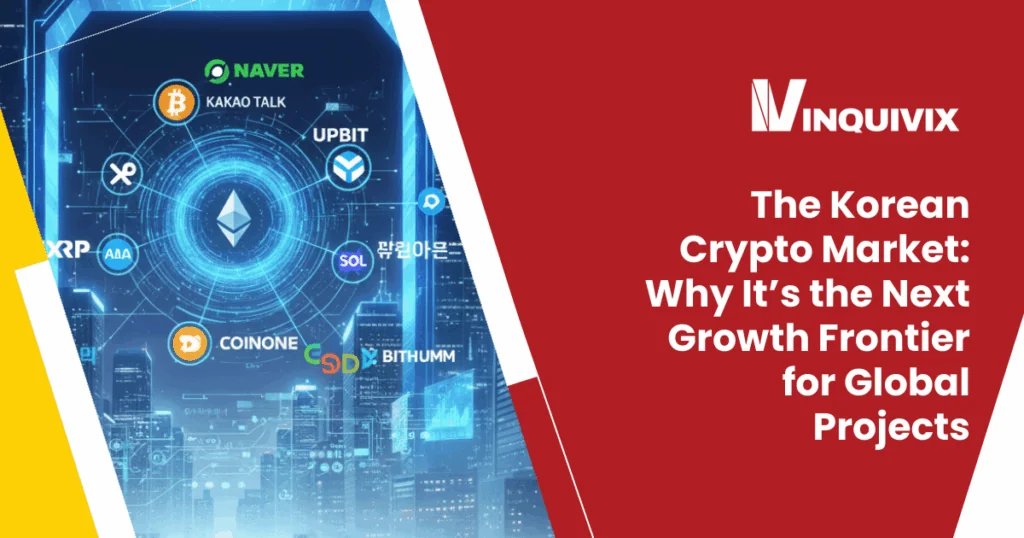
Table of Contents
- A High-Conviction, Tech-Driven Crypto Landscape
- Key Statistics & Market Dynamics (August 2025 Update)
- Korea’s Retail Dominance
- Trading Volume & Market Size
- Investor Demographics & Behavior
- The Driving Forces Behind Korea’s Crypto Boom
- Pro-Blockchain, Cautious Regulation
- Won-Backed Stablecoins
- Institutional Participation
- Regulatory Interventions
- Navigating the Unique Challenges of the Korean Market
- Essential Marketing Channels for Success in Korea
- Naver is the Gateway
- Community and KOLs
- Events and Offline Engagement
- The Power of Localized Community & Trust
- The Korean Advantage: Positioning Your Project for Growth
- Frequently Asked Questions
For any global blockchain project, breaking into new markets is critical for sustainable growth. While North America and Europe often dominate the conversation, one region has consistently proven to be a powerhouse of cryptocurrency enthusiasm, trading, and innovation: South Korea.
The Korean crypto market is not just a major player; it’s a unique ecosystem driven by cultural, economic, and technological factors that position it as the next frontier for projects seeking genuine growth. This article will explain what makes Korea so special, what the latest cryptocurrency trends are, and how your project can navigate this high-potential landscape.
A High-Conviction, Tech-Driven Crypto Landscape
South Korea’s rapid adoption of technology has laid the groundwork for its vibrant blockchain ecosystem. With nearly every citizen digitally connected and accustomed to fast-paced mobile payments and online services, the leap to digital assets was a natural progression. This isn’t a market of passive observers; it’s a community of active participants who are highly engaged and quick to act on new information. This deep-seated tech-savviness translates directly into high rates of blockchain adoption and a unique market dynamic that is unlike any other in the world.
Key Statistics & Market Dynamics (August 2025 Update)
Understanding the numbers is the first step to appreciating the scale of the Korean crypto market. As of August 2025, the market continues to exhibit high-volume, high-conviction trading, despite recent regulatory interventions.
Korea’s Retail Dominance
Unlike some Western markets, where institutional interest often leads the way, the Korean cryptocurrency market is overwhelmingly driven by retail investors. A report from the Hana Institute of Finance shows that over 25% of South Koreans aged 20-50 hold digital assets. A recent CoinNess/Cratos survey conducted in early August 2025 revealed that investor sentiment remains strong, with a significant majority of respondents predicting a rise in the value of major cryptocurrencies, such as Bitcoin and Ethereum, in the coming weeks.
Trading Volume & Market Size
Korean exchanges, particularly Upbit, consistently rank among the world’s largest by trading volume. At times, the daily volume on these platforms has surpassed that of the country’s traditional stock markets (KOSPI and KOSDAQ), underscoring the deep integration of cryptocurrency into the national financial landscape. This massive liquidity is a crucial indicator of a healthy and highly active market.
Investor Demographics & Behavior
The typical Korean crypto investor is a white-collar male in his 30s or 40s. Their motivations are evolving from short-term speculation to long-term financial planning, with many using cryptocurrencies as a tool for retirement savings and portfolio diversification. This maturity in investment strategy is a positive sign for the long-term sustainability of the Korean crypto market. The market is also known for its “herding behavior” and “kimchi premium,” phenomena that highlight the rapid information flow and cohesive action within the investor community.
The Driving Forces Behind Korea’s Crypto Boom
The fervor for blockchain adoption in Korea is not just about technology; a combination of unique cultural and economic factors fuels it. Many young Koreans view traditional avenues for wealth creation, such as real estate and conventional stock markets, as increasingly inaccessible. This financial pressure has led them to seek alternative, high-growth opportunities, with digital assets becoming a primary choice. The national pursuit of innovation and early-adopter culture further accelerates the adoption of new financial technologies.
Pro-Blockchain, Cautious Regulation
South Korea’s regulatory approach is a masterclass in a dual strategy: fostering a pro-blockchain environment while maintaining strict, cautionary controls on trading. This balancing act aims to protect retail investors and promote a responsible industry. Recent legislative and policy moves from the government and financial regulators in August 2025 highlight this strategic shift.
Won-Backed Stablecoins
In a significant development, the Financial Services Commission (FSC) is drafting a regulatory framework for won-denominated stablecoins. The government bill, expected to be submitted to the National Assembly in October 2025, aims to establish a clear legal framework for the issuance, management of collateral, and internal controls. This is a critical step towards reducing reliance on dollar-pegged stablecoins and strengthening the won’s role in the global digital economy. Furthermore, a consortium of eight central Korean banks is actively preparing to launch their won-pegged stablecoin by late 2025 or early 2026, signaling a significant push from the traditional finance sector.
Institutional Participation
The government is taking steps to facilitate greater corporate involvement. A roadmap unveiled by the FSC aims to lift the 2017 ban on corporate crypto trading in a phased approach. Non-profits and public agencies were permitted to sell existing holdings in the first half of 2025, with listed companies and qualified institutional investors slated to trade on a trial basis in the latter half of the year. The government is also preparing to approve the country’s first spot crypto ETFs, further legitimizing digital assets for institutional investors.
Regulatory Interventions
The FSC’s recent order to halt new crypto lending services on local exchanges is a prime example of their cautious approach. Citing risks to investors from high-leverage products and significant liquidations, the regulator has paused these services until a clear framework can be established. This move underscores the government’s commitment to investor protection and its willingness to intervene to stabilize the market.
Navigating the Unique Challenges of the Korean Market
Despite the immense opportunity, entering the Korean crypto market is not without its complexities. The regulatory environment, while maturing, presents significant hurdles for foreign projects. From the strict real-name bank account system to the need for local partnerships and legal compliance, the barriers to entry can be substantial. Successfully navigating these challenges requires more than just a great product; it demands a deep understanding of the local ecosystem and a sophisticated market entry strategy. To tackle these complexities and ensure a smooth launch, your project needs expert guidance.
Essential Marketing Channels for Success in Korea
Once a project has cleared the regulatory and logistical hurdles, the next challenge is to build a successful presence. Marketing in Korea is fundamentally different from Western markets due to the dominance of local platforms.
Naver is the Gateway
Naver, not Google, is the leading search engine in South Korea. Any successful marketing strategy must have a strong Naver marketing component. This includes managing a Naver Brand Blog for SEO, leveraging Naver Café for community building, and utilizing Naver Ads for targeted traffic. Ignoring Naver is a critical misstep that prevents a project from reaching its core audience.
Community and KOLs
Building a strong community on local platforms like Telegram and KakaoTalk is non-negotiable. It’s how projects share information, build trust, and gain a loyal following. Moreover, collaborating with Korean KOLs (Key Opinion Leaders) and influencers is a highly effective way to gain credibility and reach a wider audience. These figures often act as trusted validators for new projects.
Events and Offline Engagement
In-person event management, from meetups to conferences, plays a crucial role in building trust and solidifying a project’s reputation. A strong digital presence is essential, but a physical presence demonstrates long-term commitment and builds a rapport that cannot be replicated online.
The Power of Localized Community & Trust
In the Korean crypto market, trust is paramount. A project’s success often hinges on its ability to demonstrate legitimacy and commitment to the local community. The “kimchi premium” phenomenon is a testament to the community-driven loyalty of this group. When a token is listed on a major Korean exchange, its price often surges due to high demand and a concentrated retail investor base. However, maintaining that momentum requires continuous, localized engagement. Managing a vibrant KakaoTalk Open Chat group, providing regular updates in Korean, and addressing community concerns directly are all crucial to sustaining long-term interest and trust.
The Korean Advantage: Positioning Your Project for Growth
The Korean crypto market is a unique and lucrative opportunity for global projects. It’s characterized by a tech-savvy, highly engaged retail investor base and a forward-thinking, albeit cautious, regulatory environment. As the market shifts towards a more institutionalized phase, new frameworks for stablecoins and institutional trading are creating unprecedented opportunities for growth.
While the market’s dynamics are complex, the rewards for a well-executed strategy are immense. The combination of high trading volumes, strong community engagement, and a supportive regulatory climate makes South Korea a top priority for any project serious about global expansion. The time to enter this market is now.
Ready to enter the Korean crypto market? Get in touch with our specialists to develop a tailored market entry and growth plan for your project.