Naver C-Rank, D.I.A., and Smart Block Explained
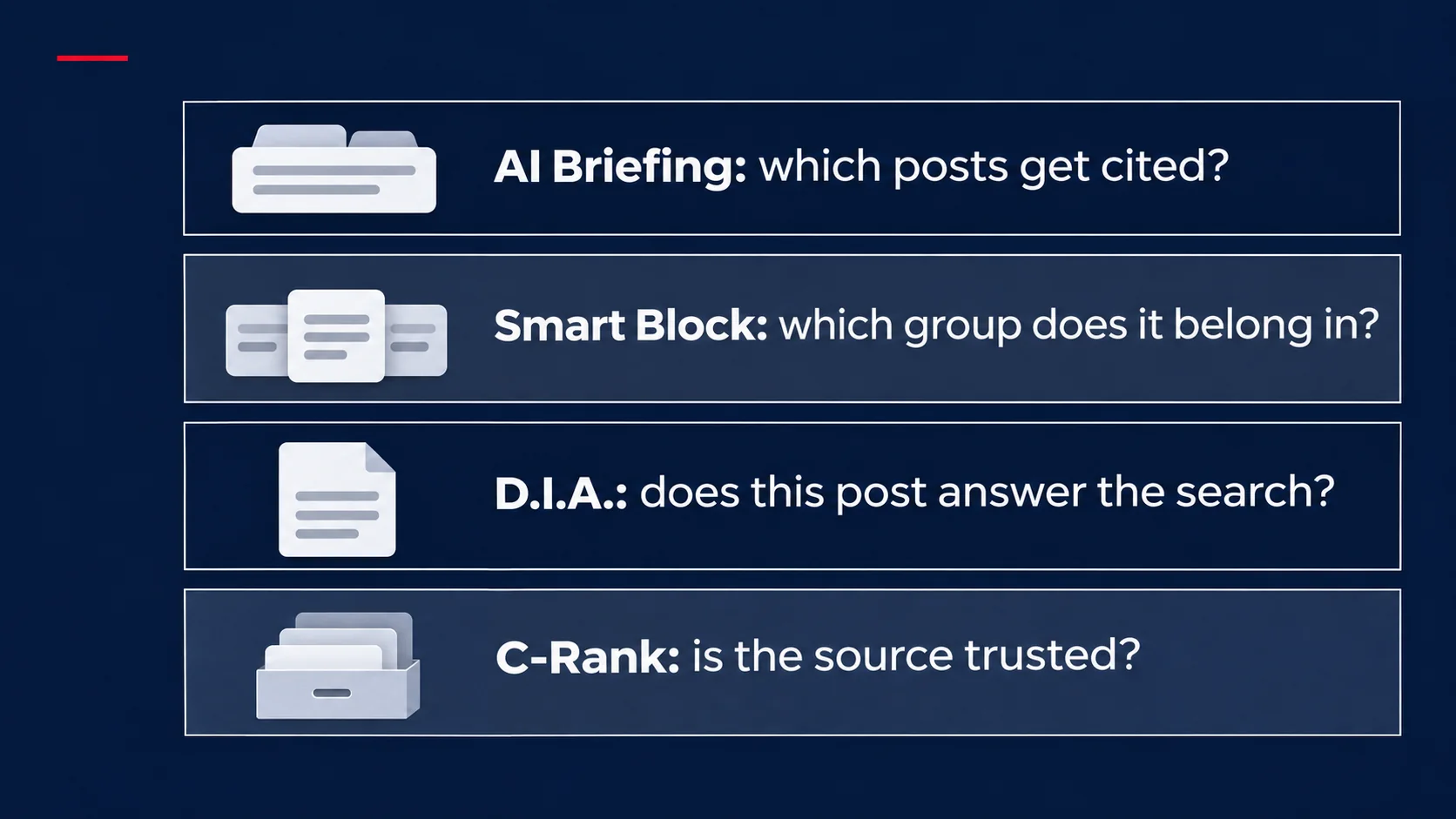
Naver ranks content in three layers. C-Rank scores how much Naver trusts the source of a piece of content. D.I.A. scores how well a single post answers the search. Smart Block decides which posts are grouped and shown for each query.
Since March 2025 a fourth step sits on top: AI Briefing, which writes a summary answer and cites the posts it trusts most.
Google ranks pages from the open web. Naver ranks content published inside Naver first, and judges it with its own systems. This guide walks through each layer, the core of Naver SEO, and what a brand can do about it.
What Naver ranks: its own platforms first
Naver is a portal, not only a search engine. For most consumer searches, the results page is assembled from content hosted on Naver’s own services: Naver Blog, Naver Cafe, Knowledge iN, Smart Store, Naver Place, and News. Links to outside websites appear in a separate “web documents” section, usually lower on the page.
The scale explains the priority. Naver users wrote 330 million blog posts in 2025, the highest yearly total on record, according to Naver’s 2025 Blog Report. Naver has more first-hand Korean-language content on its own servers than it could ever crawl from company websites.
Naver also remains the place Koreans search. InternetTrend, which measures search referrals to Korean websites, put Naver at 64.28% and Google at 28.37% for the first half of 2026.
For a foreign brand this means one thing: a well-optimized website is necessary, and it is not enough. Ranking on Naver requires content inside Naver. That is the work a Naver SEO agency does.
Layer 1: C-Rank scores the source
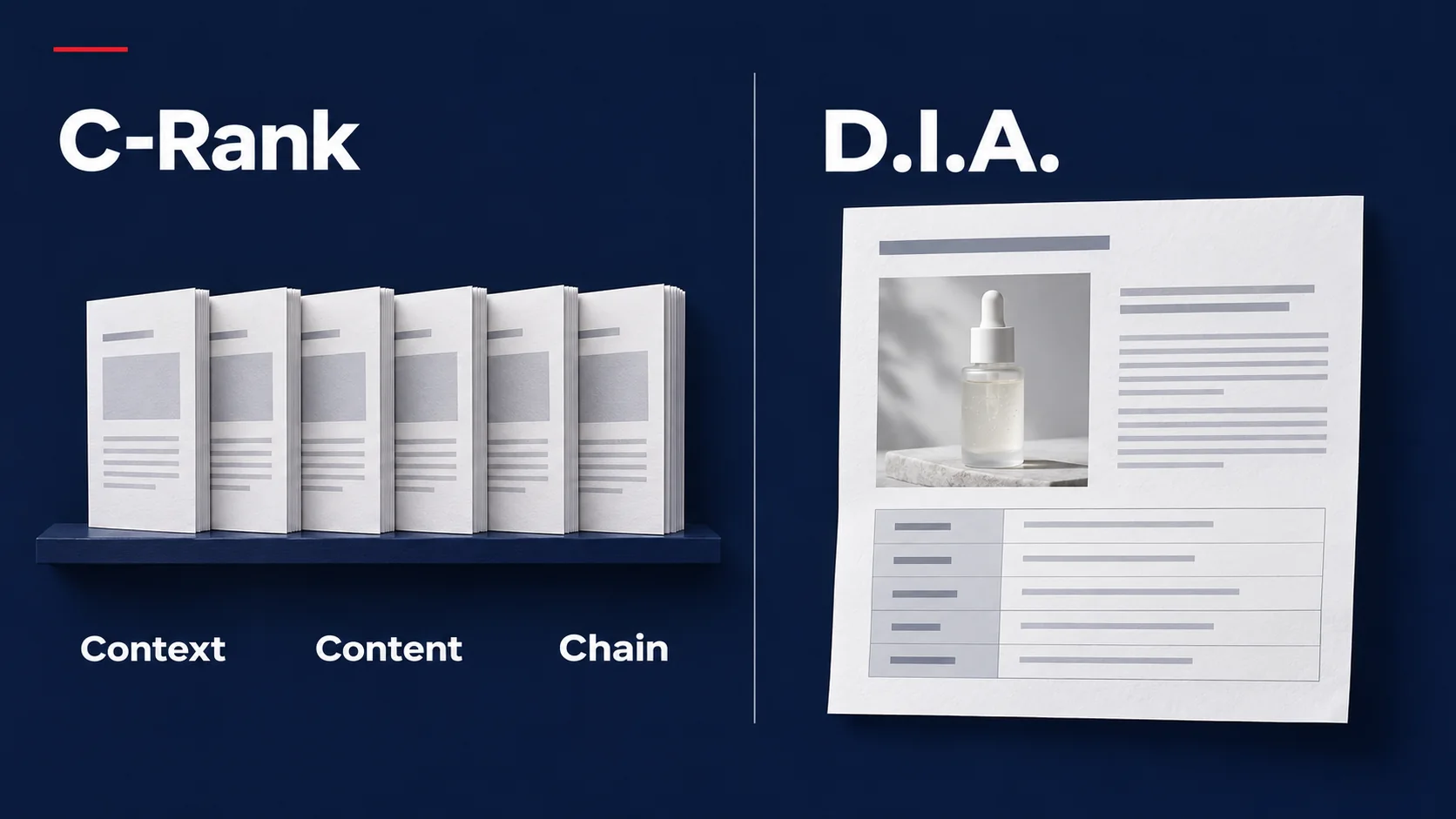
C-Rank (Creator Rank) is the system Naver introduced in 2016 to judge the credibility of a source rather than a single document. It asks whether this blog, or this Cafe, has earned the right to be shown for this topic.
Naver describes C-Rank through three ideas:
- Context: how focused the source is on one subject over time.
- Content: the quality of what it publishes.
- Chain: how people respond, through comments, shares, subscriptions, and return visits.
A blog that has published about skincare twice a week for a year has strong C-Rank for skincare queries. The same blog has almost none for hotels. Authority does not transfer between topics.
What to do about C-Rank
Pick one subject for your Naver Brand Blog and stay inside it. Publish on a fixed rhythm; one to two posts a week is the working minimum. Expect three to six months before a new blog ranks reliably on its own. When you work with outside bloggers, choose them by their history in your category, not by subscriber count.
Layer 2: D.I.A. scores the post
D.I.A. (Deep Intent Analysis) arrived in 2018 and works at the level of the individual document. Where C-Rank asks “who wrote this,” D.I.A. asks “is this post any good for this search.”
It favors posts with first-hand experience, original photos, specific detail, and a clear answer. It reads how users react: whether they stay, scroll, and interact, or leave within seconds.
D.I.A.+ followed in 2020 and added stronger analysis of the intent behind a query. A post written to answer “is it worth the price” is matched to that question, not to every search that contains the product name.
The two systems balance each other. A strong post from a newer blog can rank on D.I.A. alone. An established blog cannot coast on C-Rank with weak posts.
What to do about D.I.A.
Write each post for one Korean query, taken from Naver’s keyword tool or DataLab. Use photos taken for the post; stock images and reused press photos score poorly. Include what a buyer wants to check: price in won, where to buy in Korea, sizes, ingredients, opening hours.
Do not translate English copy. A translated post reads as foreign, and readers leave.
What D.I.A. filters out
The same system that rewards experience demotes its imitations. Posts copied or lightly reworded from other posts lose visibility. So do posts that repeat a keyword without answering anything, and commercial posts that hide a paid relationship.
Blogs bought for their age and filled with unrelated content are a known target. So are networks that publish the same review across many accounts. Agencies that sell “guaranteed top placement” through these methods are selling a result that Naver is built to remove.
Layer 3: Smart Block builds the results page
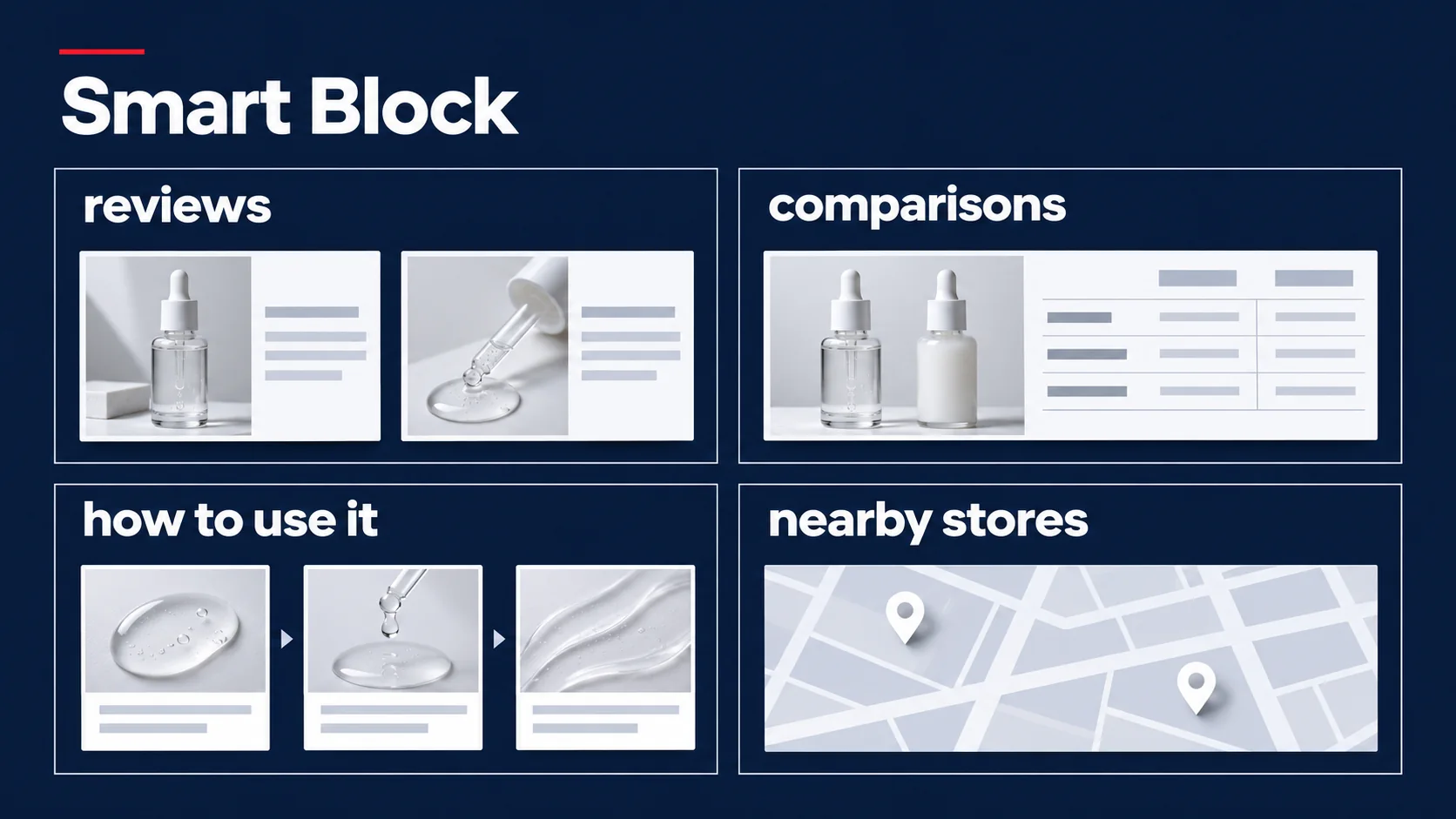
Naver announced Smart Block on October 28, 2021, as part of its AirSearch update. Instead of one fixed list, the results page became a set of blocks, each built around a different intent behind the same search.
At launch Smart Block covered a small set of lifestyle searches such as interiors, recipes, and gardening, with a stated goal of reaching 10 to 15% of results by the end of that year. It has since become the standard layout. In 2024 Naver retired the old VIEW section, added “popular posts” blocks that mix blog and Cafe content by intent, and gave Blog and Cafe their own tabs.
Search for a product today and you may see a block for reviews, a block for comparisons, a block for how to use it, a Place block for nearby stores, and a shopping block. Each block is its own small competition.
What to do about Smart Block
Search your main Korean keywords and write down which blocks appear. That list is your content plan. One post aimed at one generic keyword enters one competition. Ten posts spread across review, comparison, how-to, and location intents can appear in several blocks for the same search.
The step on top: AI Briefing
Naver launched AI Briefing in March 2025. It places an AI-written summary at the top of the results and links to the sources it used, many of them Naver Blog posts. By the end of 2025 Naver said AI Briefing appeared on more than 20% of all search queries.
Naver is paying for the content that feeds it. In May 2026 the company announced a program that funds about 3,000 creators whose work is cited in its AI search, with a budget of roughly 20 billion won a year.
AI Briefing does not simply repeat the top-ranked post. It cites posts that answer the question directly, in clear structure, with facts it can lift. A post that passes the three layers above and is written as a direct answer is the one that gets quoted.
A worked example: one search, four steps
Take a foreign skincare brand launching a vitamin C serum in Korea. A buyer types “비타민C 세럼 추천” (vitamin C serum recommendation) into Naver.
Step one, C-Rank. Naver looks for sources with a record in skincare. A beauty blogger who has reviewed serums weekly for two years qualifies. The brand’s own blog, opened last month, does not yet. A lifestyle blogger with ten times the subscribers and no skincare history does not either.
Step two, D.I.A. Among qualified sources, Naver scores the posts. A review with the writer’s own photos over four weeks of use, the price in won, and the texture described in detail scores well. A post built from the brand’s press kit scores near zero.
Step three, Smart Block. The results page shows a popular-posts block for recommendations, a block for ingredient comparisons, a shopping block, and a block for reviews by skin type. The brand’s serum can appear in each one, but only if a post exists for that intent.
Step four, AI Briefing. The summary at the top names three or four serums and links to the posts it drew on. The posts cited are the ones that state plainly who the product suits, at what price, with what result.
The brand’s website appears below all of this. It matters when the buyer searches the brand name next. It did not decide whether the brand was on the first screen.
The signals in one table
| Layer | What it measures | Since | How a brand influences it |
|---|---|---|---|
| C-Rank | Trust in the source for one topic | 2016 | One subject per blog, steady publishing, real engagement |
| D.I.A. / D.I.A.+ | Quality and intent match of one post | 2018 / 2020 | One query per post, original photos, first-hand detail |
| Smart Block | Which intent group a post is shown in | 2021 | Map the blocks for each keyword, cover each intent |
| AI Briefing | Which posts are cited in the AI answer | 2025 | Direct answers, clear headings, checkable facts |
What this means for a foreign brand
Each layer points to a specific asset.
A Naver Brand Blog is how you build your own C-Rank. It takes months, which is why it should start before launch, not after.
Disclosed reviews from established bloggers give you placement while your own blog is still earning trust. Under Korea Fair Trade Commission rules, sponsored posts must state the relationship clearly at the start.
Naver Cafe reaches buyers inside interest communities, and Cafe posts appear in the same popular-posts blocks as blogs.
Naver Place decides whether a hotel, clinic, restaurant, or store appears for searches with a location in them.
Your website still matters. Register it in Naver Search Advisor, Naver’s equivalent of Google Search Console, and submit a sitemap so Naver’s crawler, Yeti, can index it. Websites rank in the web documents section and carry weight for brand-name and B2B searches.
The order to build in
Sequence decides how soon results appear. Start with keyword research in Naver’s own tools and Search Advisor registration, which take days. Open the Brand Blog in the same week, because its clock runs slowest.
Run blogger reviews from month one so the brand has placement while the blog matures. Add Cafe and Place once the core review coverage is live. By month six the Brand Blog should rank for its main queries, and paid reviews can move to new products and seasonal peaks such as Chuseok and year-end gifting.
For a side-by-side view of where each engine deserves budget, see our guide to Naver vs. Google in Korea.
Put the four layers to work for your brand
We build the blog, review, Cafe, and Place content that earns placement in Naver’s Smart Blocks. Send us your brand, category, and launch date, and we will reply with a meeting time or a scoped proposal.