Corporate Event Planning in Korea: Best Practices for Global Brands
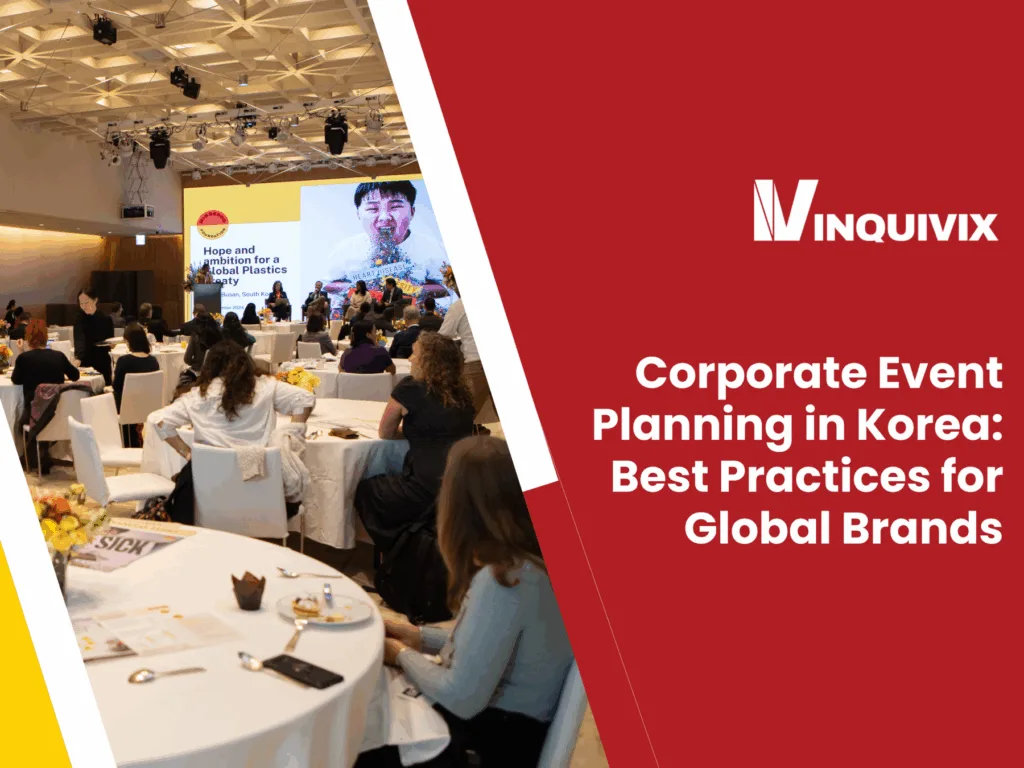
Corporate Event Planning in Korea has rapidly become a strategic priority for global brands seeking to expand their presence in Asia’s dynamic market. With its world-class infrastructure, advanced technology, and reputation as a leader in innovation, Korea offers an ideal environment for hosting business conferences, product launches, and large-scale corporate gatherings. For foreign businesses entering the Korean market, understanding the unique cultural expectations and business etiquette is just as important as selecting the right venue or event management partner. By aligning with local expertise and best practices, companies can ensure their events resonate with Korean audiences while achieving international business objectives.
Understanding the Corporate Event Landscape in Korea
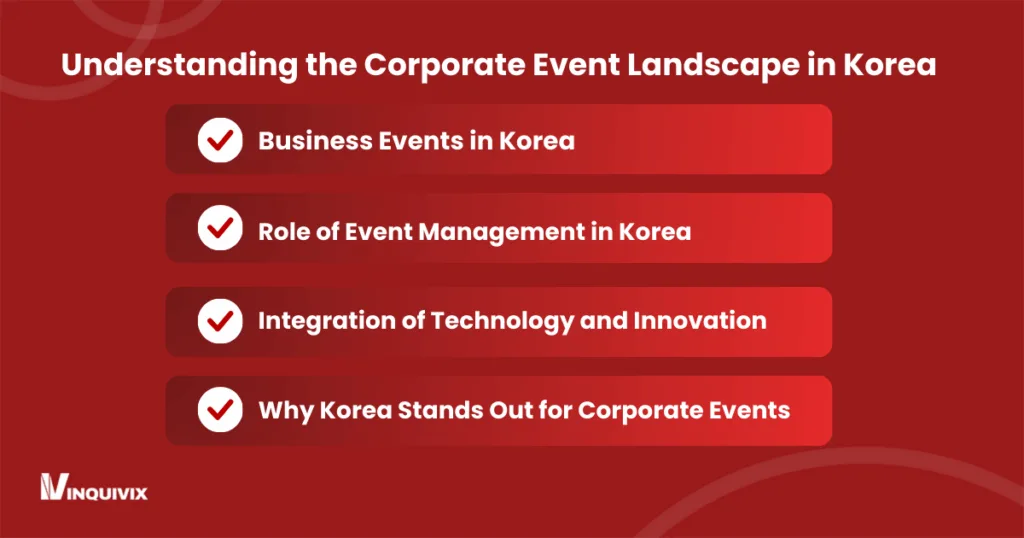
Korea has established itself as one of Asia’s most attractive destinations for corporate gatherings, making it a key market for global brands that want to host impactful business events. The country is part of the growing MICE industry (Meetings, Incentives, Conferences, and Exhibitions), which has positioned Korea as a hub for international networking and collaboration.
Business Events in Korea
Corporate events in Korea range from small-scale executive meetings to large international conferences and trade shows. Seoul, as the nation’s capital, leads the way with world-class convention centers, such as COEX, and a wide selection of luxury hotels equipped with modern facilities. Beyond Seoul, cities such as Busan, Incheon, and Daegu are also gaining recognition for their accessibility, event-ready infrastructure, and regional appeal.
Role of Event Management in Korea
Event management in Korea emphasizes precision, cultural sensitivity, and technological integration. Local event planners are renowned for their ability to seamlessly blend Korea’s unique traditions with cutting-edge technology, ensuring that events are not only professional but also engaging and memorable. Whether it’s a business conference in Korea, a corporate gala, or a product launch, event management teams play a crucial role in handling logistics, compliance, and cross-cultural communication.
Integration of Technology and Innovation
Technology-driven solutions are at the heart of Korea’s corporate event landscape. From hybrid event platforms and high-speed internet connectivity to AR/VR-powered presentations, brands have access to innovative tools that enhance audience engagement. This focus on digital innovation makes Korea particularly appealing to global companies seeking to host events that transcend conventional formats.
Why Korea Stands Out for Corporate Events
What sets Korea apart is its balance of modern business infrastructure and rich cultural heritage. Companies can host high-tech conferences that incorporate elements of Korean culture, from traditional performances to culinary experiences, creating events that leave a lasting impression. This unique combination positions Korea as more than just a meeting destination; it becomes a bridge between global business opportunities and authentic cultural exchange.
Key Considerations for Global Brands Entering Korea
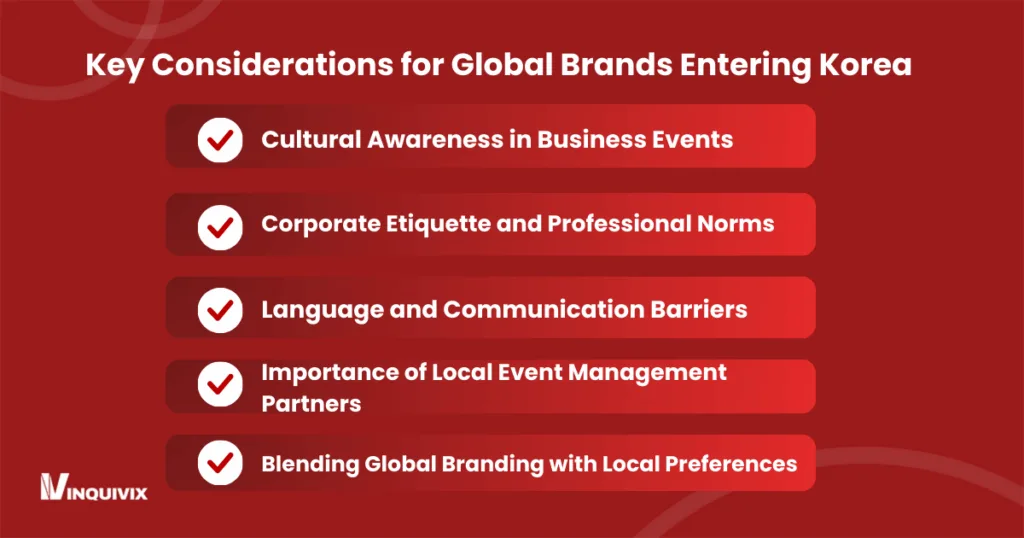
For global companies, corporate event planning in Korea requires more than booking a venue and inviting guests. Success depends on understanding the country’s cultural, linguistic, and business nuances while adapting to local expectations and customs. These considerations ensure that your event resonates with Korean audiences while aligning with international brand objectives.
Cultural Awareness in Business Events
Korean corporate culture values hierarchy, respect, and formal etiquette. Simple details, such as the wording of invitations, the order of seating arrangements, or the presentation of business cards, can significantly influence how your brand is perceived. Foreign businesses hosting events in Korea must take into account these cultural elements to avoid misunderstandings and foster positive relationships.
Corporate Etiquette and Professional Norms
Events in Korea often begin with formal greetings, speeches, or ceremonial elements that reflect respect for attendees and stakeholders. Gift-giving, although not mandatory, is a common practice used to express appreciation. Being mindful of these norms helps global brands demonstrate professionalism and cultural sensitivity.
Language and Communication Barriers
While English is widely used in international business, many Korean participants may prefer or feel more comfortable with Korean-language materials and presentations. Hiring interpreters, providing bilingual event programs, and integrating simultaneous translation technology can significantly improve audience engagement and inclusivity.
Importance of Local Event Management Partners
Navigating regulations, permits, logistics, and vendor negotiations can be challenging for businesses unfamiliar with Korea’s processes. Partnering with an experienced local event management company offers several advantages, including insider knowledge of venues, established vendor networks, and the ability to bridge cultural and language gaps. This collaboration ensures smoother execution and stronger audience connections.
Blending Global Branding with Local Preferences
Global companies often face the challenge of maintaining brand consistency while appealing to local tastes. Successful corporate events in Korea typically strike a balance between global brand identity and regional preferences, incorporating elements such as local cuisine, entertainment, or cultural motifs. This balance enhances brand relevance while maintaining a cohesive global message.
Choosing the Right Venue for Business Events in Korea
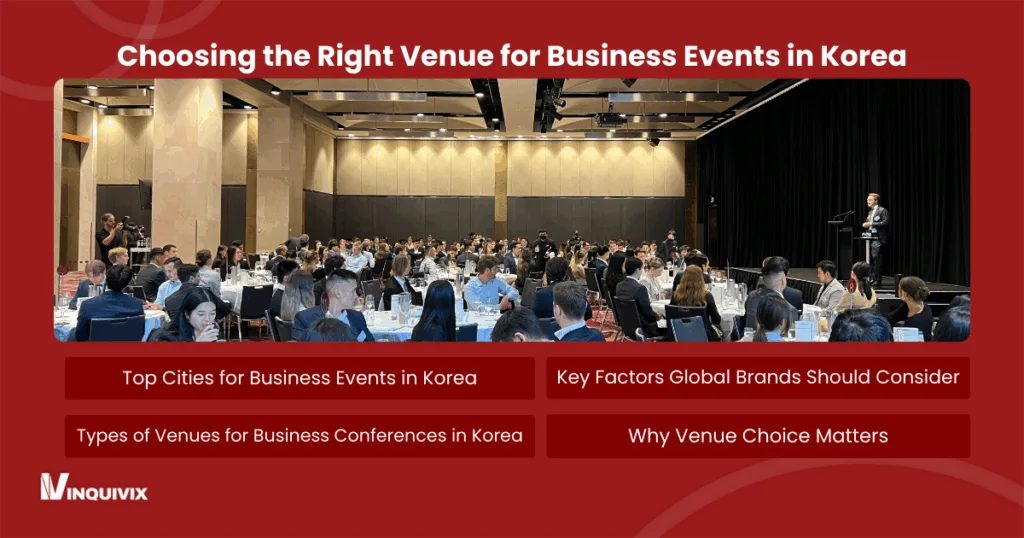
Selecting the right venue is one of the most critical decisions in corporate event planning in Korea, as it sets the tone for the entire experience. From high-profile business conferences to exclusive executive meetings, the venue not only reflects the professionalism of your brand but also influences how well the event engages with its audience.
Top Cities for Business Events in Korea
- Seoul – The capital city is the heart of Korea’s corporate event industry. With facilities like the COEX Convention & Exhibition Center and the Dongdaemun Design Plaza (DDP), Seoul offers versatile spaces equipped with advanced technology and international accessibility.
- Busan – Known for its scenic waterfront, Busan is a popular destination for conventions and trade shows, offering venues such as the BEXCO (Busan Exhibition and Convention Center).
- Incheon – Home to one of the world’s best international airports, Incheon is an emerging hub for global conferences with venues designed for easy international access.
- Daegu – As a thriving business hub, Daegu is renowned for its specialized events and regional gatherings, supported by modern facilities such as EXCO.
Types of Venues for Business Conferences in Korea
- Convention Centers – Ideal for large-scale conferences, exhibitions, and trade shows, offering state-of-the-art infrastructure and multilingual support.
- Luxury Hotels – Many international and local hotel chains in Korea provide premium ballrooms and meeting spaces, perfect for executive summits and VIP gatherings.
- Hybrid-Ready Spaces – With the rise of digital events, venues equipped with live-streaming, AR/VR integration, and hybrid conferencing tools are becoming increasingly important.
- Unique Cultural Venues – Palaces, museums, and traditional spaces provide global brands with opportunities to create memorable experiences by incorporating Korean heritage into their events.
Key Factors Global Brands Should Consider
- Capacity and Layout – Ensure the venue can accommodate the expected audience with flexible layouts that support networking, workshops, and breakout sessions.
- Technology Infrastructure – High-speed internet, audio-visual equipment, and hybrid solutions are essential for international events.
- Accessibility – Proximity to airports, hotels, and public transport is critical, especially for foreign participants.
- Brand Image Alignment – The venue should reflect the prestige and values of the hosting company.
- Sustainability – Many global brands are prioritizing eco-friendly venues that align with corporate sustainability goals.
Why Venue Choice Matters
The venue is more than a physical location; it’s part of the brand experience. A thoughtfully chosen venue demonstrates professionalism, respects the expectations of Korean participants, and enhances the overall impact of business events in Korea. By selecting spaces that combine functionality, cultural authenticity, and cutting-edge technology, global brands can create events that stand out in a competitive market.
Best Practices in Corporate Event Planning in Korea
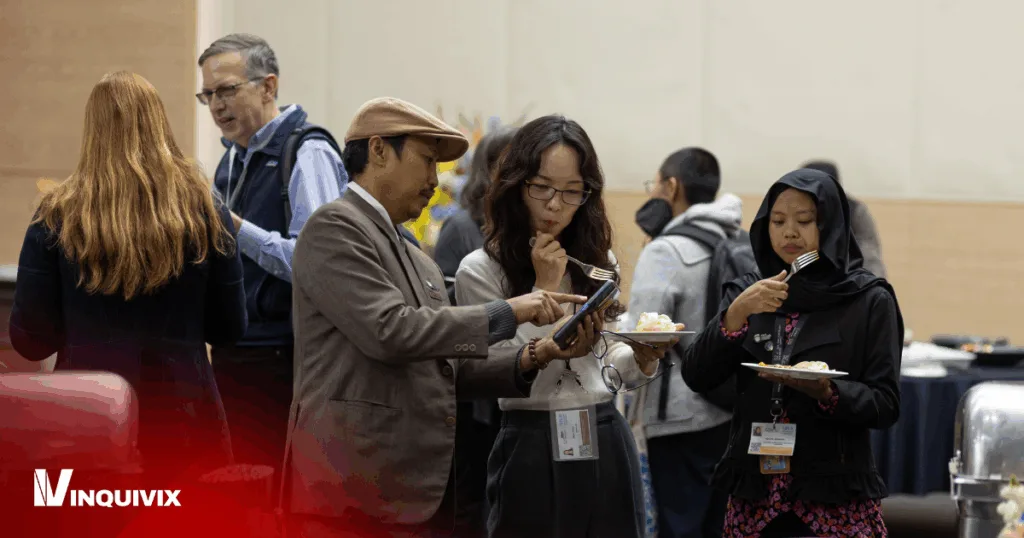
Executing a successful corporate event in Korea requires careful planning, cultural sensitivity, and strategic coordination. Global brands must not only ensure seamless logistics but also create experiences that resonate with Korean audiences while staying true to their international brand identity. By following proven practices, businesses can maximize the impact of their events and strengthen their presence in Korea’s competitive market.
Partner with Professional Event Management in Korea
Working with experienced local event management companies provides invaluable support. These professionals understand regulatory requirements, vendor networks, and cultural nuances that foreign businesses may find challenging. From securing permits to negotiating contracts and coordinating logistics, local partners ensure that events are executed smoothly and efficiently.
Leverage Local Expertise for Logistics and Compliance
Regulations in Korea may differ from those in other countries. Global brands must comply with local rules regarding safety, event permits, and labor laws. Relying on local expertise helps avoid delays, miscommunication, and compliance issues that could negatively impact the event.
Customize Experiences for Global and Local Audiences
Corporate events in Korea should strike a balance between global brand messaging and local cultural preferences. For instance, integrating Korean culinary experiences, entertainment, or design elements into the event can create a sense of familiarity for local attendees while enhancing the uniqueness for international participants.
Adopt Hybrid and Virtual Event Solutions
The shift toward digital engagement has made hybrid and virtual events increasingly important. Many venues in Korea are equipped with advanced technologies, including live-streaming, AR/VR features, and interactive platforms. By integrating these solutions, global brands can extend participation to international stakeholders while maintaining strong local engagement.
Facilitate Seamless Communication Between Global and Local Teams
Successful events depend on clear communication. It’s essential to establish coordination channels between global headquarters and Korean teams to align goals, messaging, and execution. This may involve bilingual project managers, translation support, and regular cross-team updates.
Focus on Audience Engagement and Relationship Building
Korean business culture emphasizes relationships and long-term partnerships. Beyond presentations and speeches, events should include networking opportunities, interactive sessions, and spaces for personal connection. Building trust and fostering dialogue ensures that the event delivers value beyond the immediate occasion.
Marketing and Promotion of Corporate Events in Korea
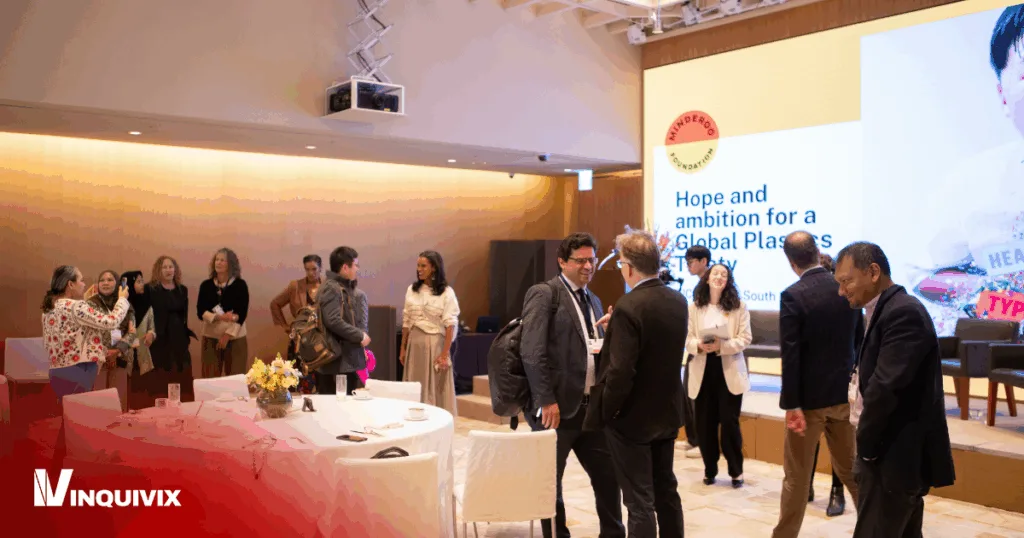
Even the most well-planned corporate event will not achieve its goals without effective promotion. In Korea, where digital adoption is among the highest in the world, the success of corporate event planning in Korea relies heavily on strategic marketing. Global brands must understand the country’s unique digital ecosystem and utilize the appropriate platforms to reach both local and international audiences.
Leveraging Korea’s Digital Platforms
Unlike many Western markets, Google and Facebook are not the dominant platforms in Korea. Instead, Naver and Kakao are central to online engagement.
- Naver – Korea’s leading search engine and content platform, ideal for SEO-driven campaigns, event landing pages, and targeted display advertising.
- KakaoTalk and Kakao Services – Korea’s most widely used messaging and lifestyle apps. KakaoTalk provides opportunities for direct invitations, event reminders, and group engagement, while KakaoStory and Kakao Channels can amplify brand messaging.
Social Media Promotion
Platforms like Instagram, YouTube, and TikTok also play a significant role in promoting events. Short-form video teasers, influencer collaborations, and event hashtags can create buzz and increase registrations. For business-focused gatherings, LinkedIn is increasingly used for reaching international professionals.
Public Relations and Media Coverage
PR remains essential for positioning corporate events as industry-relevant and credible. Partnering with Korean media outlets, trade publications, and business journals helps enhance visibility and attract the right audience. Press releases, media invitations, and thought-leadership content can ensure events are recognized beyond the immediate participant base.
Targeted Advertising and Retargeting
Running digital ad campaigns tailored to Korean audiences helps drive attendance. Event organizers often use retargeting to remind potential participants who have shown interest but have not yet registered. With precise audience targeting available on platforms like Naver Ads and Kakao Ads, global brands can maximize reach while optimizing budgets.
On-the-Ground Marketing Efforts
Beyond digital, physical promotion through signage, sponsorships, and partnerships with local business organizations can boost event visibility. Collaborations with industry associations or chambers of commerce also help attract relevant audiences and add credibility.
Building Anticipation and Engagement
To make corporate events in Korea successful, brands should create excitement before, during, and after the event. Pre-event campaigns might include sneak peeks or speaker highlights, while live social media coverage boosts real-time engagement. Post-event content, such as recap videos or thought-leadership articles, extends the event’s impact and keeps the audience engaged with the brand.
Benefits of Hosting Corporate Events in Korea

Hosting a corporate event in Korea presents global brands with a wealth of opportunities that extend beyond the immediate gathering. The country’s advanced infrastructure, vibrant business environment, and cultural appeal make it one of Asia’s most strategic destinations for business events. By choosing Korea, brands can strengthen their market presence, build meaningful connections, and elevate their corporate image.
World-Class Infrastructure and Technology
Korea is globally recognized for its cutting-edge technology and modern facilities. Convention centers, luxury hotels, and hybrid-ready venues are equipped with advanced audiovisual systems, high-speed internet, and multilingual support. This infrastructure ensures that events run seamlessly, whether they are in-person, virtual, or hybrid.
Gateway to Asia’s Fast-Growing Markets
Korea’s geographical location and strong international connectivity make it an ideal hub for reaching broader Asian markets. Hosting events in Korea allows brands to attract participants not only from within the country but also from nearby regions such as Japan, China, and Southeast Asia.
Enhanced Brand Image and Market Positioning
By investing in corporate event planning in Korea, global companies demonstrate their commitment to building a presence in one of the world’s most competitive economies. Events hosted in Korea often gain attention from local partners, media, and stakeholders, enhancing a brand’s reputation and credibility.
Opportunities for Networking and Partnerships
Corporate events in Korea bring together professionals, industry leaders, and decision-makers from diverse sectors. This environment provides a platform for networking, fostering collaborations, and exploring potential partnerships that can drive long-term business growth.
Employee Engagement and Incentive Opportunities
For companies hosting internal events, Korea offers unique opportunities to motivate and reward employees. Incentive travel programs, team-building experiences, and exposure to Korea’s rich cultural heritage can boost employee morale and reinforce corporate values.
Blend of Tradition and Modernity
Few countries combine tradition and innovation as seamlessly as Korea. Global brands can design events that incorporate elements of Korean culture, such as traditional performances, local cuisine, or cultural venues, while maintaining a modern and professional setting. This balance creates memorable experiences that leave lasting impressions on attendees.
Challenges and How to Overcome Them
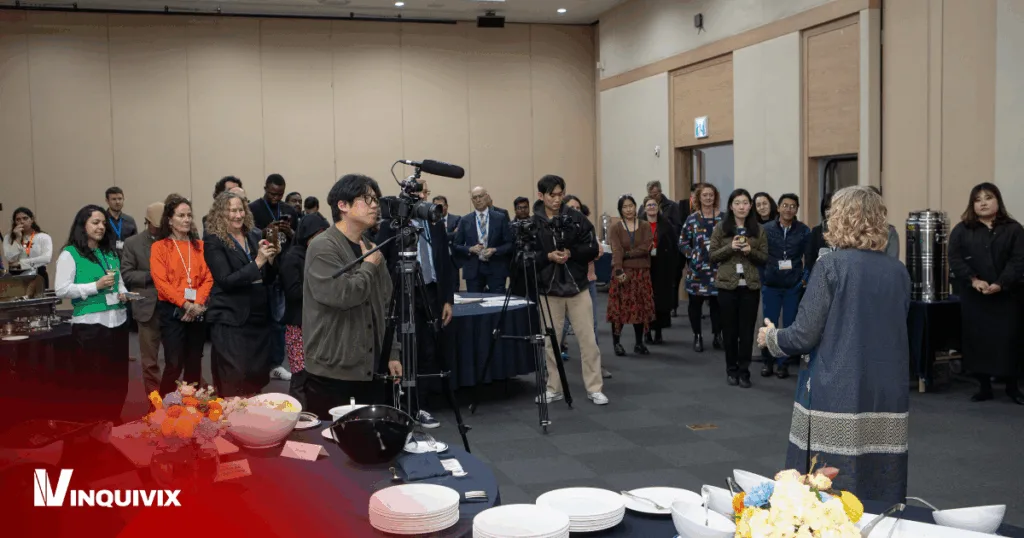
While Korea presents exciting opportunities for global brands, hosting successful business events in Korea also comes with unique challenges. From cultural differences to logistical hurdles, foreign companies must prepare strategically to ensure smooth execution. Understanding these obstacles and how to address them can transform potential risks into advantages.
Navigating Regulations and Compliance
Corporate events in Korea may require permits, insurance, and adherence to specific safety standards. Regulations can vary depending on the city and type of event. Without proper guidance, navigating these requirements can be time-consuming.
Solution: Work with local event management companies familiar with Korean regulations. They can handle compliance paperwork, vendor contracts, and safety requirements, ensuring the event meets all legal standards.
Language and Cultural Differences
Language remains a significant barrier, as not all participants or service providers may be fluent in English. Miscommunication can lead to delays, errors, or misunderstandings in both planning and execution.
Solution: Hire professional interpreters, provide bilingual materials, and use local staff who can bridge cultural and linguistic gaps. Cultural training for global teams can also help prevent unintentional mistakes.
Budget Management and Cost Control
Korea offers a wide range of premium venues and services, which can quickly escalate costs if not managed carefully. Hidden expenses, such as translation services, technology rentals, or catering upgrades, may surprise foreign organizers.
Solution: Develop a clear budget plan with contingencies. Partnering with local vendors through established event planners often provides better rates and transparent pricing.
Logistical Challenges
Coordinating transportation, accommodations, catering, and technology setup can be overwhelming, especially for brands unfamiliar with Korea’s infrastructure. Cities like Seoul can also experience heavy traffic, impacting schedules.
Solution: Select venues with convenient access to airports, hotels, and public transportation. Build buffer times into the event schedule and utilize local logistics experts to streamline the planning process.
Finding Trusted Local Partners
For foreign businesses, identifying reliable vendors and service providers can be difficult without local networks. Choosing the wrong partner may lead to delays or quality issues.
Solution: Rely on referrals, industry associations, or professional event management firms with proven track records. Establishing long-term partnerships ensures consistent quality and smoother future events.
Future of Corporate Event Planning in Korea
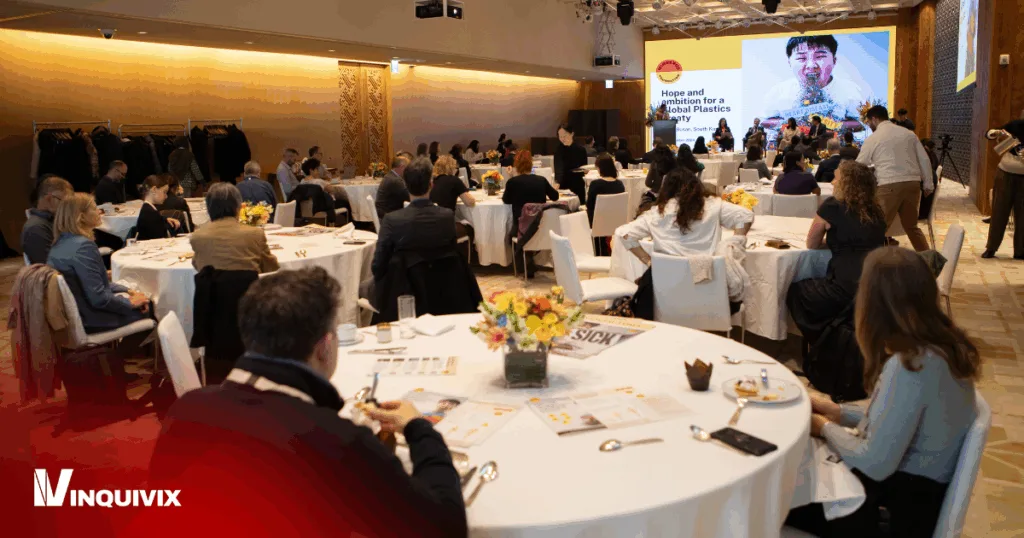
The corporate event landscape in Korea is rapidly evolving, driven by technological advancements, shifting audience expectations, and global business trends. For companies investing in corporate event planning in Korea, understanding these emerging developments is essential for staying competitive and relevant.
Rise of Hybrid and Virtual Events
The pandemic accelerated the adoption of digital event formats, and hybrid events continue to be a dominant trend. Korean venues and event planners are now fully equipped with live-streaming studios, interactive platforms, and advanced networking tools to accommodate both in-person and virtual participants. This approach enables brands to expand their reach, reduce costs, and enhance inclusivity.
Sustainability and Eco-Friendly Practices
Sustainability has become a top priority for global businesses, and Korea is responding with eco-conscious event solutions. From venues adopting green certifications to digital alternatives that reduce paper waste, environmentally friendly practices are becoming standard in event management. Brands that prioritize sustainability in their events can strengthen their image among eco-aware stakeholders.
Integration of Digital Innovation
Korea’s reputation as a technology leader makes it an ideal place for forward-thinking events. Expect to see increased use of AI-powered networking tools, AR/VR experiences, holographic presentations, and intelligent data analytics to personalize attendee experiences. These innovations not only enhance engagement but also provide valuable insights into participant behavior.
Korea as a Regional Business Hub
Korea’s strategic location and growing influence in Asia position it as a gateway for international collaboration. The government continues to support the MICE industry through infrastructure investment and global partnerships. This ensures that Korea remains one of the most attractive destinations for multinational corporate events.
Shifting Focus to Experience-Driven Events
Attendees now expect more than presentations; they want immersive, memorable experiences. In Korea, blending traditional culture with modern entertainment is becoming a hallmark of successful events. Global brands can leverage this trend to design experiences that connect emotionally while reinforcing their business objectives.
How Inquivix Supports Global Brands with Event Management in Korea

Planning and executing corporate events in Korea requires more than just logistics, it demands deep knowledge of the local market, cultural awareness, and digital expertise. This is where Inquivix steps in. As a trusted partner for global brands, we combine event management strategies with robust digital marketing solutions tailored to Korea’s unique business environment.
Expertise in the Korean Market
Inquivix understands the complexities of Korea’s corporate landscape. From navigating cultural nuances to aligning with business etiquette, our team ensures that your brand’s presence is both professional and impactful. We help global companies adapt their strategies while maintaining consistency with international branding.
Seamless Event Planning and Coordination
Our event management support encompasses every stage of the process, including venue selection, vendor coordination, logistics, and compliance. By collaborating with trusted local partners, we provide streamlined execution that saves time, minimizes risk, and maximizes results.
Digital Marketing Integration
What sets Inquivix apart is our ability to merge event management with digital promotion. Leveraging platforms like Naver, Kakao, and Korean social media, we amplify your event’s reach, attract the right audience, and generate engagement before, during, and after the event.
Tailored Strategies for Global Brands
Whether you are launching a new product, hosting a business conference, or strengthening partnerships, Inquivix creates customized strategies that align with your goals. We blend global brand positioning with local relevance to ensure that your events resonate with Korean stakeholders.
Your Strategic Partner in Korea
With Inquivix, you’re not just hosting an event, you’re building a stronger market presence in one of Asia’s most dynamic economies. Our team ensures that every detail is handled with precision, allowing you to focus on what matters most: connecting with your audience and achieving business growth.
Ready to make your mark in Korea’s corporate event landscape? Partner with Inquivix today and let us help you plan, promote, and execute events that deliver lasting impact.