Automating Customer Service with KakaoTalk Channels in Korea
In today’s highly connected Korean market, businesses can no longer afford delays or inefficiencies in customer support. With over 90% of the population actively using KakaoTalk, the platform has evolved into much more than a messaging app; it has become the go-to channel for communication, shopping, payments, and brand interaction. This makes KakaoTalk customer service a crucial touchpoint for companies seeking to establish trust and deliver seamless experiences. By leveraging tools such as KakaoTalk automation, chatbots, and integrated customer chat solutions, brands can provide instant responses, streamline inquiries, and enhance customer satisfaction. For both local companies and international businesses entering the Korean market, mastering KakaoTalk Channels as a customer service automation tool is no longer optional; it’s a competitive necessity.
Why KakaoTalk Automation Is a Must for Brands
In today’s Korean digital landscape, customer expectations are evolving at a faster pace than ever. Consumers want immediate answers, personalized engagement, and seamless service across the platforms they already use daily. For brands operating in Korea, KakaoTalk’s customer service has become the standard channel for meeting these needs. However, with millions of users sending inquiries simultaneously, manual responses alone cannot keep up with the demand. This is where KakaoTalk automation steps in, helping businesses scale customer interactions, reduce response times, and maintain consistent service quality. By adopting automation on KakaoTalk, brands not only keep pace with Korea’s digital-first society but also strengthen customer loyalty in one of the world’s most competitive markets.
KakaoTalk’s Cultural & Market Penetration in Korea
KakaoTalk is more than just a messaging platform in South Korea; it is a cultural staple and an essential part of everyday life. With nearly 90% of the Korean population using KakaoTalk daily, it functions as a super-app that integrates messaging, mobile payments, shopping, news, ride-hailing, banking, and even healthcare services. This ubiquity gives brands an unparalleled opportunity to connect with customers where they already spend their time. Unlike other global messaging apps, KakaoTalk is deeply woven into Korea’s digital and social fabric. For businesses, adopting KakaoTalk customer service solutions is not just a marketing strategy; it is a fundamental requirement for visibility, accessibility, and trust in the Korean market.
The Necessity of Automation in a Mobile-First, Fast-Paced Market
South Korea is one of the world’s most digitally advanced societies, with high-speed internet access, early adoption of mobile-first solutions, and a population that expects instant communication. In such an environment, customers demand fast, accurate, and personalized support at any time of day. Manual customer service alone can no longer keep pace with these expectations. This is where KakaoTalk automation comes into play. Through auto-responses, chatbots, and integrated Kakao CS tools, brands can streamline inquiries, resolve issues in real time, and scale support without overburdening human agents. Globally, customer service automation is becoming the norm. Still, in Korea, it is particularly critical: businesses that fail to provide quick and seamless support risk losing customers to competitors who embrace digital-first solutions.
Business Impact of Failing to Automate on KakaoTalk
Failing to adopt automation on KakaoTalk can quickly put businesses at a disadvantage. Customers frustrated by long response times or inconsistent support are more likely to abandon a brand and switch to competitors that offer instant, reliable service. In Korea’s crowded market, where consumers are accustomed to hyper-responsive customer service, even minor lapses can erode trust. For international businesses entering Korea, this challenge is even greater, as cultural nuances and language barriers add another layer of complexity. Without automation to streamline routine inquiries and support requests, companies may find their customer service teams overwhelmed, resulting in inefficiencies, higher costs, and missed opportunities to foster long-term loyalty.
Core Tools for Automating Customer Service on KakaoTalk

Delivering fast, accurate, and personalized support on KakaoTalk requires the correct set of automation tools. By leveraging KakaoTalk automation, brands can streamline inquiries, reduce response times, and maintain consistent quality across interactions. From simple auto-responses to advanced CRM integration, the platform offers a range of solutions that cater to both local and international businesses seeking to scale efficiently in the Korean market.
Auto-Responses & 24/7 Bots
One of the simplest yet most effective tools for automation is setting up auto-responses. These pre-configured messages can handle routine inquiries such as store hours, product availability, or order status. For example, when a customer types a specific keyword, the system can instantly send a tailored reply without waiting for a human agent.
Beyond keyword-triggered responses, brands can deploy 24/7 bots to engage customers around the clock. This is particularly important in Korea’s fast-paced market, where consumers expect immediate answers. Scheduled messages can also provide updates, promotions, or reminders, helping businesses stay proactive in customer communication. These automated interactions ensure that customers receive timely and accurate support even outside business hours, thereby improving overall satisfaction and brand perception.
CRM Integration for Personalized Automation
Automation becomes significantly more impactful when paired with a Customer Relationship Management (CRM) system. By integrating KakaoTalk with CRM tools, brands can access customer history, track previous interactions, and deliver personalized support on a large scale.
For instance, a returning customer inquiring about an order can receive a response that references their previous purchases or preferences. This not only saves time for agents but also enhances the customer experience by making interactions feel more thoughtful and individualized. Integration typically involves connecting KakaoTalk via APIs, syncing contact information, and configuring workflows to trigger relevant messages based on user behavior. This approach enables businesses to optimize the effectiveness of Kakao CS tools and ensure that every interaction adds value.
Chatbots for Next-Level Support
While auto-responses handle basic queries, chatbots can manage more complex interactions. Modern KakaoTalk chatbots can support multi-step conversations, guide users through processes like product selection or booking, and even escalate to live agents when necessary.
Chatbots are ideal for handling FAQs, managing repetitive requests, or providing multilingual support. For international businesses entering the Korean market, chatbots can bridge language gaps and maintain brand consistency across different markets. To optimize performance, companies should focus on designing clear conversation flows, regularly updating content based on customer behavior, and continuously testing chatbot responses to ensure accuracy and relevance.
KakaoTalk Channel API & System-Level Automation
For brands seeking more advanced automation, KakaoTalk offers API access that enables system-level integration. Through APIs, companies can manage friend groups, update customer data in real time, and automate notifications or alerts.
These integrations enable seamless workflows between KakaoTalk and other business systems, including CRM platforms, marketing automation tools, and order management systems. By leveraging APIs, businesses can create highly personalized and timely interactions that enhance the customer journey while maintaining efficiency. This level of automation is especially valuable for companies handling large volumes of inquiries, enabling them to scale support without proportionally increasing staffing costs.
Summary of Core Tools
By combining auto-responses, chatbots, CRM integration, and API-driven automation, brands can create a comprehensive customer service ecosystem on KakaoTalk. Each tool addresses a different level of interaction, ranging from basic inquiries to complex, personalized support, enabling businesses to efficiently meet customer expectations while maintaining a high standard of service. When implemented strategically, these tools not only enhance operational efficiency but also strengthen customer trust and loyalty in Korea’s competitive market.
Advantages for Businesses, Local and Global
Adopting KakaoTalk customer service automation provides distinct advantages for both local Korean brands and international businesses entering the market. By leveraging KakaoTalk automation, companies can deliver faster, more personalized, and culturally relevant experiences that strengthen customer loyalty and drive operational efficiency. This section examines how automation affects businesses differently, depending on their market context.
For Local Brands
For Korean companies, KakaoTalk is not just a messaging platform; it is an essential communication channel that reaches nearly every consumer in the country. Automating customer service allows local brands to:
- Respond Instantly to High Customer Volume: With thousands of daily inquiries, auto-responses and chatbots reduce waiting times, preventing customer frustration.
- Maintain Consistency Across Interactions: Automation ensures that all customers receive accurate, on-brand messaging, reducing human error in responses.
- Focus Human Agents on Complex Issues: By offloading routine inquiries to bots, support teams can prioritize high-value or sensitive interactions, improving overall service quality.
- Strengthen Brand Loyalty: Fast and reliable responses meet the high expectations of Korean consumers, who value speed, convenience, and attention to detail.
Local businesses gain a competitive edge by integrating Kakao CS tools into their workflows, allowing them to scale operations efficiently while maintaining strong relationships with their customer base.
For International Businesses
For foreign brands entering the Korean market, the challenges of cultural differences, language barriers, and unfamiliar consumer behavior can make customer service particularly complex. Implementing KakaoTalk customer service automation addresses these challenges effectively:
- Bridges Language and Cultural Gaps: Automated responses and chatbots can handle initial inquiries in Korean while maintaining consistent messaging that aligns with local expectations, thereby enhancing the overall user experience.
- Facilitates Market Entry: Quick and reliable customer service builds trust with new audiences, helping international brands establish credibility in a highly competitive market.
- Reduces Operational Costs: Automation enables businesses to manage inquiries efficiently without the need to immediately scale local staffing, which is particularly crucial when resources are limited.
- Enables Personalized Engagement: By integrating with CRM systems, brands can offer tailored experiences that reflect local shopping behavior, past interactions, and preferences.
For international companies, KakaoTalk automation is more than a convenience; it is a strategic tool that supports localization, builds trust, and accelerates growth in the Korean market.
Unified Advantage: Competitive Agility
Across both local and global contexts, automating KakaoTalk customer service enables businesses to achieve agility. Companies can respond more quickly, manage higher volumes of inquiries, and continually improve interactions through data-driven insights. In Korea’s mobile-first and digitally advanced environment, this responsiveness is not just a benefit; it is a market expectation, making automation essential for long-term success.
How to Get Started, Step-by-Step Guide
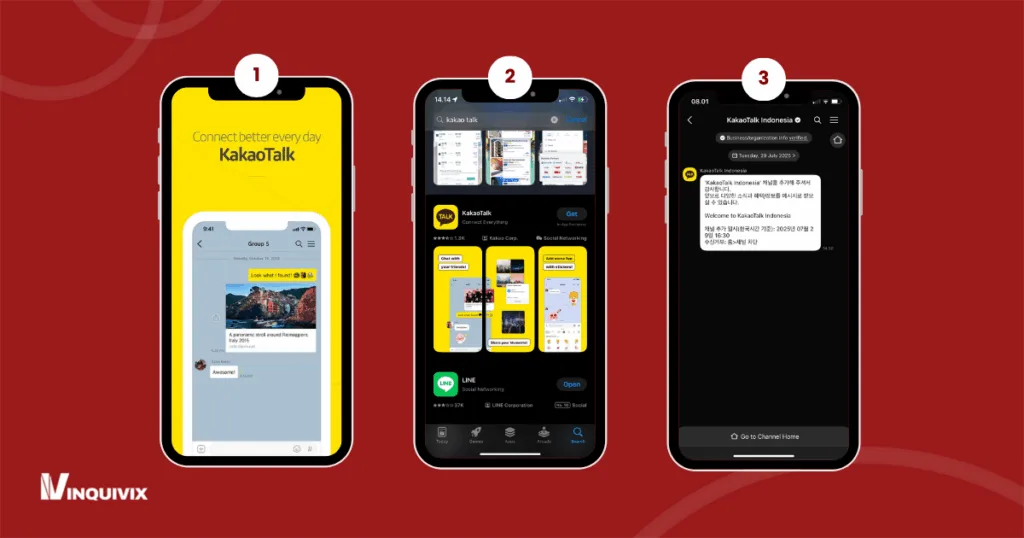
Implementing KakaoTalk customer service automation may seem complex at first, but following a structured approach ensures a smooth setup while maximizing efficiency and customer satisfaction. Whether you are a local brand looking to optimize support or an international business entering the Korean market, this guide outlines the key steps to launch and manage automated customer interactions effectively.
Create & Set Up Your KakaoTalk Channel
The first step is to establish an official KakaoTalk Channel for your brand. This serves as the central hub for customer interactions and automation tools.
- Account Creation: Sign up for a KakaoTalk Business account and register your brand’s official channel. Ensure that your profile is verified to gain customer trust.
- Channel Design: Customize the visual appearance with logos, banners, and theme colors that align with your brand identity. A well-branded channel reinforces professionalism and credibility.
- Initial Greetings: Set up a welcome message that introduces your brand and informs users about the automated support options available. This first touchpoint sets the tone for future interactions.
By completing these steps, your business establishes a professional presence on KakaoTalk and lays the foundation for automated communication.
Building Auto-Response Frameworks
Once your channel is live, the next step is to design auto-response messages that efficiently handle routine inquiries.
- Identify Common Questions: Review past customer inquiries to understand the most frequent topics, such as store hours, product availability, shipping information, or troubleshooting.
- Keyword Mapping: Link specific keywords or phrases to predefined responses. For example, a user typing “order status” could trigger a message with delivery updates or tracking instructions.
- Message Scheduling: Consider sending timely notifications, reminders, or updates automatically to ensure prompt communication. Scheduled messages ensure customers receive relevant information even outside business hours.
This structured approach enables businesses to provide fast, consistent, and accurate information without overwhelming their support teams.
CRM and Bot Integration Workflow
Integrating CRM systems and chatbots is crucial for scaling automated customer service while maintaining personalization and customer engagement.
- CRM Connection: Sync customer profiles, interaction history, and purchase data with KakaoTalk to enable personalized messaging.
- Bot Configuration: Design chatbot flows to guide users through multi-step inquiries, escalating to live agents for complex issues.
- Testing & Refinement: Continuously test bot responses to ensure accuracy, relevance, and a smooth conversational experience. Adjust flows based on customer feedback and performance metrics to optimize results.
This integration enables your brand to automate high-volume inquiries while maintaining personalized support, thereby increasing customer satisfaction and operational efficiency.
Measuring Success via Key Metrics
Monitoring performance is crucial to ensure your KakaoTalk automation is delivering the desired results. Focus on key performance indicators (KPIs) such as:
- Response Time: Measure how quickly automated messages or chatbots respond to customer inquiries.
- Resolution Rate: Track the percentage of inquiries fully resolved via automation versus those requiring human intervention.
- Customer Satisfaction (CSAT): Collect feedback to evaluate the effectiveness of automated responses.
- Engagement Metrics: Monitor message open rates, click-through rates, and repeat interactions to gauge user engagement.
Leverage native KakaoTalk analytics or third-party dashboards to collect these insights. Regularly reviewing these metrics enables continuous optimization, ensuring your automation remains effective and aligned with customer expectations.
By following this step-by-step approach, businesses can efficiently implement KakaoTalk customer service automation by setting up their channel, designing auto-responses, integrating CRM and chatbots, and monitoring KPIs. This structured workflow not only reduces response times and operational burdens but also enhances the customer experience, making your brand more competitive in Korea’s fast-paced digital market.
Best Practices & Strategic Tips
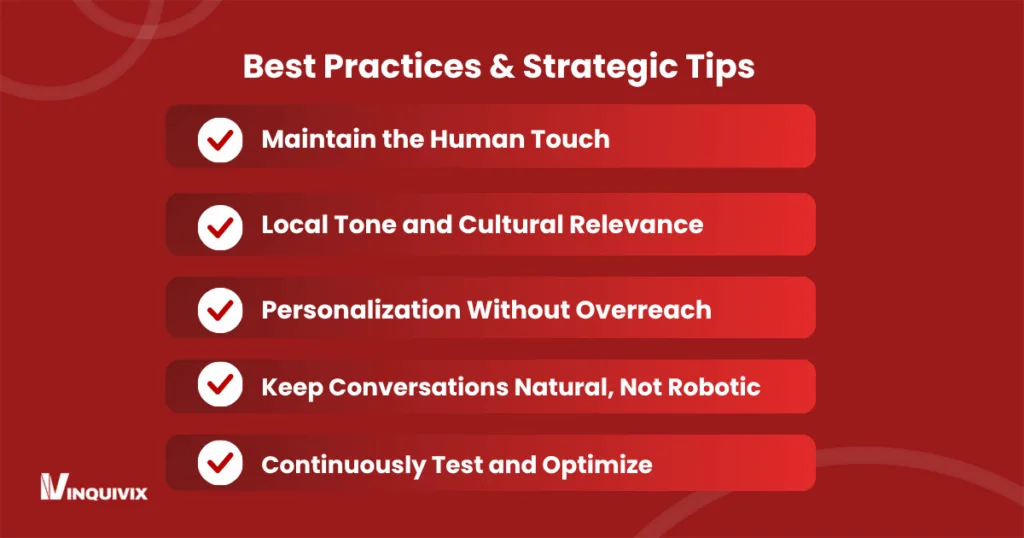
Implementing KakaoTalk customer service automation is not just about setting up bots and auto-responses; it’s about delivering a seamless, culturally aware, and engaging experience that strengthens customer trust. By following proven best practices, brands can ensure their KakaoTalk automation strategy is efficient, effective, and aligned with customer expectations in Korea’s fast-paced digital environment.
Maintain the Human Touch
Even with sophisticated automation, providing access to live agents remains essential. While bots can handle routine queries, complex or sensitive issues require a human touch. Businesses should design workflows that automatically escalate to a live agent when necessary. This balance ensures that customers feel heard and valued, reinforcing trust and satisfaction.
Local Tone and Cultural Relevance
Korean consumers respond best to messaging that feels familiar and culturally appropriate. Automation should reflect local communication styles, polite yet casual, using expressions and phrasing common in everyday Korean conversation. Incorporating emojis or friendly language where appropriate can also make interactions feel more personal and engaging. For international businesses, this approach helps bridge cultural gaps and positions the brand as approachable and trustworthy.
Personalization Without Overreach
Automation tools and CRM integrations allow brands to personalize interactions based on user history, preferences, and past inquiries. However, it is essential to avoid over-personalization that can feel intrusive. For example, referencing a recent order or subscription is helpful, but sending excessive messages or overly detailed behavioral tracking can negatively impact trust. Striking the right balance enhances engagement while respecting customer privacy.
[H3] Keep Conversations Natural, Not Robotic
Bots should aim for a conversational tone rather than a repetitive, template-like messaging style. Avoid responses that feel generic or overly formal, which can frustrate users. Regularly audit chatbot scripts and auto-response content to ensure clarity, relevance, and a human-like flow. This approach creates a more satisfying experience, increases engagement, and reduces the likelihood of customers abandoning the channel.
Continuously Test and Optimize
Best practices include ongoing testing and refinement of automated workflows to ensure optimal performance. Monitor key metrics, including response time, resolution rate, and customer satisfaction, to identify areas for improvement. Adjust auto-responses, chatbot flows, and escalation rules based on customer behavior and feedback to optimize customer experience. By iterating continuously, businesses can ensure that KakaoTalk automation remains effective, responsive, and aligned with evolving customer needs.
What’s Next, Emerging Trends in KakaoTalk Automation
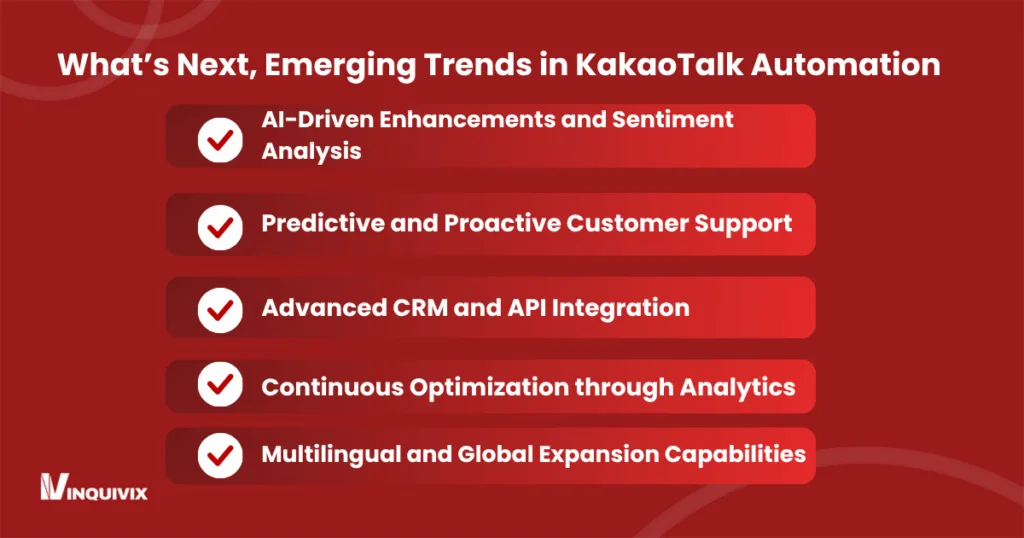
The world of KakaoTalk customer service is evolving rapidly, and staying ahead of emerging trends is crucial for brands that want to maintain a competitive edge in Korea’s highly digital market. Automation tools are no longer just about responding faster; they are increasingly capable of delivering proactive, intelligent, and personalized experiences. Understanding these trends allows businesses to prepare for the next generation of customer service, optimizing both operational efficiency and customer satisfaction.
AI-Driven Enhancements and Sentiment Analysis
Artificial intelligence is transforming the capabilities of KakaoTalk automation. Beyond simple chatbots, AI can analyze user messages in real time to detect tone, sentiment, and intent, allowing brands to respond more intelligently. For example, if a customer expresses frustration or confusion, the system can escalate the inquiry to a human agent or deliver an empathetic automated response. This ensures that KakaoTalk customer service remains both fast and contextually aware. AI-driven solutions also enable more intelligent routing of inquiries, personalized messaging, and learning from past interactions to improve response quality over time.
Predictive and Proactive Customer Support
Predictive support represents a shift from reactive to proactive service. By analyzing historical data, behavior patterns, and purchase history, KakaoTalk automation can anticipate customer needs before they arise. Examples include sending reminders about upcoming appointments, alerting users to order status changes, suggesting complementary products, or offering troubleshooting guidance before an issue escalates. Proactive support enhances customer satisfaction, reduces the volume of support requests for human agents, and reinforces trust in your brand’s reliability.
Advanced CRM and API Integration
The integration of CRM systems and APIs with KakaoTalk Channels enables a higher level of automation and personalization. Brands can synchronize customer profiles, purchase histories, and engagement data in real time, delivering tailored interactions at scale. API-driven workflows enable complex processes, including multi-step automated responses, dynamic content delivery, and cross-platform notifications. These integrations ensure that KakaoTalk customer service automation is fully aligned with marketing campaigns, sales initiatives, and operational workflows, creating a seamless omnichannel experience.
Continuous Optimization through Analytics
Data analytics is becoming central to the effectiveness of KakaoTalk automation. By tracking key performance indicators (KPIs) such as response times, resolution rates, and customer engagement, brands can identify areas for improvement and refine their automated workflows. Regular analysis allows companies to update chatbot scripts, adjust auto-responses, and optimize escalation rules. Continuous optimization ensures that automation evolves in tandem with customer behavior and market trends, thereby maintaining high standards of service quality and satisfaction.
[H3] Multilingual and Global Expansion Capabilities
As more international businesses enter the Korean market, KakaoTalk automation is evolving to support multilingual interactions. Automation tools can handle inquiries in both Korean and foreign languages, providing consistent support while respecting local expectations. This capability is especially valuable for global brands aiming to deliver high-quality, scalable customer service without expanding staff in Korea. Multilingual automation enhances brand accessibility, helping companies build trust with a diverse customer base.
Maximizing Your KakaoTalk Customer Service Strategy

Implementing KakaoTalk customer service automation is more than a technological upgrade; it’s a strategic move that enhances efficiency, strengthens customer loyalty, and positions your brand for success in Korea’s fast-paced, mobile-first market. By leveraging tools like KakaoTalk automation, chatbots, and Kakao CS tools, businesses can streamline routine inquiries, provide timely and personalized support, and ensure seamless interactions at every touchpoint.
For foreign brands entering Korea or local companies aiming to scale, partnering with experts who understand the market’s unique cultural nuances and technical requirements is critical. Inquivix specializes in helping businesses harness the full potential of KakaoTalk Channels, offering end-to-end solutions for customer service automation, integration, and optimization. Start transforming your customer interactions today with Inquivix and deliver the fast, reliable, and personalized service your customers expect.