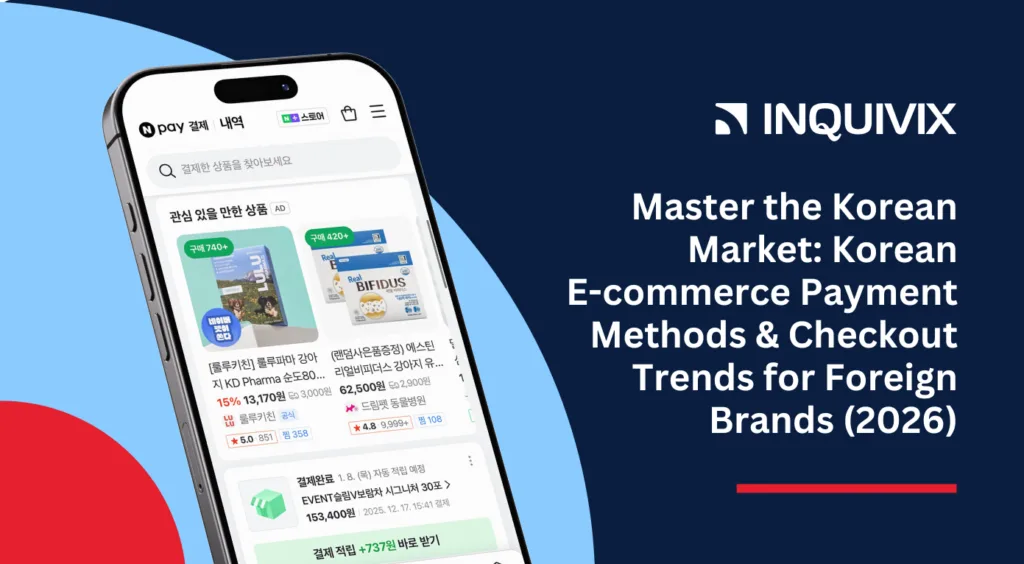
Master the Korean Market: Korean E-commerce Payment Methods & Checkout Trends for Foreign Brands (2026)
South Korea is the world’s fifth-largest e-commerce market, valued at over $147 billion in 2025. While the opportunity for expansion is vast, foreign brands often encounter a “Trust Gap” at the most critical stage of the funnel: the checkout. In a market where 75% of online transactions are completed on mobile devices, providing a seamless, localized payment experience is not optional, but it is the baseline for entry. For many international brands, the primary driver of failure isn’t product demand, but checkout abandonment. When a Korean consumer is met with unfamiliar foreign gateways, manual card entry, or complex 3D-secure verification, the result is an immediate failed sale.
This high abandonment rate stems from a mismatch in expectations. Manual card entry is seen by Korean customers as a high-friction security risk. This “Trust Gap” is caused by a combination of frictions, including technical timeouts from verification loops that are not optimized for the local mobile-ID environment, a lack of interest-free installment alternatives (anticipated for purchases over 50,000 KRW), and authentication fatigue from legacy systems. These obstacles indicate that a brand is an outsider, which frequently results in bounce rates at the last click that are higher than 70%.
For Korean consumers, trust is linked to the digital ecosystems they inhabit daily. This is where Naver Pay and Kakao Pay become essential. These aren’t just payment gateways; they are “Simple Payment” systems embedded within the nation’s most powerful search and social platforms. Naver Pay leverages the search dominance of Naver, while Kakao Pay thrives within KakaoTalk, an app used by over 90% of the population. Understanding Korean e-commerce payment methods is critical for foreign brands entering a mobile-first market where trust and speed define conversion success.
Understanding Korean Mobile Payment Methods for Foreign E-commerce Brands
To succeed in South Korea, foreign brands need to understand how Korean mobile payment methods are embedded within the country’s unique “All-In-One” app culture. In many countries, the internet is like a busy street with many different shops, you go to one site for news, another for social media, and a third for shopping. In South Korea, the internet is more like a giant, comfortable shopping mall where you never have to leave the building.
The “Living Room” of the Internet
Apps like Naver and KakaoTalk are the digital living rooms of South Korea. These platforms are not just tools but daily ecosystems where search, content, communication, and payments converge.
- Naver is more than Search****: It is a combination of Google, Amazon, and Yelp. A Korean shopper starts their day on Naver to check the news, looks up a product, reads reviews on a Naver Blog, and buys it all using the same account.
- Kakao is more than Chatting****: It is a combination of WhatsApp, Uber, and a digital wallet. Koreans use it to message friends, call taxis, and send gifts. Because their bank account is already linked to Kakao Pay, buying something takes only a few seconds.
The Benefit of “Native” Shopping
When a brand is integrated into these apps, it gains instant trust, for foreign e-commerce brands in South Korea, appearing within native platforms signals safety, familiarity, and ease of use.
- One-Click Convenience: Korean shoppers are used to “Simple Payments”. This means they don’t reach for their wallets to find a credit card. They simply use their thumbprint or a 6-digit PIN. If your store forces them to type in a 16-digit card number, they will likely leave.
- The Reward Loop: Every time a user pays with Naver Pay or Kakao Pay, they earn points. These points are like cash that they can use to pay for their next taxi or order food. Foreign brands that offer these payments tap into this “reward loop” that keeps customers coming back.
Navigating the Market Transition
Adapting to this environment means moving beyond a simple translated website. Thriving in Korea requires placing your products exactly where the customers are already spending their time.
- Visibility on Naver Shopping: Listing products within the Naver ecosystem ensures they appear when shoppers search for specific categories, mirroring the way users discover products in a physical mall.
- Social Connectivity via Kakao: Using social business profiles allows brands to connect directly with shoppers, sending personalized updates or “Buy Now” links that work perfectly with their existing digital wallets.
- Simplifying the Technical Setup: While local regulations can be complex, many cross-border solutions now allow international sellers to offer these “one-tap” payments, making it possible to provide a local experience without needing a physical office in the country.
By plugging into the apps Koreans already use and love, a foreign brand stops feeling like an outsider and becomes a natural part of the consumer’s daily life.
Deep Dive into Naver Pay: One of the Most Popular Payment Methods in South Korea
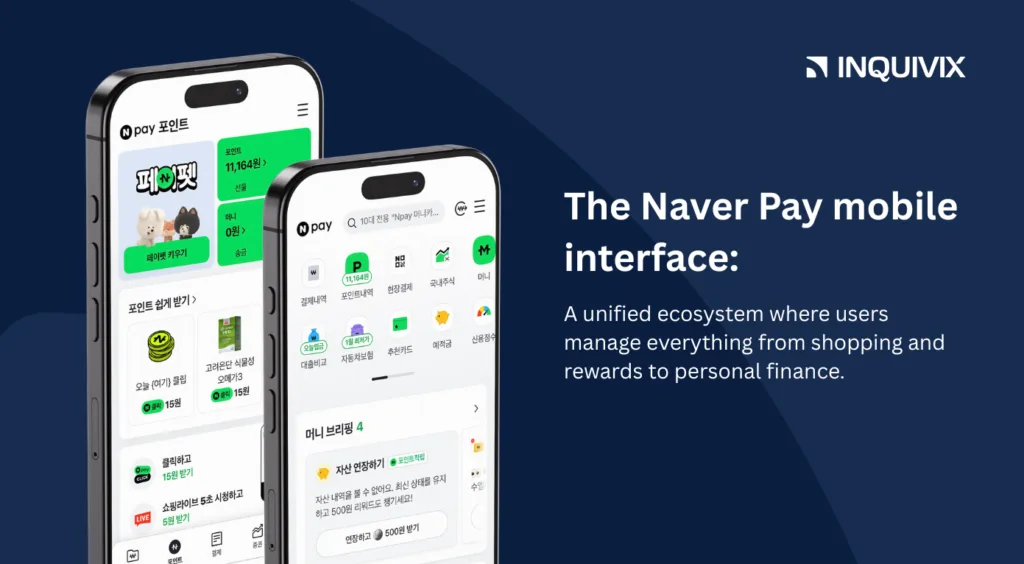
If search engines are the doorway to e-commerce, Naver Pay is the master key for the South Korean market. As the payment arm of Naver, which is the country’s most popular search portal, Naver Pay has evolved into a dominant financial force with over 30 million active users. This makes Naver Pay one of the most important Korean mobile payment methods for brands selling to South Korea online.
The Power of the Naver Shopping Ecosystem
The true strength of Naver Pay lies in its seamless connection to Naver Shopping. Unlike global markets where shoppers jump from Google to an independent website, many Koreans start and end their journey within the Naver ecosystem, shaping local payment preferences in South Korea.
- Search-to-Purchase Bridge: When a user searches for a product on Naver, they see an icon next to verified listings. This icon acts as a signal of quality and security.
- Zero-Friction Checkout: Because users’ payment details and shipping addresses are already stored in their Naver account, they can complete a purchase on a foreign site without ever reaching for their wallet. This “one-click” experience is essential for reducing cart abandonment.
The “Points” Strategy: Driving Customer Loyalty
One of the most powerful reasons Koreans prefer Naver Pay is its aggressive reward system. Naver Pay is famous for its Naver Points, which function almost like a local digital currency.
- High Cashback Rates: Shoppers can earn up to 2.5% (or more) back in points on every transaction. For a consumer, choosing a store that offers Naver Pay means they are effectively getting a discount on their next purchase.
- Naver Plus Membership: Millions of Koreans subscribe to “Naver Plus,” a premium service that boosts these rewards even further. These high-value shoppers actively seek out stores that accept Naver Pay to maximize their point accumulation.
Why Foreign Brands Need Naver Pay in 2026
For a foreign company, Naver Pay is more than just a payment button; it is one of the most trusted South Korea e-commerce payment methods for reducing friction in cross-border checkout.
- Skip Identity Hurdles: Standard credit card checkouts often require complex mobile phone verification (Bon-in In-jeung). Naver Pay handles this authentication internally, allowing the user to pay with just a biometric scan or a 6-digit PIN.
- Trust by Association: By using Naver Pay, your brand inherits the trust of the Naver platform. This is vital for international sellers who may not yet have a strong reputation in Korea.
- Buy Now, Pay Later (BNPL): In 2025, Naver Pay expanded its “post-payment” services, allowing customers to defer payments. This has been shown to increase the “average order value,” as shoppers feel more comfortable making larger purchases.
Getting Started Without a Local Entity
A common misconception is that a physical office is needed in Seoul to offer Naver Pay. In reality, modern global payment gateways (PGs) now allow international merchants to integrate Naver Pay, one of Korea’s most popular local payment methods, into their existing platforms. This allows brands to settle funds in their home currency (such as USD or EUR) while giving Korean customers the “local” experience they demand.
By placing Naver Pay at the center of your payment strategy, brands aren’t just offering convenience but participating in the most influential shopping habit in South Korea.
Mastering Kakao Pay for Social Commerce in South Korea
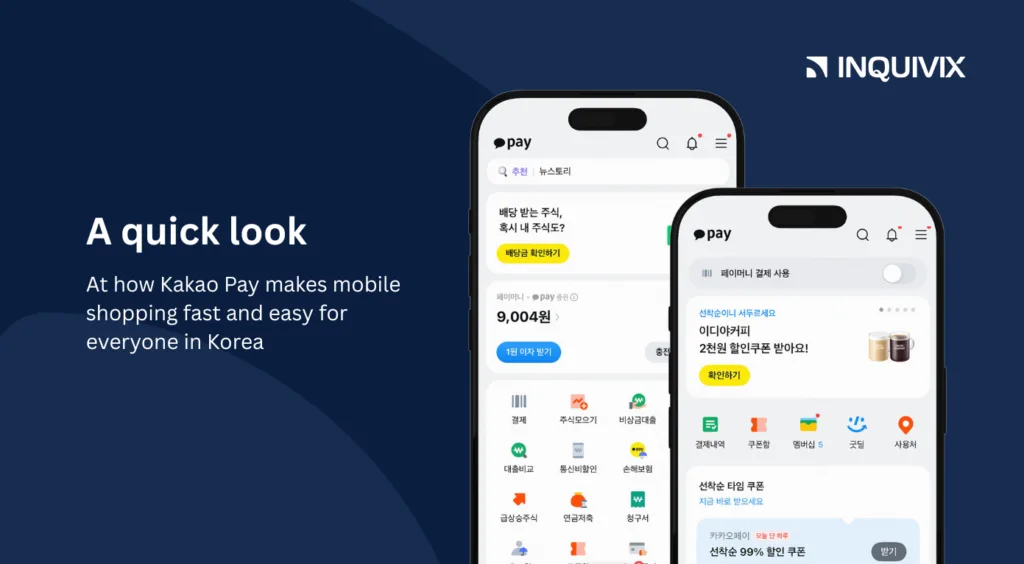
While Naver Pay owns the search-driven market, Kakao Pay is the undisputed leader of social commerce. Integrated directly into KakaoTalk, the messaging app used by over 94% of South Koreans, Kakao Pay transforms a simple chat conversation into a direct sales channel. For foreign e-commerce brands, Kakao Pay is a gateway to the most engaged mobile audience in the country.
The “Social Shopping” Phenomenon
In South Korea, shopping is frequently a social activity, which is why social commerce and mobile payments like Kakao Pay play such a central role in everyday purchasing behavior.
- Frictionless “Gifting” Culture: One of the most powerful features for foreign brands is KakaoTalk Gift. Koreans frequently send digital gift vouchers or physical products to friends for birthdays, holidays, or simple thank-yous. Brands that accept Kakao Pay can participate in this multi-billion-dollar “Gifting” economy, where the barrier to purchase is incredibly low.
- The “BizBoard” Connection: You have likely seen small banner ads at the top of your chat list if you use KakaoTalk. These are Kakao BizBoards. When a user clicks one of these ads, they can be taken to a product page where they pay instantly with Kakao Pay. This “one-tap” journey from ad to purchase is why social commerce conversion rates in Korea are among the highest in the world.
Why Global Brands Choose Kakao Pay
For an international merchant, Kakao Pay solves the problem of “mobile friction,” especially for foreign e-commerce brands entering the Korean market. If your website is not optimized for the specific ways Koreans use their phones, you will lose sales. Kakao Pay fixes this by providing:
- Biometric Security: Instead of typing in credit card numbers or navigating complex “3D Secure” windows, users authorize payments with a fingerprint or facial scan. This satisfies the gold standard of the Korean consumer, who values speed above all else.
- Multilingual Support (Global Home): As of 2025, Kakao Pay has launched “Global Home,” an interface specifically designed for non-Korean speakers and international contexts. This makes the payment process more intuitive for a global audience, reducing the “foreign” feel of the transaction.
- Omnichannel Reach: Kakao Pay isn’t just for your website. If you eventually open a pop-up shop or a physical retail space in Korea, Kakao Pay’s QR code system allows you to use the same payment partner for both online and offline sales.
Strategic Advantage: Tapping into the 20-40 Demographics
Kakao Pay is particularly dominant among Gen Z and Millennials, who are the primary drivers of e-commerce growth for fashion, luxury, and beauty brands. These users don’t just use Kakao Pay for shopping; they use it to split bills with friends, pay for taxis, and manage their investments. By offering Kakao Pay, your brand becomes part of their daily financial routine, strengthening trust in your mobile payment experience in Korea.
Integration Made Simple
Much like Naver Pay, you do not need to be a Korean corporation to start accepting Kakao Pay as a local Korean mobile payment method. By partnering with a Global Payment Gateway (PG), you can add a Kakao Pay button to your checkout page in a matter of days. This setup allows you to receive payments in your preferred currency while your customers enjoy the familiarity and ease of their favorite social wallet.
By mastering Kakao Pay, your brand moves beyond being just another website on the internet. You become a participant in the social lives of millions of Korean consumers, making your products as easy to buy as sending a text message.
Understanding Korean Checkout Preferences
Offering the right payment method is only half of the battle. To truly thrive in the South Korean market, foreign brands must understand the unique psychology behind Korean checkout preferences and mobile payment behavior. In a country where 75% of online purchases are made via mobile devices, the checkout experience is judged on three pillars: speed, security, and rewards.
The “30-Second Rule” and Simple Payments
The Korean concept of “Palli-Palli” (hurry-hurry) extends directly to checkout behavior in South Korea, where speed is the primary driver of conversion. If a checkout process takes more than 30 seconds or requires multiple page reloads, abandonment rates skyrocket. This has led to the total dominance of Simple Payments (Ganpyeon Gyeolje).
- One-Tap Authorization: Korean shoppers expect to confirm a purchase using only a 6-digit PIN, a fingerprint, or facial recognition.
- The Death of Form-Filling: Manually entering a 16-digit card number, expiration date, and CVV is considered an outdated and frustrating experience.
- Guest Checkout as a Priority: While data collection is important, forcing a user to create a full account before their first purchase is a major deterrent. Providing a “Guest Checkout” option that integrates with Naver or Kakao credentials is the gold standard for 2026.
Identity Verification: Navigating “Bon-in In-jeung”
One of the biggest hurdles for foreign e-commerce sites is the strict Korean requirement for identity verification, known as Bon-in In-jeung. This process usually requires a Korean phone number and a resident registration number. This requirement is one of the most common friction points for foreign e-commerce brands selling to South Korea.
- The Barrier: Most foreign-hosted sites cannot easily process this verification, leading to failed transactions for local customers.
- The Solution: By using a local-friendly payment gateway, foreign brands can bypass the need for traditional mobile authentication. Systems like Naver Pay and Kakao Pay handle the identity verification on their end, allowing the customer to shop on your site without being blocked by local security protocols.
The Psychology of Installments and Points
To maximize conversions and AOV with Korean consumers, e-commerce brands must offer interest-free installments (Halbu) for purchases over 50,000 KRW, typically across 2–12 month payment plans.
Equally important is the “Reward Loop.” Explicitly displaying earned Naver Points or Kakao Points at checkout is a proven psychological trigger that significantly increases conversion rates.
Trust Indicators and Local UX
For a foreign brand, building trust at the final step requires aligning with local Korean checkout UX expectations.
- Local Logos: Seeing the familiar green Naver Pay or yellow Kakao Pay icons immediately lowers the perceived risk of buying from an international seller.
- Clear Shipping & Duty Info: One of the main reasons Koreans hesitate to buy from foreign brands is “hidden costs.” A checkout that clearly breaks down the price in KRW (Won) and explains the customs duties (DDP – Delivered Duty Paid) prevents “sticker shock” and builds long-term trust.
By aligning your checkout flow with these local preferences, you remove the “foreign” friction from your store, making the purchase as easy and comfortable as buying from a local neighborhood shop.
How Foreign Brands Can Practically Integrate Korean Payment Systems
For many international businesses, the biggest concern when entering the South Korean market is whether they need to open a local office or hold a Korean bank account to offer local payment methods. The good news is that in 2025, you can provide a “local” experience for your customers while maintaining your business entirely from abroad.
The most effective way for foreign brands to integrate South Korean payment methods like Naver Pay and Kakao Pay is through a Global Payment Gateway (PG). A PG acts as the bridge between your website and the complex financial systems in South Korea.
The Three-Step Integration Process
- Use a Global Payment Gateway: Partner with a global payment gateway (such as KOMOJU, Eximbay, or Adyen) to accept Korean payment methods like Naver Pay and Kakao Pay without needing a local entity. You can sell in KRW and receive payouts in your home currency.
- Add Simple Payment Buttons Early: Integrate Naver Pay and Kakao Pay using plugins for platforms like Shopify or WooCommerce, and display the payment buttons early in checkout to match Korean shopper expectations.
- Optimize for Mobile-First Checkout: Ensure a mobile-first payment flow where users confirm payments via the Naver or Kakao app (PIN or biometric) and return instantly to the confirmation page.
Why a Local Growth Partner Matters
While the technical integration is straightforward, the strategic integration is where most brands struggle. Simply having the buttons isn’t enough; you need to drive the right traffic to them. This is where a partner like Inquivix adds vast value.
- Marketing Integration: A local growth partner ensures that payment integration is supported by high-intent traffic. Through specialized Naver SEO and Kakao Marketing strategies, discovery channels are aligned with preferred payment methods, increasing the likelihood of checkout completion.
- Cultural Content Strategy: Global messaging is adapted to local Korean shopping psychology. From Naver Blog-style reviews to Kakao BizBoard ads, each touchpoint is designed to feel native and trustworthy to local consumers.
- Performance-Driven Optimization: The South Korean e-commerce market moves quickly. Local insights help identify which channels and campaigns drive the highest payment completion rates, enabling continuous optimization across Naver Shopping and Kakao channels.
By combining the right technical tools with a localized growth strategy, foreign e-commerce brands can remove operational barriers and position themselves as trusted, convenient options for South Korean shoppers.
Using Naver SEO and Kakao Marketing to Drive E-commerce Sales in South Korea
Having Naver Pay and Kakao Pay at your checkout is like having a high-speed engine in a car; it only works if you have the fuel to move it. For foreign e-commerce brands, that “fuel” is a targeted local marketing strategy. Simply having a website is not enough; you must be discoverable within the specific platforms where Koreans shop and search.
This is where Inquivix bridges the gap between your store and the Korean consumer through specialized Naver SEO and Kakao Marketing services.
The Naver SEO Engine: Being Found Where It Matters
In the West, SEO means Google. In South Korea, SEO means Naver, especially for foreign brands selling online in Korea. Naver does not just rank websites; it prioritizes its own content, such as Naver Blogs, Cafés (community forums), and Knowledge iN (Q&A).
- Visibility Beyond the Website: We optimize your brand so that when a user searches for your product, they find high-ranking blog reviews and community discussions that build trust before they even reach your site.
- Trust Through Content: A user who reads a detailed review on a Naver Blog is 3x more likely to click through to your store and use Naver Pay to complete the purchase.
- Keyword Strategy: We identify the specific high-intent Korean keywords that your target audience is using, ensuring your brand appears at the top of the search results.
Maximizing Conversions with Naver SmartStore Optimization
For foreign brands that want to enter the market quickly without building a complex standalone website, the Naver SmartStore is the ultimate solution. It is essentially a “Shopify for the Naver ecosystem,” and because it is owned by Naver, it comes with built-in trust and automatic integration with Naver Pay, one of the most trusted e-commerce payment methods in South Korea.
However, simply opening a store isn’t enough to drive sales. Inquivix specializes in Naver SmartStore Optimization to ensure your products don’t just exist.
- Algorithmic Product Listing: Much like Amazon SEO, Naver has its own ranking factors for products. We optimize your titles, descriptions, and backend tags with high-traffic Korean keywords so your items appear at the top of the Naver Shopping tab.
- Trust-Building through Reviews: In Korea, verified user reviews are the #1 factor for conversion. We provide strategies to encourage organic reviews and manage customer feedback, ensuring your store maintains the high rating required to stay competitive.
- Mobile-First Design: We customize your SmartStore layout to ensure it looks and functions perfectly for mobile shoppers, who represent the majority of e-commerce traffic in Korea.
- Data-Driven Insights: We use SmartStore Analytics to track where your customers are coming from and which products are performing best, allowing us to continuously refine your marketing spend.
By optimizing your SmartStore, your business is building a high-performance sales machine that is fully integrated into the most powerful search engine in South Korea.
The Kakao Marketing Strategy: Social Engagement to Direct Sales
If Naver is where users research, Kakao is where they interact. A successful Kakao Marketing strategy turns a casual follower into a loyal customer.
- KakaoTalk Business Channels: We help you set up and manage an official brand channel. This allows you to send push notifications and personalized coupons directly to your customers’ chat windows.
- Instant Conversion: By combining Kakao Ads (BizBoard) with your messaging strategy, we create a direct path to your checkout. A user sees an ad, chats with your automated bot for details, and pays instantly via Kakao Pay, all without leaving the Kakao ecosystem, matching local checkout preferences in South Korea.
Building Brand Fandom: Through targeted social campaigns, we help you build a community of “Plus Friends” who receive regular updates about your new collections and exclusive offers.
Making South Korea Your Next High-Growth Market
The South Korean e-commerce market is highly rewarding but requires a “local-first” mindset. Integrating Naver Pay and Kakao Pay removes the technical barriers to purchase, while mastering Naver SEO and Kakao Marketing ensures a steady flow of high-intent traffic to your store.
If you are ready to stop being an outsider and start competing like a local brand, the path to success starts with a localized strategy.