Kakao Games: Exploring Korea’s Mobile Gaming Giant
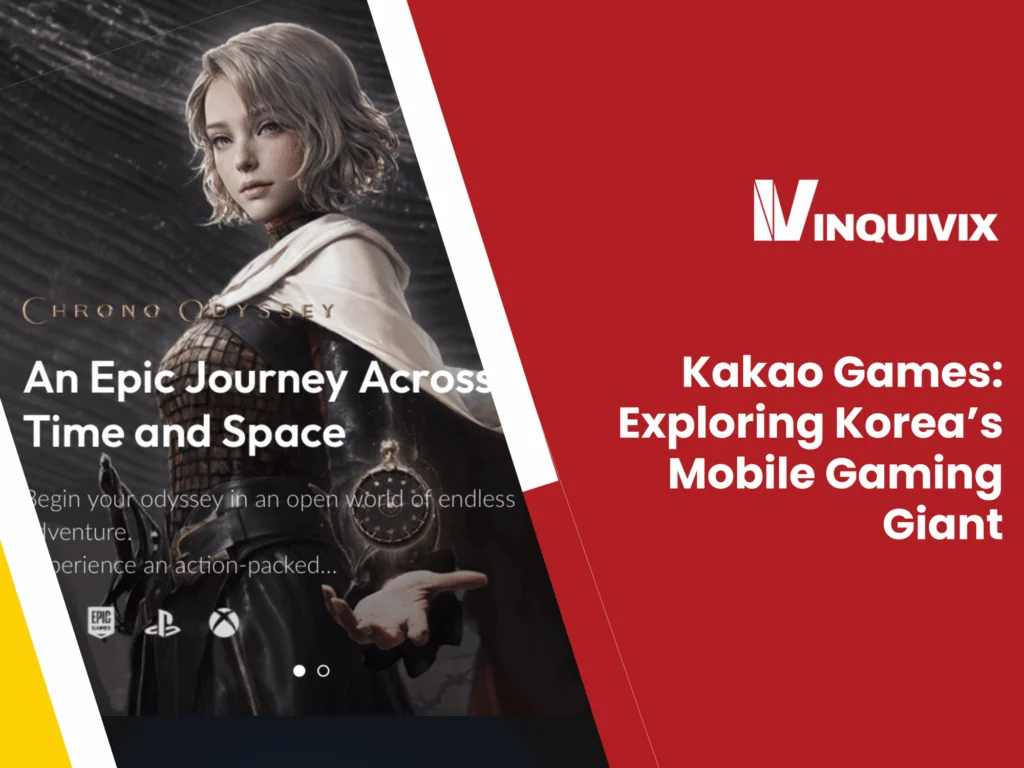
Kakao Games has established itself as one of the most influential forces in South Korea’s booming gaming industry, shaping how millions of players experience mobile and online entertainment. As a subsidiary of the Kakao Corporation, best known for its dominant messaging platform KakaoTalk, Kakao Games leverages Korea’s digital ecosystem to deliver engaging mobile games, online titles, and cross-platform experiences. With a strong foothold in publishing, development, and strategic partnerships, the company has become a gateway for both domestic and international game studios seeking to reach Korean audiences. For businesses and developers, understanding Kakao Games is key to navigating Korea’s competitive gaming landscape.
The Rise of Kakao Games in Korea
The success story of Kakao Games is closely tied to the evolution of South Korea’s digital and mobile ecosystem. Originally launched as a gaming platform within the broader Kakao Corporation, Kakao Gaming Korea quickly leveraged the massive user base of KakaoTalk to distribute and promote mobile games. With millions of daily active users already engaged on the messaging app, Kakao Entertainment was able to position itself as a natural hub for social gaming, making it easy for players to download, share, and play games directly through their favorite communication channel.
Origins and History of Kakao’s Gaming Division
Kakao entered the gaming space in the early 2010s, a time when Korea’s mobile gaming market was beginning to explode. The introduction of KakaoTalk-linked mobile games enabled developers to leverage built-in social features, including friend lists, chat functions, and virtual gift sharing. This integration was a breakthrough; players were no longer just competing against anonymous users but against friends, family, and colleagues already connected through KakaoTalk.
Key Milestones and Growth Timeline
From its early success with hit mobile titles like Anipang and Dragon Flight, Kakao Games rapidly gained recognition as a publisher and distributor. Over time, it evolved into a full-fledged gaming company, expanding beyond mobile into PC and online gaming. A significant milestone was reached when Kakao Games Corporation was officially established in 2016, thereby giving the division a stronger corporate identity. Its successful IPO in 2020 further highlighted the company’s credibility and growth potential in the global gaming market.
Position in Korea’s Competitive Gaming Landscape
South Korea is home to some of the world’s most competitive game developers and publishers, including Nexon, Netmarble, and NCSoft. Within this environment, Kakao Games carved out a distinct position by focusing on the mobile-first gaming market and leveraging the power of Kakao’s ecosystem. By seamlessly linking its gaming offerings with KakaoTalk, KakaoStory, and other Kakao platforms, the company created a powerful distribution channel that few rivals could replicate. Today, Kakao Games stands as a dominant player in the Korean gaming sector, recognized for its innovative approach to social gaming and its ability to foster engagement on a large scale.
Kakao Games’ Core Business Areas
As a leading force in South Korea’s gaming industry, Kakao Games has diversified its operations to cover multiple segments of the gaming market. While its foundation was built on mobile gaming, the company has steadily expanded into PC and online titles, as well as publishing partnerships that connect global developers with Korean audiences. These core business areas reflect Kakao Games’ strategy of combining entertainment with social connectivity, ensuring that its gaming services remain relevant to a wide range of players.
Mobile Games
Mobile gaming remains the heart of Kakao Games’ business. Leveraging the vast user base of KakaoTalk, the company seamlessly integrates gaming with social communication, allowing players to invite friends, share achievements, and compete within their existing social circles. Popular titles such as Anipang in the early years demonstrated how viral mobile gaming could be when paired with Kakao’s platform. Over the years, Kakao Mobile Games has continued to publish and promote a wide variety of mobile titles, ranging from casual puzzle games to more advanced RPGs, capturing diverse demographics across South Korea.
PC and Online Games
While mobile games dominate Kakao’s portfolio, the company has also invested heavily in PC and online gaming. By publishing titles from domestic and international developers, Kakao Games has positioned itself as a bridge between Korean gamers and the global gaming community. Successful releases in the MMORPG and multiplayer categories have expanded the company’s reputation beyond mobile-first entertainment, proving its ability to operate in competitive online segments. This diversification not only broadens its market reach but also ensures that Kakao Games is not overly dependent on mobile gaming trends alone.
Publishing and Partnerships
A defining feature of Kakao Games’ strategy is its role as a publisher and partner for global studios looking to enter the Korean market. South Korea is one of the world’s most lucrative and demanding gaming markets, and Kakao’s distribution network offers international developers a valuable entry point. By leveraging its existing ecosystem, brand recognition, and marketing channels, Kakao Games provides publishing support that helps both indie and large-scale developers gain traction among Korean players. Partnerships with major global gaming companies also highlight Kakao’s ambitions to expand its influence beyond Korea, positioning it as a competitive force in the worldwide gaming industry.
Popular Kakao Mobile Games
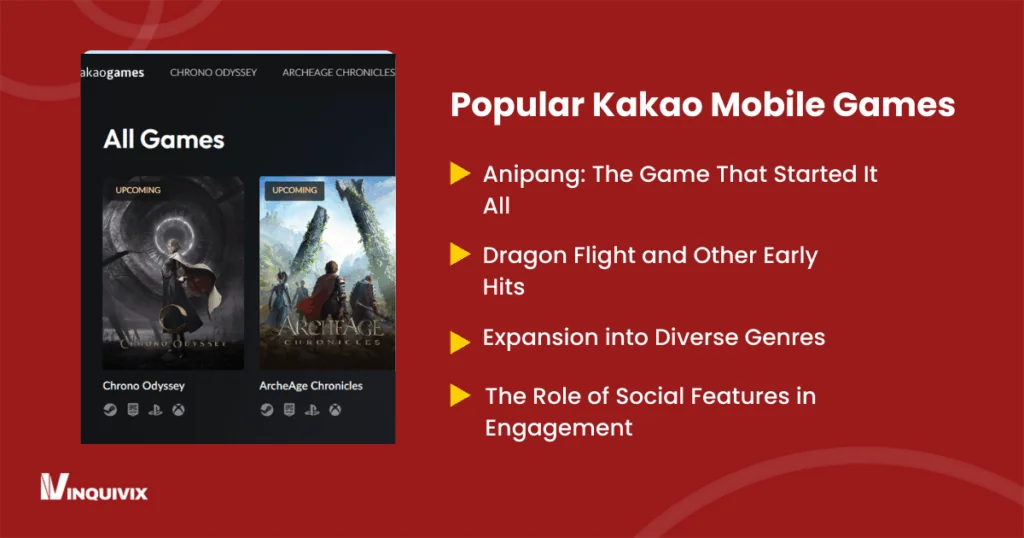
Mobile gaming has been at the center of Kakao Games’ success, helping the company rise quickly within South Korea’s competitive digital entertainment landscape. By integrating games directly into the KakaoTalk platform, Kakao created a seamless ecosystem where social interaction and gaming naturally come together. This model allowed mobile games to spread virally, driven by friend recommendations, group challenges, and real-time communication.
Anipang: The Game That Started It All
One of the earliest and most influential successes for Kakao Games was Anipang, a casual puzzle game released in 2012. The title became a nationwide sensation, thanks to its simple mechanics and integration with KakaoTalk’s friend network. Players could challenge their contacts directly, share high scores, and send in-game gifts, making the experience social rather than solitary. Anipang marked the beginning of Kakao’s dominance in the Korean mobile gaming space and set the tone for future titles.
Dragon Flight and Other Early Hits
Following the momentum of Anipang, Kakao Games introduced other titles such as Dragon Flight, which combined casual gameplay with addictive progression systems. These early games became cultural phenomena, frequently topping download charts and solidifying KakaoTalk’s role as the go-to platform for mobile gaming in Korea. The formula of “social plus simple” proved to be a winning combination, attracting millions of users across age groups.
Expansion into Diverse Genres
As the Korean gaming audience matured, Kakao Games expanded its mobile offerings beyond simple puzzle and arcade-style games. The company began publishing role-playing games (RPGs), strategy games, and multiplayer titles to cater to a broader demographic. By doing so, Kakao not only retained casual gamers but also tapped into the country’s highly engaged RPG community, where long playtimes and deep storytelling attract dedicated players.
The Role of Social Features in Engagement
What truly differentiates Kakao mobile games from other publishers is the built-in social layer. Players can compete with friends, share updates in group chats, and use Kakao Friends characters as in-game avatars or rewards. This fosters a sense of community and loyalty that keeps players coming back. For businesses and developers, this integration shows how Kakao Games leverages Korea’s social culture to enhance user engagement and retention.
Kakao Entertainment and Gaming Integration
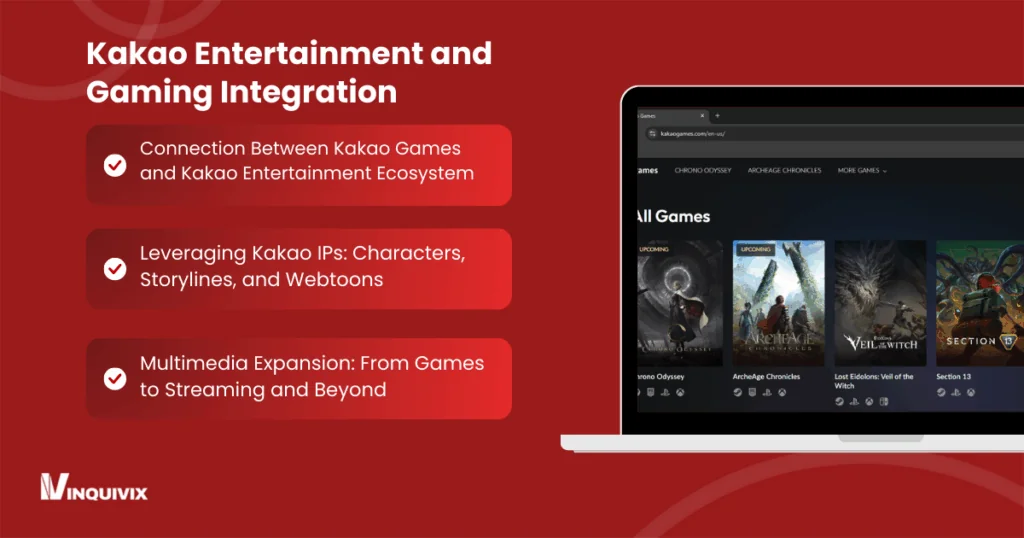
One of the unique strengths of Kakao Games lies in its close relationship with the broader Kakao ecosystem, particularly Kakao Entertainment. Unlike many standalone game publishers, Kakao is not only a gaming company but also a digital lifestyle platform that spans messaging, media, music, webtoons, and character merchandising. By aligning gaming with entertainment, Kakao creates cross-industry opportunities that strengthen brand loyalty and deepen user engagement.
Connection Between Kakao Games and Kakao Entertainment Ecosystem
Kakao Games does not operate in isolation. It benefits from Kakao’s vast entertainment network, which includes Kakao Entertainment’s music, video, and content platforms. This allows games to be promoted across multiple channels, from music streaming apps to Kakao’s popular social platforms. For example, collaborations between Kakao’s characters, webtoons, or dramas can be integrated into game storylines or special events, giving players a sense of cultural familiarity.
Leveraging Kakao IPs: Characters, Storylines, and Webtoons
The Kakao Friends characters, beloved mascots such as Ryan, Apeach, and Muzi, have become cultural icons in Korea. These characters often appear in Kakao mobile games, not just as mascots but as interactive elements that players can collect, customize, or use in gameplay. Similarly, Kakao Webtoons and story-based content provide rich intellectual property (IP) that can inspire narrative-driven games. This synergy enables Kakao Games to differentiate its portfolio by offering experiences that transcend generic gameplay, seamlessly blending entertainment with emotional connection.
Multimedia Expansion: From Games to Streaming and Beyond
Kakao Entertainment’s reach into music, video, and live streaming also plays a role in enhancing gaming engagement. Games published by Kakao can be promoted through Kakao’s streaming platforms, while artists and entertainers managed by Kakao Entertainment sometimes participate in promotional campaigns. This blurring of lines between gaming and entertainment reflects a broader trend in Korea, where gaming is seen not only as play but also as part of pop culture. By tapping into this integration, Kakao Games positions itself at the intersection of media, culture, and technology.
Business Strategies Behind Kakao Games’ Success
The rise of Kakao Games in South Korea’s competitive gaming industry did not happen by chance. Its success is the result of carefully planned strategies that leverage the strengths of the Kakao ecosystem, adapt to consumer behavior, and form partnerships with global developers. By focusing on mobile-first innovation, cultivating relationships with leading studios, and investing in community-driven experiences, Kakao Games has established itself as a dominant force in both domestic and international markets.
Focus on Mobile-First Development
South Korea has one of the highest smartphone penetration rates in the world, and mobile gaming dominates the entertainment landscape. Recognizing this early, Kakao Games positioned itself as a mobile-first publisher and developer, prioritizing accessibility and integration with KakaoTalk. By making it easy for users to download, play, and share games through a platform they already used daily, Kakao Games lowered barriers to entry and fueled viral growth. This mobile-first mindset remains at the heart of its strategy, ensuring that Kakao stays aligned with consumer habits.
Strategic Partnerships with Global Developers
Another critical strategy behind Kakao Games’ success is its emphasis on partnerships with domestic and international studios. By acting as both a publisher and distributor, Kakao Games brings foreign titles into Korea while also exporting Korean games abroad. Collaborations with leading developers allow the company to offer a diverse portfolio that spans casual games, role-playing titles, and large-scale MMORPGs. These partnerships not only expand Kakao’s reach but also reinforce its position as a trusted gateway into the Korean gaming market for foreign companies.
Investment in eSports and Online Communities
Korea is a global hub for eSports and competitive gaming, and Kakao Games has tapped into this culture by supporting online communities and competitive play. Through events, tournaments, and partnerships with eSports organizations, Kakao strengthens player loyalty and creates long-term engagement. Beyond competition, Kakao also invests in fostering community-driven experiences within its games, encouraging social interactions and collaborations. This focus on community and competition reflects the social DNA of Kakao’s platforms and adds depth to its gaming strategy.
Opportunities for Global Brands and Developers

The growth of Kakao Games has not only shaped the Korean gaming industry but also created valuable entry points for global brands and developers. South Korea is one of the world’s most lucrative gaming markets, renowned for its tech-savvy audience, high smartphone adoption rates, and robust gaming culture. For international companies, Kakao’s established ecosystem provides a direct pathway to tap into this dynamic market. By leveraging Kakao Games’ publishing network, entertainment integrations, and social platforms, foreign brands can access audiences that are otherwise difficult to reach.
Why Foreign Companies Should Care About Kakao Games
South Korea ranks among the top gaming markets worldwide, with billions in annual revenue generated from mobile and online titles. Kakao Games, as a leading publisher and distributor, offers global developers immediate exposure to millions of Korean players. Unlike other platforms that require building an audience from scratch, Kakao offers a built-in distribution channel through KakaoTalk, which is used by nearly every Korean person on a daily basis. For foreign companies, this means lower barriers to market entry and the ability to connect with users in a familiar, trusted environment.
Entry Points for International Partnerships
Kakao Games regularly partners with international developers to publish and localize games for the Korean market. These partnerships allow foreign studios to focus on game development while Kakao handles localization, distribution, and marketing. The company’s expertise in adapting content for Korean players, through language, cultural nuances, or social integrations, helps global games perform successfully in Korea. Additionally, Kakao’s established payment systems, advertising channels, and entertainment collaborations provide a comprehensive infrastructure for international partners.
Potential for Marketing and Cross-Brand Collaborations
Beyond game publishing, global brands have opportunities to collaborate with Kakao Games through in-game marketing, character licensing, and cross-brand promotions. Kakao Friends characters, for example, have strong cultural resonance in Korea and can be integrated into gaming experiences or co-branded campaigns. For lifestyle, fashion, and entertainment brands, partnerships with Kakao Games open doors to new, younger audiences that spend significant time engaging with digital entertainment. Such collaborations not only enhance brand visibility but also build credibility in one of the world’s most trend-driven markets.
Challenges and Competition in the Gaming Market
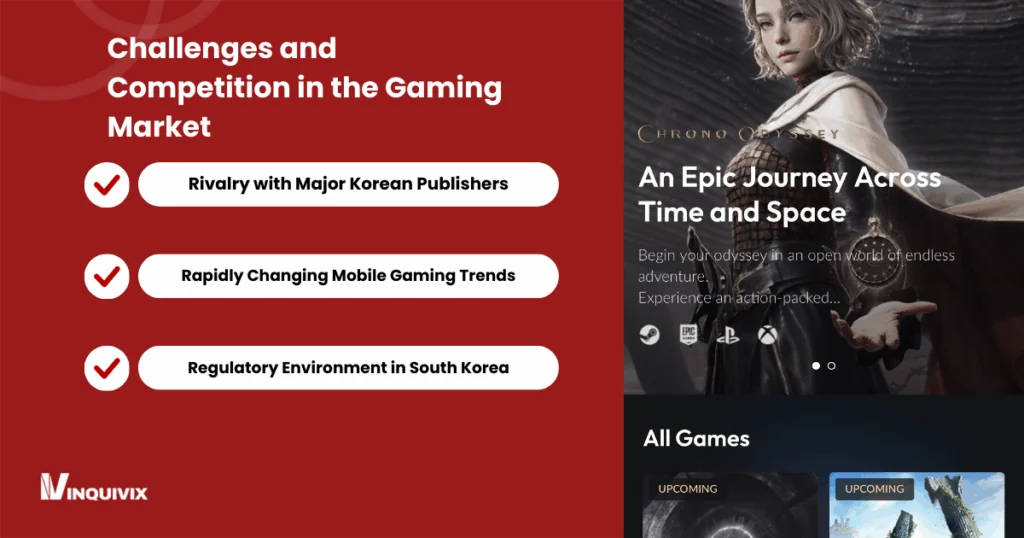
Despite its strong position in Korea’s entertainment landscape, Kakao Games operates in one of the most competitive and fast-changing industries in the world. The Korean gaming market is not only highly lucrative but also saturated with influential players, evolving consumer expectations, and strict regulatory oversight. To maintain its growth, Kakao must navigate these challenges while continuing to innovate and diversify its portfolio.
Rivalry with Major Korean Publishers
Kakao Games faces fierce competition from established giants such as Nexon, Netmarble, and NCSoft, each with decades of experience and a strong base of blockbuster franchises. These companies dominate segments like MMORPGs, large-scale PC gaming, and global publishing. While Kakao has built its strength on mobile-first strategies, the competition has also expanded into the mobile sector, intensifying the battle for user attention and market share.
Rapidly Changing Mobile Gaming Trends
The Korean audience is known for being both highly engaged and highly selective. Mobile gaming trends shift quickly, with new titles often rising and falling in popularity within a short span of time. For Kakao Games, this creates pressure to constantly deliver fresh content, maintain long-term engagement, and invest in new genres to avoid overreliance on a few hit titles. The need to balance viral success with sustainable growth remains one of its most significant strategic challenges.
Regulatory Environment in South Korea
Strict government regulations also shape South Korea’s gaming industry. Issues such as “shutdown laws” for minors, loot box transparency requirements, and broader digital policy changes directly affect how companies like Kakao Games operate. Regulatory scrutiny adds complexity to monetization models, requiring publishers to adapt quickly to legal changes. Additionally, as Kakao Games expands globally, it must comply with diverse regulations in different regions, adding another layer of operational difficulty.
Future Outlook for Kakao Games
Looking ahead, Kakao Games is poised to remain a significant player in both Korea’s domestic gaming market and the broader global industry. With a foundation built on mobile-first innovation and integration with the broader Kakao ecosystem, the company is well-positioned to adapt to the industry’s rapid evolution. However, success will depend on how effectively it embraces emerging technologies, expands internationally, and continues to resonate with an audience that demands fresh, immersive experiences.
Emerging Technologies: AI, VR, and Metaverse Integration
The future of gaming is increasingly tied to technological innovation, and Kakao Games has opportunities to leverage trends such as artificial intelligence, virtual reality (VR), and metaverse-style platforms. AI-driven personalization could enhance gameplay by tailoring challenges and rewards to individual users, while VR integration opens doors for immersive entertainment. Kakao’s strong position in social connectivity makes it a natural fit for metaverse initiatives, where communities and social interactions are at the core. If pursued strategically, these technologies could strengthen Kakao Games’ relevance for the next generation of players.
Expansion into Global Gaming Markets
While Kakao Games is firmly established in South Korea, its long-term growth depends on expanding into international markets. By partnering with foreign studios and exporting Korean-developed titles, the company can reach new audiences in Asia, North America, and Europe. Global expansion also reduces dependency on Korea’s highly competitive and regulated market. With its proven ability to act as both a publisher and distributor, Kakao Games is well-positioned to bridge the Eastern and Western gaming communities.
Sustaining Relevance in Korea’s Mobile Gaming Scene
At home, Kakao Games must continue to innovate to sustain its position in Korea’s fast-moving mobile gaming environment. This means investing in new genres, supporting live-service models, and leveraging its Kakao Entertainment IPs, such as webtoons and Kakao Friends characters, to maintain cultural resonance. By continuously refreshing its portfolio and fostering long-term communities, Kakao can strike a balance between short-term viral hits and sustainable engagement.
How Inquivix Helps Brands Enter Korea’s Gaming Market

South Korea’s gaming industry is one of the most dynamic in the world, and Kakao Games plays a pivotal role in shaping player behavior, mobile game adoption, and entertainment integration. For international brands and developers, this presents a tremendous opportunity, but breaking into Korea’s gaming ecosystem requires local expertise, cultural understanding, and tailored marketing strategies.
That’s where Inquivix comes in. As a leading digital marketing agency specializing in the Korean market, we help global businesses navigate Korea’s gaming and entertainment landscape with precision. From market entry strategies and localized campaigns to partnership building with platforms like Kakao Games, our team ensures that your brand connects with the right audience in the right way.
Suppose you’re a game developer looking to publish in Korea, a brand exploring sponsorship opportunities, or an entertainment company seeking cross-industry collaborations. In that case, Inquivix provides the insights, tools, and execution strategies with our Kakao marketing expertise to make it happen.
Ready to unlock opportunities in Korea’s gaming market? Contact Inquivix today to create a winning strategy for your brand.