Kakao Zigzag: Fashion Shopping App Shaping Korea’s E-Commerce
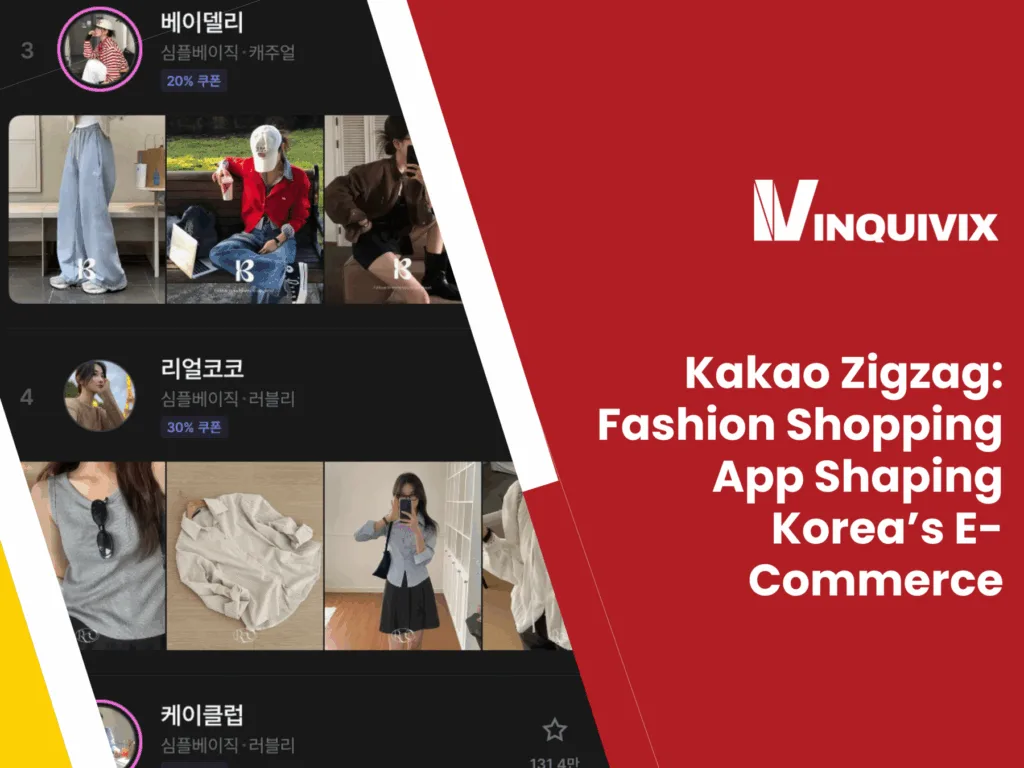
In Korea’s fast-paced digital marketplace, Kakao Zigzag has emerged as one of the most influential fashion shopping apps, transforming the way consumers discover and purchase clothing online. Originally launched as a standalone platform, Zigzag quickly gained traction among young shoppers due to its intuitive interface and extensive selection of trendy brands. After being acquired by Kakao, the app was seamlessly integrated into Korea’s most powerful digital ecosystem, combining social communication, payments, and e-commerce in one place. Today, Kakao Zigzag is not just a fashion app; it’s a driving force in shaping the future of Korea’s mobile shopping experience and a valuable channel for businesses entering the Korean market.
Overview of the Zigzag Shopping App
Korea’s e-commerce landscape is highly competitive, with consumers expecting speed, convenience, and personalization in every shopping experience. Among the many apps available, Kakao Zigzag has carved out a unique position as a go-to platform for fashion enthusiasts. Developed initially as an independent fashion shopping app, Zigzag quickly gained a loyal following thanks to its easy-to-use interface, curated collections, and focus on women’s apparel.
The app functions as a fashion aggregator, bringing together thousands of online boutiques and local brands in one seamless platform. Instead of browsing multiple websites, shoppers can explore diverse styles, compare options, and complete purchases all within Zigzag. This convenience has made it especially popular among younger generations who prefer mobile-first shopping experiences.
When Kakao acquired Zigzag, it wasn’t just an investment in e-commerce; it was a strategic move to expand its digital ecosystem. By integrating with KakaoTalk, Korea’s most widely used messaging app, Zigzag gained a massive edge in visibility and user engagement. Shoppers can now discover products through social interactions, receive personalized recommendations, and make quick purchases without leaving Kakao’s ecosystem.
With its growing influence, Zigzag Korea is more than just a shopping app; it represents a shift toward socially integrated, mobile-driven retail. For businesses and brands, this means access to a large and highly engaged audience that values both style and convenience.
Features of Kakao Zigzag That Drive Its Success
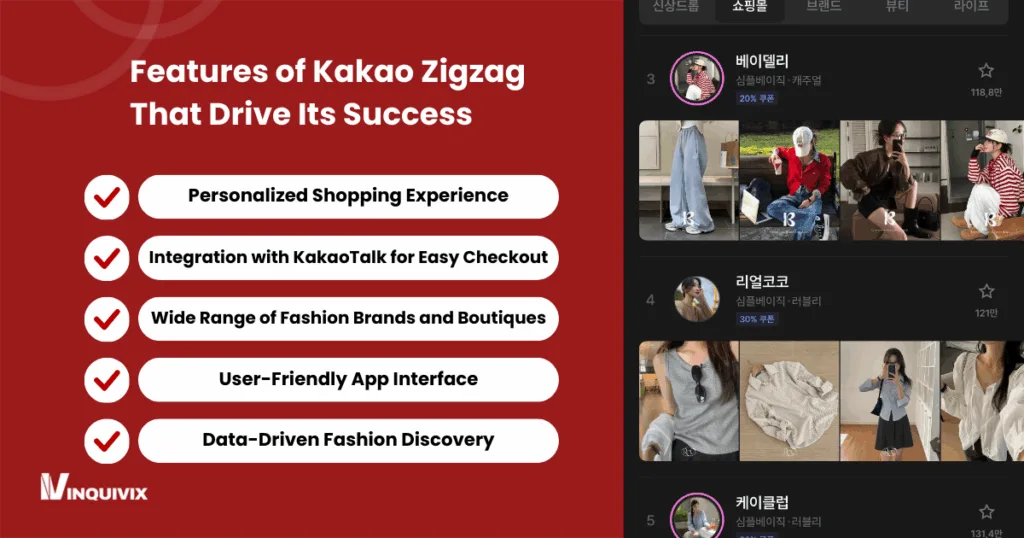
The success of Kakao Zigzag in Korea’s e-commerce market isn’t just about convenience; it’s about how the platform aligns with consumer behaviors and expectations. By blending fashion discovery with social integration, Zigzag has redefined mobile shopping for a new generation of digital-savvy users. Below are the standout features that have made this Kakao fashion app one of the leaders in Korea’s retail space.
Personalized Shopping Experience
Zigzag uses advanced algorithms to recommend items based on user preferences, browsing history, and purchase behavior. This personalization ensures that shoppers are consistently presented with fashion that suits their style, thereby reducing decision fatigue and increasing overall satisfaction. For younger consumers in Korea, who value individuality and tailored experiences, this feature has been a game-changer.
Integration with KakaoTalk for Easy Checkout
One of Zigzag’s most substantial advantages following its acquisition is its seamless integration with KakaoTalk. Shoppers can browse outfits on Zigzag and then complete purchases using KakaoPay without leaving the Kakao ecosystem. This frictionless process not only enhances user convenience but also increases trust, as Kakao’s payment system is already widely adopted in Korea.
Wide Range of Fashion Brands and Boutiques
Unlike single-brand apps, Zigzag Korea serves as a multi-brand hub. From small, independent boutiques to well-known fashion labels, users can explore thousands of styles within a single app. This diversity appeals to consumers who want variety, making Zigzag a one-stop destination for fashion shopping. It also provides smaller businesses and emerging designers with valuable exposure to a large audience.
User-Friendly App Interface
Korean consumers are accustomed to sleek, intuitive apps, and Zigzag delivers precisely that. The app’s layout emphasizes visual browsing, quick filters, and easy navigation, allowing users to find what they need in just a few clicks. Its mobile-first design caters to Korea’s highly connected population, where the majority of e-commerce transactions happen on smartphones.
Data-Driven Fashion Discovery
Beyond browsing, Zigzag leverages data insights to spotlight trending items and seasonal bestsellers. By surfacing products that are currently popular among its user base, the app creates a sense of urgency and social proof, which drives higher engagement and conversions.
Zigzag Korea in the E-Commerce Landscape
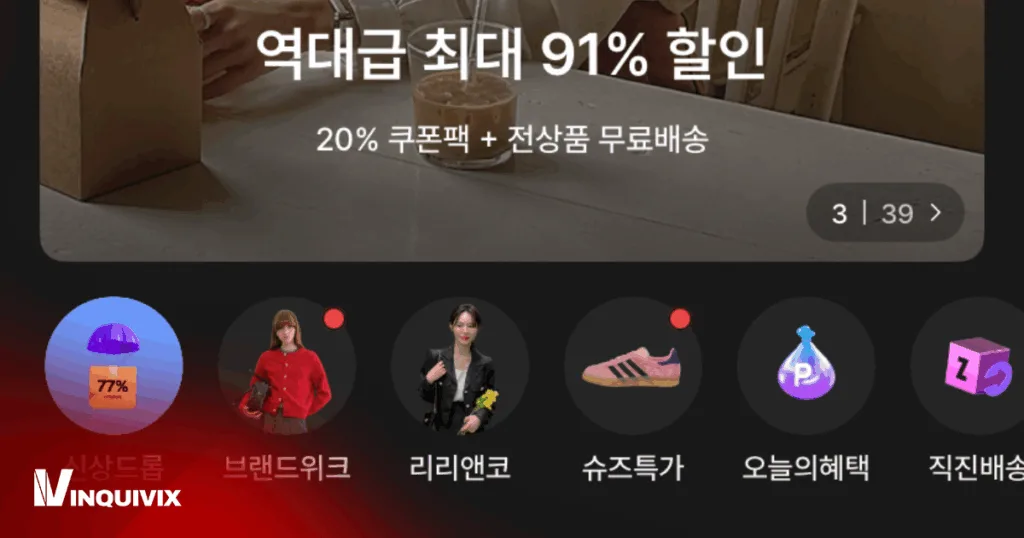
South Korea is one of the world’s most advanced e-commerce markets, where mobile shopping dominates and consumer expectations for speed, convenience, and personalization are exceptionally high. Within this environment, Kakao Zigzag has emerged as a key player, particularly in the fashion vertical. Its strong brand recognition and integration with Kakao’s ecosystem give it a unique position compared to other shopping platforms.
Unlike general e-commerce giants such as Coupang or Gmarket, Zigzag focuses exclusively on the fashion industry. This specialization allows the app to serve a highly engaged audience that values curated style recommendations and access to boutique-level variety. For fashion-conscious consumers, Zigzag is more than a shopping tool; it’s a discovery platform for the latest trends.
When compared with Musinsa, another leading fashion e-commerce platform in Korea, Zigzag’s edge lies in its integration with KakaoTalk and KakaoPay. While Musinsa thrives on building its brand-driven community, Zigzag benefits from Kakao’s vast user base and social-commerce potential. The ability to merge shopping, messaging, and payment into a single experience reflects a broader shift in Korea’s e-commerce toward socially connected shopping ecosystems.
The rise of Zigzag also reflects the increasing importance of mobile-first fashion retail in Korea. Shoppers want the convenience of exploring multiple brands without switching between platforms, and Zigzag’s aggregator model delivers precisely that. Its strong alignment with Korea’s digital habits has helped it stand out as one of the country’s top fashion shopping apps.
For businesses, especially small and mid-sized fashion brands, being featured on Zigzag means access to a vast, ready-to-buy audience. As Korea’s e-commerce sector continues to grow, Zigzag’s role as both a discovery engine for consumers and a growth channel for retailers makes it a significant force shaping the future of online fashion retail in the country.
Benefits for Businesses Using Kakao Zigzag
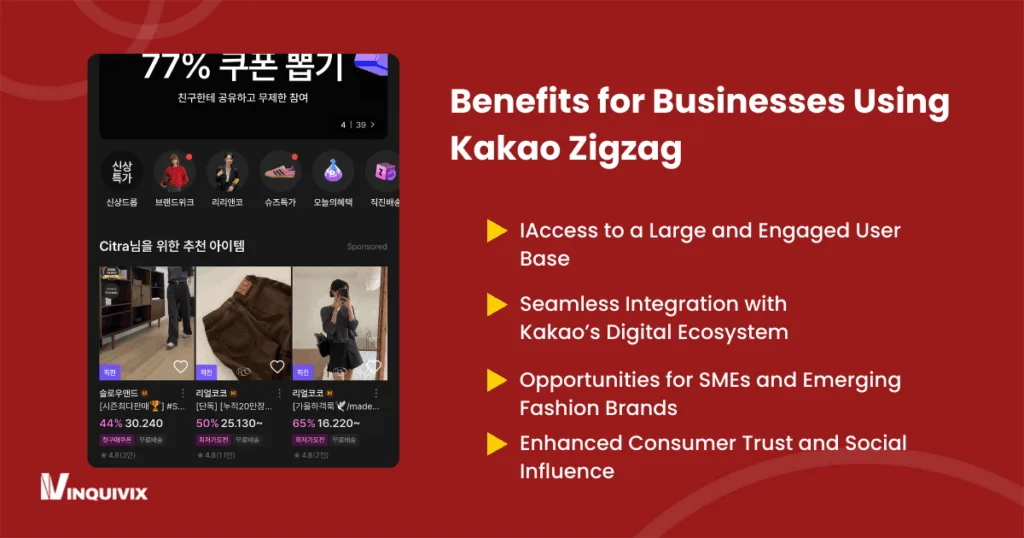
For fashion brands seeking to expand in Korea’s competitive e-commerce market, being present on Kakao Zigzag presents significant advantages. As a leading Kakao shopping app, Zigzag combines the power of fashion discovery with the reach of Kakao’s massive digital ecosystem. This creates unique opportunities for both local and international businesses to connect with highly engaged consumers.
Access to a Large and Engaged User Base
Zigzag has become a go-to fashion app on Kakao for young consumers, particularly women, who are constantly seeking new styles and trends. By listing products on Zigzag, businesses gain direct access to millions of active shoppers who are already in the mindset to make a purchase. This built-in audience reduces the challenge of brand discovery and increases visibility among trend-driven customers.
Seamless Integration with Kakao’s Digital Ecosystem
One of Zigzag’s key strengths is its integration with KakaoTalk and KakaoPay. This enables businesses to offer a seamless shopping experience, from product discovery to purchase, within a single ecosystem that consumers already trust and utilize daily. For brands, this means higher conversion rates, smoother transactions, and an overall better customer experience.
Opportunities for SMEs and Emerging Fashion Brands
Unlike large-scale platforms that often prioritize big retailers, Zigzag is designed to give smaller boutiques and emerging designers a chance to shine. Businesses that may not have the resources for massive advertising campaigns can still effectively reach their target audience. This levels the playing field and allows new brands to gain traction in Korea’s fashion market.
Enhanced Consumer Trust and Social Influence
Because Zigzag operates under the Kakao umbrella, it benefits from the reputation and trust Kakao has built with Korean consumers. Brands featured on Zigzag automatically gain credibility, which helps reduce purchase hesitation. Additionally, the integration of social commerce elements, such as product sharing via KakaoTalk, encourages word-of-mouth promotion, thereby amplifying exposure at no extra cost.
For foreign brands entering Korea or local businesses aiming to expand their digital reach, Kakao Zigzag represents more than just another shopping channel; it’s a gateway to connecting with the fashion-forward Korean consumer in a trusted, mobile-first environment.
Consumer Shopping Trends on Kakao Zigzag
The success of Kakao Zigzag is closely tied to how well it reflects the preferences and shopping habits of Korean consumers. As a leading fashion shopping app, Zigzag captures key trends that define Korea’s e-commerce landscape, especially among younger, style-conscious demographics.
Popular Fashion Categories
Zigzag’s users primarily shop for women’s clothing, with categories like casual wear, dresses, and accessories leading in popularity. Affordable fast-fashion items dominate, but there is also a growing interest in premium, locally designed brands. Seasonal trends, such as spring dresses or winter outerwear, often drive sales spikes as Korean consumers are quick to adapt to changing styles.
Mobile-First Shopping Behavior
South Korea has one of the highest mobile commerce penetration rates in the world, and Zigzag thrives in this environment. Shoppers prefer browsing on their smartphones, making purchases during commutes, breaks, or while chatting with friends on KakaoTalk. The convenience of having Zigzag integrated with the broader Kakao ecosystem enables users to transition seamlessly from discovery to purchase without interruption.
Social Commerce and Peer Influence
One unique aspect of shopping in Korea is the influence of social interactions on purchasing decisions. Zigzag leverages this by enabling easy sharing of product links through KakaoTalk. Consumers often consult with friends or share outfit ideas before making a purchase, creating a socially driven shopping journey. This peer-to-peer influence plays a crucial role in enhancing product visibility and driving conversions.
Preference for Personalized Recommendations
Korean shoppers value personalization, and Zigzag’s recommendation engine ensures users see items that align with their style and browsing history. This not only improves user satisfaction but also drives repeat engagement, as consumers feel the app “understands” their fashion preferences.
Rising Demand for Local Boutiques and Indie Brands
While global fast-fashion brands are available in Korea, Zigzag has tapped into the demand for unique styles from local boutiques and indie designers. This trend underscores the platform’s role as more than just a sales channel; it’s also a discovery hub for emerging and up-and-coming fashion labels that resonate with consumers seeking individuality.
By understanding these shopping trends, businesses can tailor their product offerings, marketing strategies, and customer engagement efforts to resonate with Zigzag’s audience. For brands, Zigzag is not only about selling, it’s about aligning with the way Korean consumers naturally shop and discover fashion.
Strategies for Brands to Succeed on Kakao Zigzag
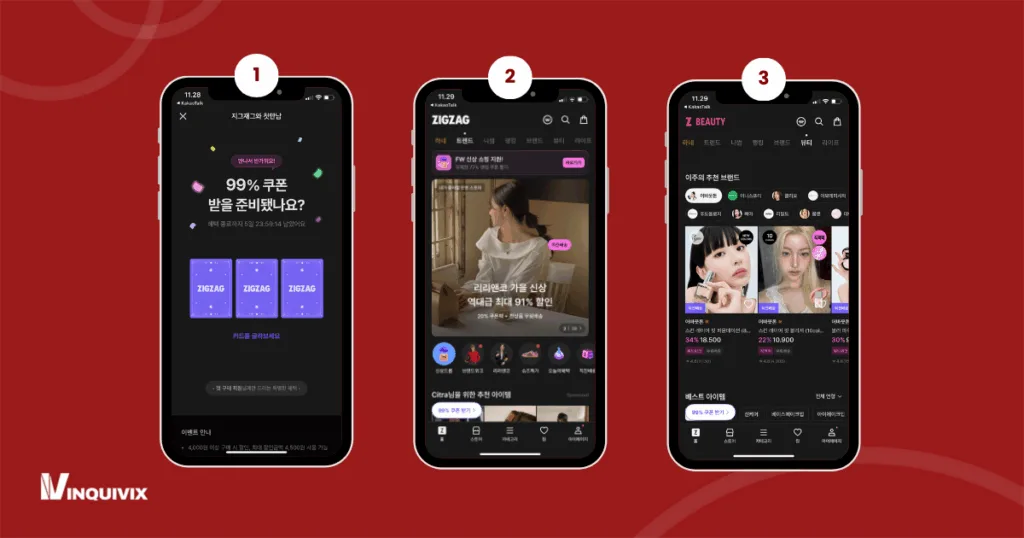
With the growing popularity of Kakao Zigzag, brands that want to stand out must align with the unique shopping habits of Korean consumers while leveraging the platform’s strengths. Whether you’re a local boutique or a global fashion brand entering Korea, adopting the right strategies can maximize visibility and drive sales on this powerful Kakao fashion app.
Optimizing Product Listings for Mobile Shoppers
Since most Zigzag users shop through their smartphones, product listings need to be designed with a mobile-first mindset. High-quality images, concise descriptions, and easy-to-read formatting are essential. Including size guides, fabric details, and lifestyle photos can also boost customer confidence, thereby reducing hesitation and increasing the likelihood of a purchase.
Leveraging KakaoTalk Promotions and Chat Integration
One of Zigzag’s most significant advantages is its connection to KakaoTalk, Korea’s dominant messaging app. Brands can use KakaoTalk channels to send promotions, new arrival alerts, or personalized discounts directly to consumers. This creates a seamless loop between product discovery, social interaction, and purchase, boosting engagement and conversion rates.
Building Trust with Authentic Reviews and Ratings
Korean consumers place a high value on reviews and peer recommendations before making purchasing decisions. Encouraging satisfied customers to leave reviews, share photos, and provide ratings on Zigzag helps build trust and authenticity. Featuring user-generated content in product listings can further enhance credibility and influence potential buyers.
Adapting to Seasonal and Trend-Driven Demand
Fashion in Korea is fast-moving, with trends shifting from one season to the next. To succeed on Zigzag, businesses must adapt quickly by updating their product catalogs to reflect current styles and seasonal demands. Limited-time collections, trend-based promotions, and timely marketing campaigns can help brands capture attention when demand is at its peak.
Collaborating with Local Influencers and Stylists
Influencer marketing plays a significant role in Korea’s fashion scene. Partnering with local fashion influencers or stylists and integrating those campaigns into Zigzag listings can significantly boost brand awareness. Since consumers often seek validation of trends, influencer collaborations add an extra layer of trust and desirability.
By combining these strategies, brands can fully tap into the potential of Kakao Zigzag. It’s not just about being present on the platform; it’s about optimizing for visibility, leveraging Kakao’s ecosystem, and connecting with consumers in a way that feels natural, personalized, and trustworthy.
The Future of Kakao Zigzag in Korea’s E-Commerce
As Korea’s e-commerce industry continues to evolve, Kakao Zigzag is positioned to play an increasingly central role in shaping how consumers shop for fashion. Backed by Kakao’s expansive digital ecosystem, Zigzag is not just keeping pace with changing market trends; it is helping define them.
Expansion of Kakao’s E-Commerce Ecosystem
Kakao has been steadily expanding beyond messaging and entertainment into financial services, mobility, and commerce. With Zigzag under its wing, Kakao is strengthening its position as a comprehensive lifestyle platform. By integrating Zigzag with KakaoTalk, KakaoPay, and Kakao’s advertising services, the company is creating a seamless journey that allows consumers to chat, discover, and make purchases within a single ecosystem.
Growth of AI-Powered Personalization
Personalization is already one of Zigzag’s core strengths, but the future lies in deeper AI-driven recommendations. Kakao has been investing in artificial intelligence across its platforms, and this investment is likely to extend to Zigzag. Consumers can expect even more precise suggestions based on real-time behavior, location, and style trends, further enhancing shopping convenience and engagement.
Rising Influence of Social Commerce
The integration of social interaction with shopping is a key differentiator for Zigzag. As social commerce continues to grow in Korea, Zigzag will continue to capitalize on peer influence and group buying behaviors. Features such as sharing outfits with friends on KakaoTalk or receiving instant feedback before making a purchase are expected to become even more prominent.
Opportunities for Global Expansion
While Zigzag’s current dominance is in the Korean market, the model has potential for expansion into other Asian markets where Kakao is building a presence. For foreign brands, this presents an opportunity not only to reach Korean consumers but also to expand visibility across a broader Kakao-driven e-commerce network, potentially.
Stronger Role for Emerging Designers and SMEs
Zigzag has already proven to be a valuable platform for small boutiques and indie designers. In the future, Kakao is likely to continue supporting these sellers through improved tools, analytics, and marketing opportunities. This focus will further strengthen Zigzag’s position as a discovery hub for unique fashion.
The future of Kakao Zigzag is closely tied to the evolution of Korea’s mobile-first, socially connected retail environment. For businesses, this means a growing opportunity to tap into an audience that values personalization, trust, and convenience, all within one platform backed by one of Korea’s most influential digital players.
How Inquivix Helps Businesses Succeed on Kakao Platforms

Navigating Korea’s digital ecosystem can be challenging, especially for foreign businesses unfamiliar with platforms like Kakao Zigzag, KakaoTalk, and other Kakao marketing services. Success requires more than just setting up a presence; it takes localized strategies, cultural insight, and deep knowledge of how Koreans interact with these platforms. That’s where Inquivix comes in.
At Inquivix, we specialize in helping businesses leverage the full potential of Kakao’s digital ecosystem. From setting up optimized brand channels on KakaoTalk to positioning your products effectively on Kakao Zigzag, our team ensures that your brand not only enters the Korean market but also thrives in it. We combine SEO, content marketing, social media strategy, and paid advertising to deliver comprehensive solutions tailored to your business goals.
Global fashion brands launching in Korea and local retailers aiming to scale can rely on Inquivix for the expertise and execution needed to thrive. Our proven strategies are built around consumer shopping trends, helping your brand connect authentically with Korean audiences and achieve sustainable growth.
Ready to grow your business with Kakao Zigzag and Korea’s leading digital platforms? Partner with Inquivix today and let us help you build visibility, trust, and sales in one of the world’s most dynamic e-commerce markets. Contact us now for a consultation.