KakaoBank: Korea’s Leading Digital Bank and Its Marketing Power
Banking in South Korea has transformed rapidly over the past decade, and KakaoBank has been at the center of this revolution. Launched as the country’s first mobile-only bank, KakaoBank has redefined how people open accounts, manage money, and access financial services, all from the convenience of their smartphones. With its seamless integration into the Kakao ecosystem, including KakaoTalk and KakaoPay, the bank has grown into one of Korea’s most trusted and widely used digital banks. Today, KakaoBank isn’t just leading in mobile banking; it’s shaping the future of finance with innovations in AI, global expansion, and even digital assets like stablecoins.
What Is KakaoBank?

KakaoBank is South Korea’s first mobile-only bank, launched in 2017 as part of the Kakao ecosystem, the same company behind the country’s most popular messaging app, KakaoTalk. Unlike traditional banks that rely on physical branches, KakaoBank was designed from the ground up to be digital-first, allowing users to open accounts, transfer money, and manage loans directly from their smartphones. This approach has reshaped how South Koreans interact with financial services, especially younger generations who prefer speed, convenience, and intuitive technology over visiting a branch.
Within just a few years of its launch, KakaoBank became a dominant force in the Korean financial sector. As of mid-2025, the bank has surpassed 25.8 million registered customers, representing nearly half of South Korea’s adult population. Its appeal comes not only from being a pioneer in digital banking but also from leveraging Kakao’s robust ecosystem, integrating messaging, payments, and even lifestyle services into one seamless experience.
In addition to its innovative app-based banking model, KakaoBank emphasizes accessibility and affordability. Services such as low-fee international transfers, quick mobile loans, and group savings features have positioned it as a customer-friendly alternative to conventional banks. By combining fintech innovation with strong brand trust, KakaoBank has set a new standard for what banking can look like in the digital age.
Key Highlights of KakaoBank
- Mobile-only model – no physical branches, 100% app-based banking.
- Ecosystem integration – connected with KakaoTalk, KakaoPay, and lifestyle services.
- Massive customer base – 25.8+ million users as of 2025.
- Affordable services – lower fees for transfers, loans, and savings tools.
- Fintech-driven growth – leveraging AI, digital identity, and data innovation.
What Does KakaoBank Offer?
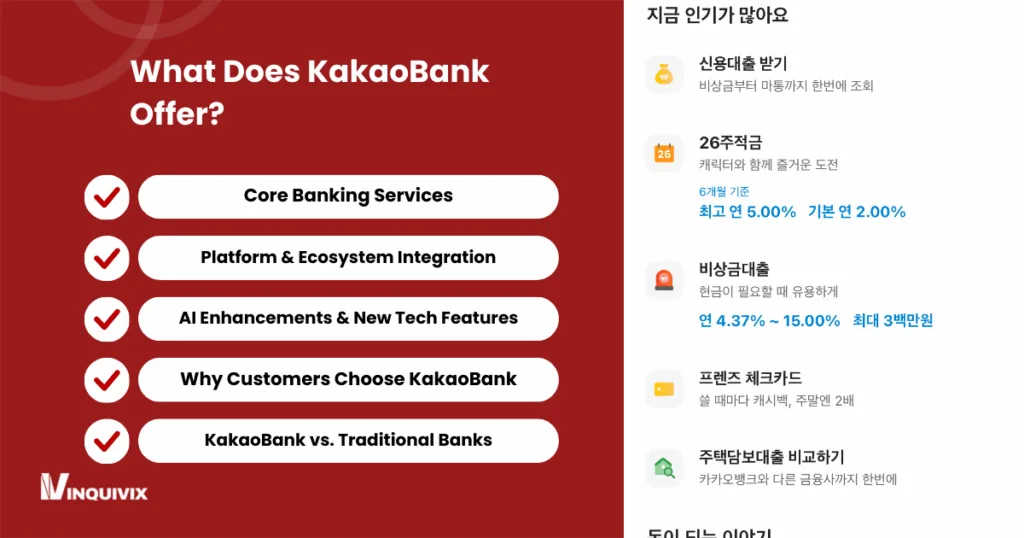
KakaoBank has built its reputation by providing financial services that are simple, accessible, and designed for the digital age. Unlike traditional banks that often require in-person visits and paperwork, KakaoBank delivers a seamless banking experience through its mobile app. From basic banking needs to advanced financial tools, the bank’s offerings continue to evolve to meet the lifestyles of modern consumers.
Core Banking Services
At its foundation, KakaoBank provides all the essential functions customers expect from a bank, but with the convenience of being entirely digital:
- Mobile Account Opening – Sign up in minutes using just a smartphone and a valid ID.
- Deposits & Savings – Competitive interest rates, flexible savings accounts, and group savings tools such as the Meeting Passbook.
- Loans & Credit – Quick approval personal loans, overdraft services, and housing-related loans, all processed within the app.
- Transfers & Payments – Instant domestic transfers, low-cost international remittances, and scheduled payments.
- Debit & Check Cards – Linked with Kakao Friends designs and unique ON/OFF features for security and convenience.
Platform & Ecosystem Integration
KakaoBank’s real power comes from its ability to integrate banking with everyday digital life:
- KakaoTalk Connection – Send or request money directly through KakaoTalk chat windows, making peer-to-peer transactions effortless.
- KakaoPay Services – Seamless bill payments, QR code transactions, and mobile commerce checkout integration.
- Lifestyle Features – Shared accounts, group fund collections, and spending analysis tools built directly into the app.
AI Enhancements & New Tech Features
To stay ahead in digital banking, the KakaoBank app is rapidly introducing next-generation features:
- AI-Powered Recommendations – Personalized financial planning, savings insights, and spending optimization.
- Mobile ID & Security – Facial recognition, biometric logins, and digital ID storage for secure banking.
- Smart Search Tools – AI-driven search within the app to quickly find account details, transaction history, or available services.
Why Customers Choose KakaoBank
- Convenience – 100% mobile banking without branch visits.
- Affordability – Lower transaction and loan fees than traditional banks.
- Speed – Fast approvals and instant transfers.
- User Experience – Simple, intuitive design that matches the habits of KakaoTalk users.
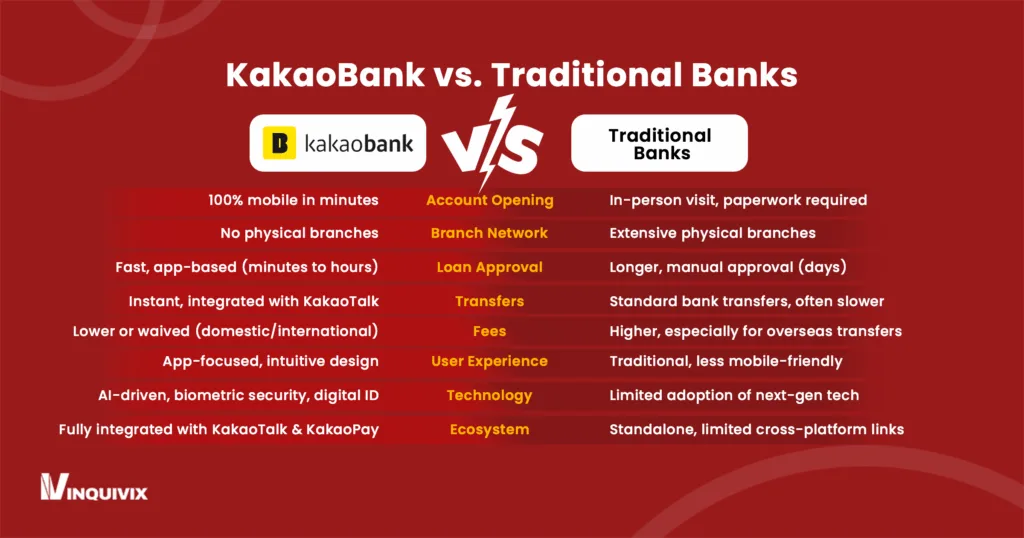
KakaoBank vs. Traditional Banks
Growth & Performance Highlights in 2025
KakaoBank’s journey from a digital upstart to a major player in Korea’s financial sector is reflected in its strong performance in the first half of 2025. Despite economic headwinds and increased regulatory scrutiny, the mobile-first bank continues to expand its customer base, deposits, and platform revenues, proving the resilience of its digital-first strategy.
In 2025, Kakao Bank Korea achieved record-breaking growth in both users and deposits while diversifying its revenue sources beyond traditional lending. The bank’s platform business, including advertising, loan comparison services, and lifestyle integration, has seen double-digit growth, highlighting how KakaoBank is evolving from a digital bank into a full-fledged fintech ecosystem.
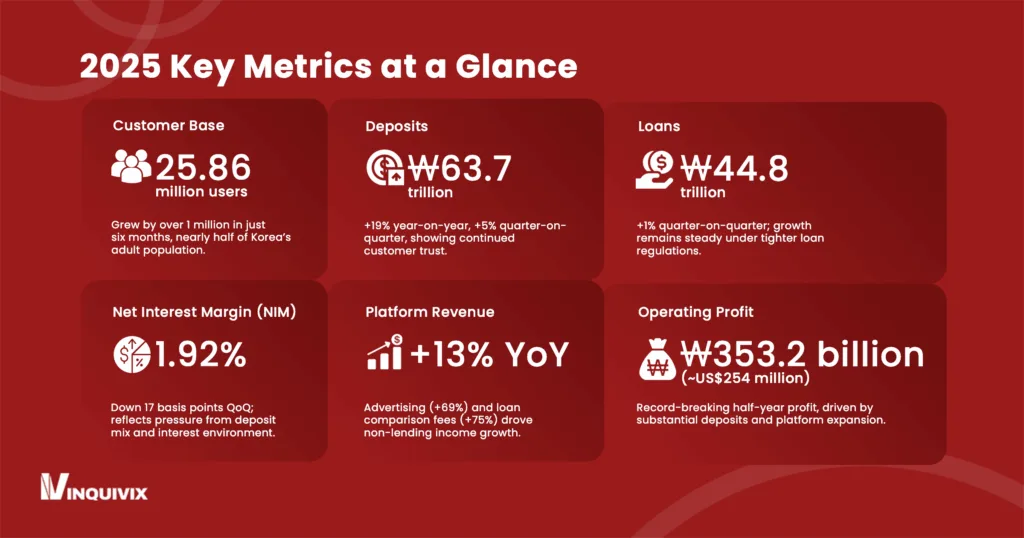
2025 Key Metrics at a Glance
What This Growth Means
- Diversification pays off – KakaoBank is not solely dependent on lending; platform-based income is becoming a stronger growth driver.
- Strong user loyalty – Continuous growth in deposits and customer base shows trust in KakaoBank’s mobile-first model.
- Regional expansion foundation – Solid financials provide the capital strength needed for upcoming overseas ventures in Indonesia and Thailand.
- Challenges ahead – NIM pressure and stricter regulations could slow loan growth, but KakaoBank’s diversified revenue sources balance the risks.
Global Expansion & International Ambitions
While KakaoBank has secured its dominance in South Korea, the company is now setting its sights on global opportunities. With a strong capital base, advanced mobile banking technology, and the backing of the Kakao ecosystem, KakaoBank is positioning itself as a regional fintech leader in Asia. Its international strategy focuses on high-growth emerging markets where mobile-first banking can leapfrog traditional branch-based systems.
Southeast Asia Strategy
Southeast Asia has become a natural target for KakaoBank’s expansion due to its young, tech-savvy population and high demand for digital financial services. Two significant milestones define KakaoBank’s current push:
- Indonesia – Superbank PartnershipKakaoBank acquired a 10% stake in Superbank, a digital bank in Indonesia. Within a short period, Superbank has already turned profitable, fueled by rapid customer adoption and low operating costs. KakaoBank’s role includes providing expertise in mobile banking technology and customer acquisition strategies, helping to strengthen its foothold in one of the largest digital banking markets in Asia.
- Thailand – Virtual Bank LicenseIn June 2025, KakaoBank, through a joint venture with SCBX Public Company Limited, was granted Thailand’s first-ever virtual bank license. This marks a significant milestone not just for KakaoBank, but for Thailand’s financial sector, which is embracing digital banking at scale. Operations are expected to launch in H2 2026, with plans to introduce mobile-first services that mirror KakaoBank’s Korean success.
Strategic Goals of Global Expansion
- Market Diversification – Reduce reliance on the Korean market, where growth is slowing due to demographic shifts and tighter regulations.
- Fintech Export – Leverage Kakao’s proven mobile banking model and ecosystem integration in new markets.
- Regional Leadership – Establish KakaoBank as a household name in Asia’s fintech space, competing with players like Grab Financial and Sea Group.
- Long-Term Profitability – Tap into underbanked populations across Southeast Asia, where mobile penetration is high but financial access remains limited.
KakaoBank’s overseas ventures demonstrate how South Korean fintech innovations are going global. Its success in Indonesia and Thailand could pave the way for future expansions into Vietnam, the Philippines, and beyond. For investors and business partners, this signals that KakaoBank is not just a domestic disruptor, but a potential pan-Asian digital banking powerhouse.
KakaoBank’s Entry into Digital Assets & Stablecoins
As digital finance evolves, KakaoBank is moving beyond traditional banking to explore opportunities in the world of digital assets and stablecoins. This marks a significant step for the bank, positioning itself at the intersection of fintech innovation, blockchain, and mainstream financial services. By leveraging South Korea’s push toward regulated digital currencies, KakaoBank aims to become a pioneer in offering secure, regulated crypto solutions that integrate seamlessly with everyday banking.
Stablecoin Initiative
In mid-2025, KakaoBank confirmed its plans to explore the issuance and custody of a Korean won (KRW)-backed stablecoin. The project is part of the Kakao Group’s broader Stablecoin Task Force, which also includes KakaoPay. If launched, the KRW stablecoin could be used for domestic payments, cross-border remittances, and integration with Kakao’s digital platforms.
Key elements of the initiative include:
- KRW-backed digital currency – pegged 1:1 with the Korean won to ensure stability.
- Seamless integration – potential use across KakaoTalk, KakaoPay, and KakaoBank’s ecosystem.
- Custody services – secure storage solutions for institutional and retail users.
- Pilot programs – possible trials aligned with the Bank of Korea’s CBDC projects.
Regulatory & Market Context
South Korea has emerged as one of the most crypto-active nations in the world, and government policy under President Lee Jae-myung is trending toward crypto-friendly regulation. Authorities are actively developing frameworks for stablecoin issuance, custody, and consumer protection, seeing digital currencies as a way to both modernize the financial system and curb capital outflows into unregulated markets.
For KakaoBank, this is both an opportunity and a challenge:
- Opportunity – Being an early mover among banks positions it as a leader in digital asset adoption.
- Challenge – Must ensure compliance with evolving regulations, particularly around anti-money laundering (AML) and consumer protection.
Strategic Implications
- New revenue streams – Stablecoin-related services such as custody, transactions, and cross-border payments could open new revenue streams.
- Ecosystem synergy – By linking stablecoins to KakaoTalk and KakaoPay, KakaoBank can create one of the most integrated digital finance ecosystems in Asia.
- Global competitiveness – Digital asset solutions enhance KakaoBank’s value proposition as it expands overseas, particularly in emerging fintech markets.
Strategic Challenges & Future Risks
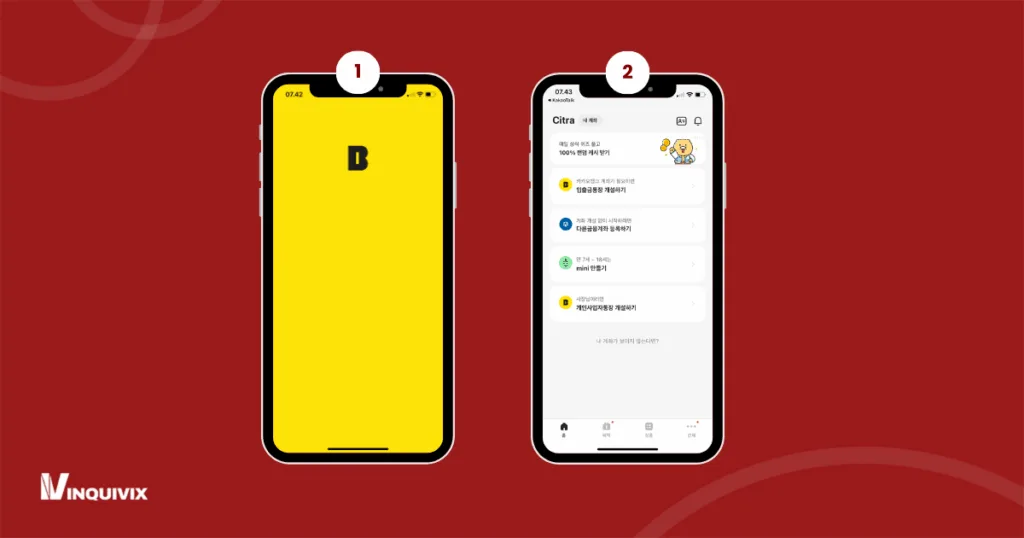
While KakaoBank continues to dominate the Korean digital banking market and expand internationally, it faces several challenges that could affect its long-term growth. These risks stem from both external market conditions and internal dependencies on the Kakao ecosystem. Understanding these issues is crucial to assessing the sustainability of KakaoBank’s success in the years ahead.
Regulatory Pressure and Loan Growth Limits
South Korea’s financial regulators have tightened rules around household debt, which directly impacts KakaoBank’s loan business. With loan growth capped near 10% annually, the bank has less flexibility to scale lending, a core revenue driver. Over time, stricter oversight on credit and lending practices may limit profitability, forcing KakaoBank to rely more heavily on platform-based revenues.
Net Interest Margin (NIM) Pressure
In H1 2025, KakaoBank reported a decline in its net interest margin (NIM) to around 1.92%, down from the previous quarter. This trend is partly due to changes in deposit composition, where customers are shifting to higher-yield savings products, increasing the bank’s cost of funds. With interest rate environments remaining uncertain, sustaining healthy margins could become a persistent challenge.
Domestic Market Saturation
With 25.8 million users, almost half of Korea’s adult population, KakaoBank’s domestic growth is approaching saturation. Expanding beyond this base will be difficult, especially as competition intensifies from other digital banks and fintech startups. This plateau means KakaoBank must rely more on international expansion and new digital services like stablecoins to maintain momentum.
Dependence on the Kakao Ecosystem
KakaoBank benefits immensely from its integration with KakaoTalk and KakaoPay. However, this dependency is also a risk. Any regulatory changes, reputational issues, or technical challenges faced by Kakao Corp could directly affect KakaoBank’s user engagement and brand trust. Diversifying its ecosystem partnerships may be necessary to reduce overreliance on its parent group.
Rising Competition in Fintech & Digital Assets
The digital banking and stablecoin spaces are becoming increasingly crowded. Rival Korean banks, as well as regional fintech players like Grab Financial and Sea Group, are investing heavily in mobile-first financial solutions. This creates pressure for KakaoBank to innovate rapidly while maintaining security, compliance, and user trust.
Key Risks at a Glance
- Loan growth restrictions – tighter household debt regulations.
- Profit margin pressure – declining NIM and rising deposit costs.
- Market saturation – limited room for domestic customer expansion.
- Ecosystem dependency – heavy reliance on KakaoTalk and KakaoPay.
- Intensifying competition – both locally and across Asia.
Why KakaoBank Matters Especially for Business
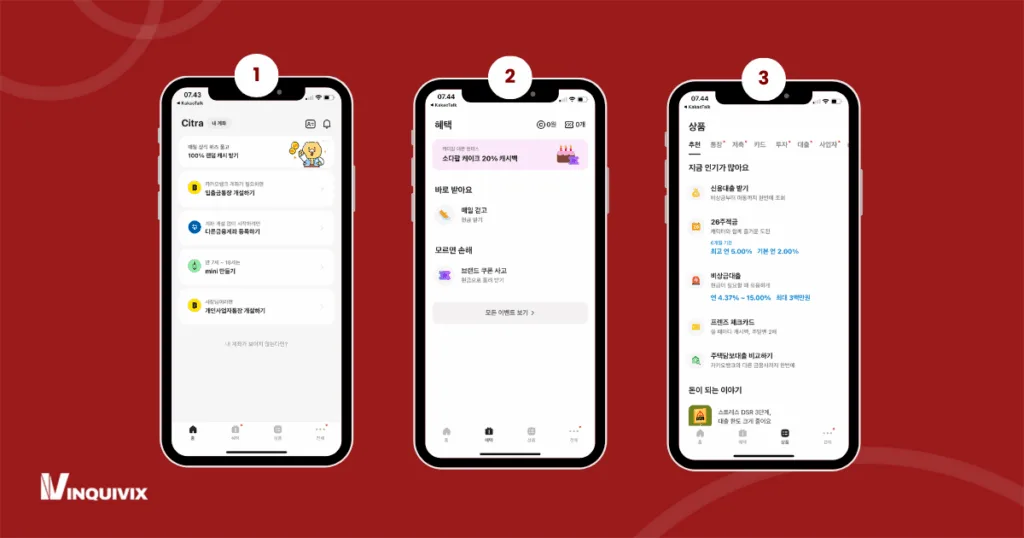
KakaoBank is not just a consumer-friendly digital bank; it has quickly become a strategic gateway for businesses operating in Korea. Its widespread adoption, seamless integration with the Kakao ecosystem, and ability to streamline financial transactions make it a powerful enabler for both local and international enterprises. For foreign businesses entering the Korean market, KakaoBank is particularly valuable because it helps overcome common barriers to entry, such as banking accessibility, local payment preferences, and customer trust.
Widespread User Base and Market Penetration
With over 25.8 million users, nearly half of Korea’s adult population, KakaoBank has entrenched itself in the daily financial lives of Koreans. For businesses, this means access to a vast customer base that already trusts and actively uses KakaoBank’s financial services. Companies that integrate payment and transaction options through KakaoBank gain instant credibility and smoother adoption by Korean consumers.
Seamless Integration with KakaoTalk and KakaoPay
KakaoBank’s ecosystem synergy is unmatched. Businesses can leverage their integration with KakaoTalk (Korea’s top messaging app) and KakaoPay (a leading digital wallet) to simplify transactions, customer engagement, and even targeted promotions. For foreign companies, this ecosystem connectivity offers an efficient way to adapt to Korean consumer behaviors without building an entirely new local infrastructure.
Lower Barriers for Foreign Business Banking
One of the challenges foreign businesses face in Korea is setting up financial accounts and navigating regulatory complexities. KakaoBank’s digital-first approach reduces bureaucracy and provides streamlined onboarding processes, making it easier for international companies to establish local accounts, manage payroll, and handle customer transactions. This efficiency can significantly accelerate a business’s market entry.
Driving E-Commerce and Cross-Border Trade
KakaoBank’s strength in digital payments and remittance services also supports businesses involved in e-commerce and cross-border trade. Foreign retailers, hospitality brands, and digital platforms entering Korea can integrate KakaoBank as a trusted payment option, improving conversion rates by aligning with local payment preferences. This reduces friction in customer acquisition and retention.
Essential for Building Trust in a New Market
For any foreign business entering Korea, building consumer trust is one of the biggest hurdles. Since KakaoBank is widely recognized as secure, user-friendly, and part of Koreans’ everyday lives, aligning with its services gives foreign businesses a strong trust advantage. Customers are far more likely to transact with a brand that uses a familiar and reputable local financial partner.
Key Reasons KakaoBank Matters for Businesses:
- Market Reach – access to 25M+ Korean users.
- Ecosystem Advantage – direct link to KakaoTalk and KakaoPay.
- Simplified Onboarding – faster account setup for foreign entities.
- E-Commerce Enablement – supports digital trade and payments.
- Trust Building – leveraging KakaoBank’s credibility to win local customers.
Unlocking Opportunities with KakaoBank

KakaoBank has rapidly transformed the financial landscape in Korea, evolving from a digital-first banking solution into a critical ecosystem for consumers and businesses alike. Its massive user base, seamless integration with KakaoTalk and KakaoPay, and forward-looking innovations in global expansion and digital assets make it a pivotal player in Korea’s digital economy. For foreign businesses aiming to enter the Korean market, KakaoBank represents more than just a banking partner; it is a gateway to trust, accessibility, and growth.
If you are considering expanding your business into Korea, leveraging platforms like KakaoBank is essential to building local credibility and connecting with millions of consumers. At Inquivix, we specialize in helping international brands successfully navigate the Korean market through tailored Kakao marketing strategies, digital integrations, and business growth solutions.
Partner with Inquivix today and let us help you unlock your brand’s full potential in Korea.