Kakao Map: How Korea Navigates with Kakao’s Digital Maps
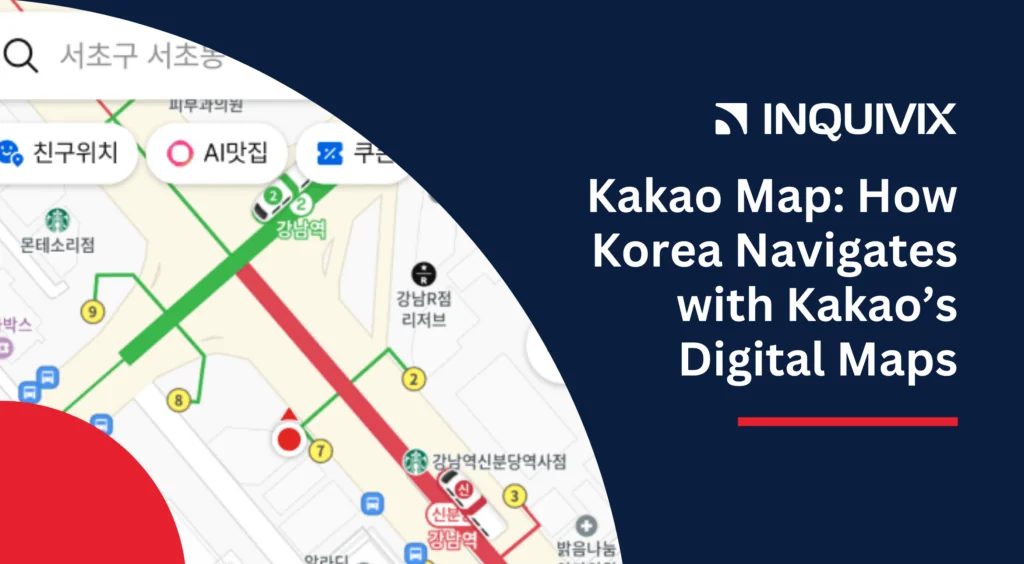
Navigating South Korea’s bustling cities and hidden neighborhoods has become effortless thanks to Kakao Map, one of the country’s most widely used digital mapping platforms. More than just a navigation tool, Kakao Map integrates detailed directions, real-time transit updates, local business listings, and user-generated reviews, making it an indispensable app for both residents and visitors. Suppose you’re a tourist exploring Seoul, an expatriate adjusting to daily commutes, or a business seeking to attract local customers. In that case, Kakao Map provides accurate and reliable insights into Korea’s streets, stores, and transportation systems. For brands, it’s also a powerful platform to connect with audiences right where they are, on the map.
Overview of Kakao Map
South Korea’s fast-paced, digital-first environment demands navigation tools built for its unique infrastructure. While global platforms like Google Maps often fall short, Kakao Map Korea has become the go-to solution for millions of users. With detailed maps, accurate routing, and deep integration into daily life, it supports everything from commuting and exploring to discovering local businesses. For both travelers and brands, Kakao Map is essential to navigating Korea’s physical and digital landscape.
What is Kakao Map?
Kakao Map is South Korea’s leading digital mapping and navigation platform, developed by Kakao Corporation. Designed with Korea’s dense urban layouts and complex transit systems in mind, it delivers accurate, real-time directions for driving, walking, biking, and public transport. Beyond navigation, it integrates features like business listings, user reviews, 3D map views, and location sharing, making it much more than a map app. Its strength lies in its local precision: street names, building details, and public transport information are updated frequently, ensuring users can rely on it for everyday travel or business needs.
Why Businesses and Travelers Rely on It
For travelers, Kakao Map simplifies the challenge of exploring a country where language and signage can often be barriers. With features like English-language support, real-time transit alerts, and detailed walking paths, it helps visitors navigate confidently. For businesses, the platform is just as critical.
Local retailers, restaurants, and service providers use Kakao Map as a digital storefront, ensuring customers can easily find and access them and access updated information such as operating hours, photos, and reviews. For foreign companies entering Korea, being visible on Kakao Map is a key step in building local presence. At the same time, Korean brands looking to expand rely on it to strengthen their digital footprint and connect with on-the-go consumers.
Core Features of Kakao Map
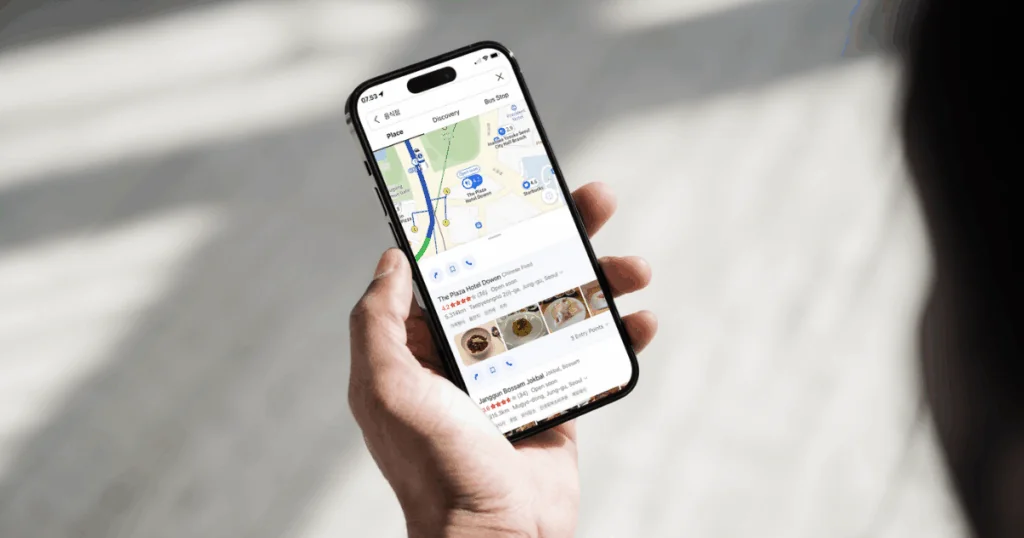
What makes Kakao Map stand out in South Korea is its depth of features tailored to the way people move through and experience cities. From daily commutes to discovering hidden cafés, the app goes beyond simple navigation to deliver a complete digital guide to local life. Below are the key features that make it indispensable for both individuals and businesses.
Multi-Modal Navigation (Car, Transit, Walk, Bike)
Kakao navigation supports multiple modes of travel, offering precise directions whether you’re driving, using public transport, cycling, or walking. Routes are updated frequently to reflect new roads, traffic changes, and transit schedules, ensuring accuracy even in dense urban areas.
Integrated Navigation System
Unlike other map platforms that require a separate app, Kakao Map includes built-in turn-by-turn navigation. Users can start directions directly within the app, making it more convenient for drivers and commuters who rely on real-time updates.
Comprehensive Search Functionality
The app makes finding destinations easy, allowing searches by store names, addresses, landmarks, bus numbers, or even subway station names. This flexibility is especially useful for users who may not know the exact name of a location in Korean.
Real-Time Transit Alerts
Kakao Map provides push notifications for public transportation, reminding users when to board, transfer, or disembark. This feature helps travelers navigate Korea’s complex subway and bus systems with confidence.
Smart Local Discoveries (“Nearby” Tab & Theme Maps)
Beyond navigation, Kakao Map helps users explore. With the “Nearby” feature and themed maps, users can discover restaurants, shopping districts, cultural attractions, and other points of interest, making it a valuable discovery tool for businesses seeking increased visibility.
Advanced Map Views (3D, Road View, Sky View)
Users can switch between different map perspectives, including 3D cityscapes, immersive street-level road views, and satellite sky views. These options provide better orientation and help businesses showcase their locations more effectively.
Favorites, Sharing, and Personalization
Kakao Map allows users to save and organize favorite places into folders, which can also be shared with friends or colleagues. This social feature is particularly beneficial for brands, as it encourages word-of-mouth sharing and repeat visits.
Navigational Strengths vs. Naver and Google
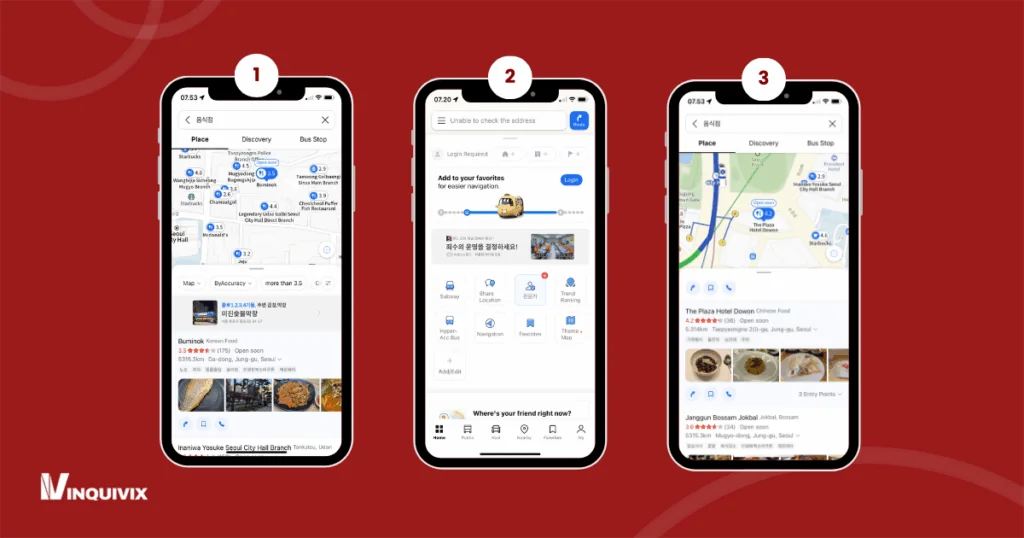
When navigating South Korea, Kakao Map, Naver Map, and Google Maps are the three leading platforms available. However, their usability and accuracy differ significantly due to how well each integrates with Korea’s unique infrastructure and data systems. While Google is the global standard, it often struggles with Korean addresses and transit details. In contrast, Kakao Map and Naver Map dominate the local market, offering far more reliable coverage. Below are the strengths that set Kakao Map apart.
Rich User Content and Local Reviews
Kakao Map benefits from a strong community of users who upload photos, leave ratings, and write reviews. This creates a richer experience than Google Maps in Korea, where business listings are often incomplete or outdated. For businesses, this user-generated content provides free exposure and social proof that can influence new customers.
Better Orientation with Directional Guidance
Kakao Map includes features like a directional arrow, helping users immediately identify which way they are facing, an advantage in Korea’s dense city streets. This is especially helpful for first-time visitors or expatriates unfamiliar with local landmarks.
More Accurate Transit and Local Data
Google Maps is often unreliable for subway routes, bus times, or walking paths in Korea. Kakao Map, however, updates transit schedules and road conditions frequently, ensuring users get accurate real-time navigation. For brands located in high-traffic areas, this accuracy ensures customers can reach them without frustration.
English vs. Korean Interface
While both Naver and Kakao Maps now offer English support, Kakao’s interface tends to be more intuitive for non-Korean speakers. However, some transit or business details still appear only in Korean. Compared to Google Maps, Kakao provides more localized accuracy, though Naver sometimes has stronger English translations for addresses.
Real User Feedback and Comparisons
Travelers and expatriates often report preferring Kakao Map for biking routes and bus accuracy, while Naver Map can be slightly better for tourists relying heavily on English. Despite this, Kakao remains highly popular among locals, making it the better choice for businesses targeting Korean customers.
Using Kakao Map to Locate Kakao Stores & Facilities
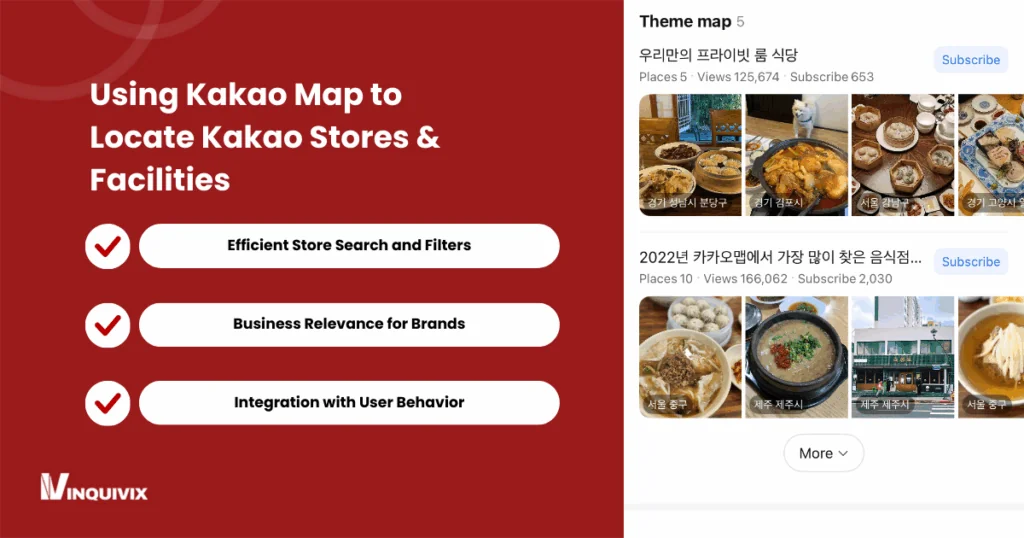
One of the most practical uses of Kakao Map is its ability to function as a powerful Kakao store locator. For users searching for Kakao Friends stores, KakaoTalk service centers, or affiliated partner facilities, the app provides an intuitive way to find exact locations with just a few taps. This feature goes beyond simple mapping; it helps users identify operating hours, contact details, and even customer reviews, ensuring a smooth experience whether they are shopping for Kakao merchandise or seeking customer support.
Efficient Store Search and Filters
Kakao Map’s search bar allows users to enter brand names, categories, or specific keywords such as “Kakao Friends Store” or “KakaoTalk Center.” Results display with detailed store information, including phone numbers, addresses, and navigation options. Users can also apply filters to narrow searches by proximity or relevance.
Business Relevance for Brands
For businesses, appearing accurately in Kakao Map’s store locator is crucial. Millions of users rely on Kakao daily to find restaurants, cafés, retail outlets, and service providers. Ensuring your brand is listed with correct details, such as operating hours, menus, or photos, can directly influence customer foot traffic and conversion rates.
Integration with User Behavior
Since locals widely use Kakao Map for daily life, stores and facilities listed on the platform gain more credibility. When customers see ratings, photos, and reviews alongside your listing, they are more likely to trust and visit your business. This makes Kakao Map not just a navigational tool, but also a digital marketing channel for visibility and customer engagement.
Strategies for Businesses & Marketers
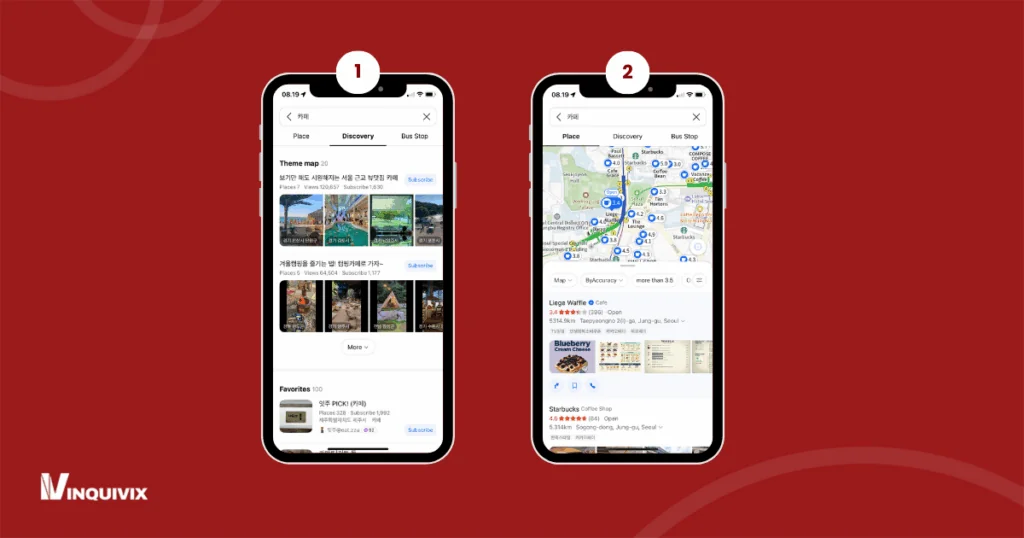
For businesses entering Korea, Kakao Map is more than a navigation tool; it’s a powerful platform to boost local visibility, attract customers, and strengthen brand trust. With millions of daily users, ensuring your business is represented correctly on Kakao Map can directly influence foot traffic and conversions. Below are strategies that brands can apply to make the most of the platform.
Optimize Your Business Listing
The first step for any brand is to claim and optimize its business listing on Kakao Map. Accurate details such as store name, address, operating hours, and contact information are essential. Adding high-quality photos of your storefront, products, and interiors helps build trust and makes your listing stand out against competitors.
Leverage Reviews and User-Generated Content
Encourage customers to leave reviews and upload photos after visiting your location. User-generated content not only builds credibility but also improves visibility within Kakao Map’s search results. Positive ratings play a significant role in influencing purchasing decisions, especially for food, retail, and service businesses.
Utilize Theme Maps and “Nearby” Features
Kakao Map’s theme maps and “Nearby” tab highlight trending places, popular restaurants, and local attractions. By positioning your business in these categories through optimized tags and descriptions, you can capture attention from users actively exploring the area.
Drive Engagement Through Social Sharing
Since Kakao Map integrates with other Kakao services like KakaoTalk, users can easily share their store location with friends or in group chats. Businesses can encourage this behavior by running promotions that reward check-ins, photo shares, or referrals tied to Kakao Map listings.
Use Data Insights to Improve Strategy
Kakao Map can provide valuable insights into customer behavior, such as peak visiting hours or popular search queries related to your category. Monitoring these trends allows businesses to adjust marketing strategies, optimize staffing, and plan targeted promotions at the correct times.
Best Practices & Real-World Use Cases

To maximize the value of Kakao Map, businesses should not only ensure accurate listings but also adopt strategies that improve discoverability and customer engagement. By studying how other brands use the platform effectively, foreign companies can gain insights into building their local presence in Korea.
Best Practices for Businesses
- Keep Information Updated**
- **Store hours, contact numbers, and menus change frequently. Regularly updating these details ensures customers don’t encounter outdated information, which can damage trust and lead to lost sales.
- Add High-Quality Visuals**
- **Businesses with clear photos of storefronts, interiors, and products perform better on Kakao Map. Visuals help customers recognize the location when they arrive and influence their decision to visit.
- Use Bilingual Descriptions**
- **Including both Korean and English descriptions widens accessibility, attracting both locals and international visitors. This is especially valuable for cafés, retail shops, and tourist-focused businesses.
- Encourage Customer Interaction**
- **Asking customers to rate, review, or share their visit on Kakao Map helps improve visibility in search results and builds social proof.
- Leverage Categories and Tags**
- **Correctly categorizing your business (e.g., “café,” “restaurant,” “beauty shop”) and using relevant tags improves how easily users can find you when browsing or searching within Kakao Map.
Real-World Use Cases
- A Foreign Café Launching in Seoul**
- **An international coffee chain opening its first location in Seoul can use Kakao Map to list its store, upload professional photos, and add bilingual descriptions. By tagging popular categories like “coffee” or “dessert,” the café appears in “Nearby” searches, attracting both locals and tourists.
- Retail Brand Expanding into Shopping Districts**
- **A global fashion brand entering Myeongdong or Gangnam can optimize its Kakao Map listing with store hours, new arrivals, and promotions. Featuring professional photos and encouraging customer reviews helps the store stand out against well-established Korean competitors.
- Small Business Leveraging Local Search**
- **Independent shops and restaurants often rely heavily on foot traffic. By appearing in Kakao Map’s “Nearby” or theme-based recommendations, they gain exposure to users actively looking for dining or shopping options in real time.
- Service Providers Targeting Locals**
- **Gyms, clinics, or beauty salons can use Kakao Map as a discovery platform by offering accurate listings and engaging visuals. Customer reviews and word-of-mouth sharing within KakaoTalk amplify visibility and trust among local users.
Practical Tips & International Access
While Kakao Map is designed with Korean users in mind, it also offers valuable functionality for international visitors and businesses. Understanding how to navigate the platform efficiently can make the difference between a frustrating experience and a seamless journey through Korea’s urban landscape.
Practical Tips for Travelers
- Enable English or Multilingual Support**
- **Kakao Map provides English-language options, though translations may not always be perfect. Switching to English mode makes basic navigation easier for international users.
- Use Romanized Search Terms**
- **Some Korean addresses or business names may not appear in English. Searching with romanized names (e.g., “Gangnam Station” instead of 강남역) can improve accuracy.
- Rely on Landmarks for Navigation**
- **Since smaller businesses may not always be listed in English, using well-known landmarks (hotels, subway stations, malls) as reference points helps with orientation.
- Download Maps for Offline Use**
- **Mobile data may be limited for some international travelers. Saving maps or routes offline ensures reliable access when navigating in areas with poor connectivity.
Tips for Businesses Expanding into Korea
- Optimize Listings for Bilingual Access**
- **Add English descriptions alongside Korean so international users can still find and understand your business details.
- **Integrate with KakaoTalk Ecosystem
- **Many Koreans search for directions or share locations directly through KakaoTalk. Linking your Kakao Map listing with your KakaoTalk channel boosts discoverability.
- Highlight Tourist-Friendly Services**
- **If your business caters to tourists (cafés, retail, attractions), emphasize multilingual staff, payment methods (like credit cards or mobile wallets), and special promotions for visitors.
International Access Considerations
- **Account Setup
- **While basic Kakao Map features are available without a Kakao account, having one enables deeper integration with the Kakao ecosystem, including saving favorite locations and syncing across devices.
- App Compatibility**
- **The app is available globally through both iOS and Android app stores. However, some advanced features may be restricted outside Korea due to licensing or data-sharing agreements.
- **Navigation vs. Ride-Hailing
- **For international users, Kakao Map’s navigation works seamlessly, but linking it with ride-hailing (Kakao T) may require a Korean phone number. Travelers should plan to use navigation as a guide for taxis or public transport if they don’t have a local SIM.
Why It Matters for Inquivix Clients

Kakao Map is far more than just a navigation tool; it’s a digital touchpoint where consumers, travelers, and businesses intersect in South Korea’s highly localized market. For brands entering Korea, visibility on Kakao Map means being discoverable to millions of users who rely on it daily for everything from commuting to choosing where to shop or dine. For local Korean businesses, optimizing presence on Kakao Map strengthens discoverability, enhances customer trust, and directly supports growth in a competitive market.
At Inquivix, we help our clients unlock the full potential of Kakao’s ecosystem, from optimizing your Kakao store locator presence to integrating your brand seamlessly with KakaoTalk marketing and other Kakao strategies and platforms. If you’re a global brand preparing to launch in Korea or a local business aiming to scale, our expertise ensures that your digital footprint on Kakao Map is both accurate and impactful. Ready to expand your visibility in Korea’s unique digital landscape? Partner with Inquivix today and let us help you connect with Korean consumers through precise, data-driven strategies tailored to Kakao Map and beyond.