KakaoTalk vs LINE: A Complete Comparison of Asia’s Top Messaging Apps

When it comes to messaging apps in Asia, KakaoTalk vs LINE is a comparison that often surfaces, especially for businesses, marketers, and users trying to understand the region’s digital landscape. While both apps offer similar core functionalities like instant messaging, stickers, voice, and video calls, their dominance varies significantly by country. KakaoTalk reigns supreme in South Korea, while LINE holds its ground in Japan, Taiwan, and parts of Southeast Asia. Understanding their differences is crucial if you’re planning to engage with audiences in these markets. In this article, we’ll dive deep into features, user bases, marketing potential, and cultural relevance to help you decide which platform suits your needs best.
What Are KakaoTalk and LINE?

KakaoTalk and LINE are two of the most popular messaging apps in Asia, each dominating in different regions and offering users more than just basic communication tools. While both started as mobile chat platforms, they have since evolved into full-scale digital ecosystems, offering services such as mobile payments, shopping, games, and brand engagement tools.
KakaoTalk: South Korea’s Super App
Launched in 2010 by Kakao Corp., KakaoTalk quickly became the go-to communication app in South Korea. It boasts a near-universal adoption rate in the country, with over 90% of smartphone users actively using the platform. What sets KakaoTalk apart is its deep integration with the broader Kakao ecosystem, including KakaoPay (mobile payments), KakaoMap, KakaoStory (social networking), and even Kakao T (ride-hailing). The app isn’t just for chatting, it’s part of everyday life in Korea.
LINE: Japan’s Messaging Giant
Developed by LINE Corporation (a subsidiary of South Korea’s Naver Corporation), LINE was launched in 2011 in response to Japan’s major telecom disruptions after the Tōhoku earthquake. LINE rapidly gained popularity in Japan and expanded into Taiwan, Thailand, and Indonesia. Its user-friendly interface and fun features, especially its famous LINE Friends characters and rich sticker culture, helped it build a loyal fan base.
Beyond messaging, LINE offers features like LINE Pay, LINE News, LINE Manga, and even job search and banking services, turning it into what many call Japan’s “lifestyle platform.” It’s widely used for both personal communication and business engagement.
Why This Comparison Matters
Though similar in purpose, KakaoTalk and LINE reflect the digital behaviors and cultural nuances of their respective countries. For businesses and marketers, understanding these differences is key to building effective communication strategies in South Korea, Japan, and beyond.
Market Share & User Base Comparison
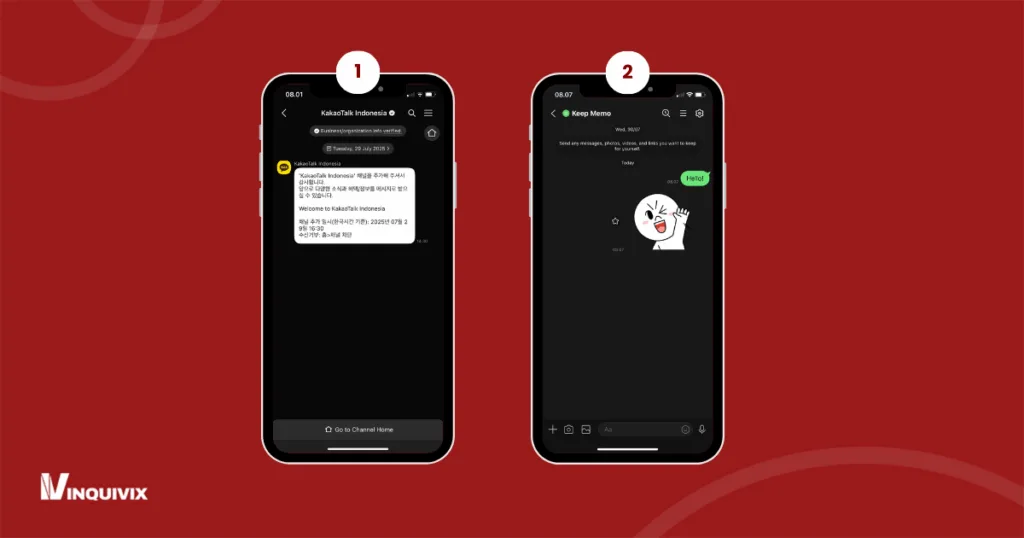
When evaluating KakaoTalk vs LINE, a key consideration is their market share and user base. While both platforms enjoy widespread popularity in Asia, their dominance is highly region-specific, shaped by cultural preferences, platform integrations, and digital ecosystems. Understanding where and how each app is used can help businesses craft more effective, localized strategies.
KakaoTalk in South Korea: The Default Communication Tool
KakaoTalk holds an undisputed monopoly in South Korea, with over 47 million monthly active users in a country of approximately 52 million people. It’s not just the most popular messaging app; it’s the default digital communication platform for nearly every age group and demographic.
Key stats and facts:
- Market Penetration: Over 90% of smartphone users in Korea use KakaoTalk.
- Daily Usage: Ranked as the most-used app by screen time among Korean users.
- Cross-Platform Reach: KakaoTalk users often engage with other Kakao services (e.g., KakaoPay, Kakao Games, and KakaoTalk Channel for businesses).
- Language & Localization: Primarily available in Korean, with limited adoption outside Korea.
LINE in Japan, Taiwan, and Thailand: A Regional Powerhouse
LINE is the messaging app of choice in Japan, with strong user bases in Taiwan, Thailand, and, to a lesser extent, Indonesia. Its success in these markets is driven by its fun, character-driven branding, wide feature set, and early-mover advantage in disaster recovery communication.
Key stats and facts:
- Japan: 96 million monthly active users (approx. 76% of the population)
- Taiwan: ~21 million users (over 90% penetration)
- Thailand: ~54 million users (dominant platform)
- Multi-Language Support: Fully localized in several languages, allowing for broader regional adoption.
- High Engagement: LINE users frequently interact with official brand accounts, games, stickers, and payment systems.
What It Means for Brands
- If you’re targeting South Korean consumers, KakaoTalk is non-negotiable. It’s where people communicate, shop, pay bills, and engage with brands.
- If your focus is Japan, Taiwan, or Thailand, LINE offers the best access to those digital audiences with localized features and marketing tools.
For regional campaigns, businesses may need a dual-platform approach, tailoring messaging and advertising strategies for each user base.
Key Features – Similarities and Differences
While KakaoTalk and LINE serve the same core purpose, enabling digital communication, they have developed unique feature sets tailored to the needs and behaviors of their primary users. Both apps go far beyond simple messaging, offering expansive ecosystems that include multimedia sharing, payments, games, and marketing tools. Here’s how they stack up side by side.
Chat and Messaging Features
Similarities:
- 1:1 and group chats
- Free voice and video calls
- Multimedia sharing (photos, videos, voice notes)
- Typing indicators, read receipts
- Custom chat themes and notifications
Differences:
- KakaoTalk offers open chats, where users can join public chat rooms based on interests.
- LINE emphasizes “Timeline”, a feed-like feature similar to Facebook, where users can share updates and comment.
- LINE supports disappearing messages in some regions, while KakaoTalk does not.
Stickers, Emojis, and Characters
Both platforms revolutionized the way users express themselves with stickers and emojis, but their strategies differ:
- KakaoTalk features Kakao Friends, iconic characters like Ryan and Apeach that are deeply embedded in Korean culture.
- LINE boasts the wildly popular LINE Friends, including Brown, Cony, and Sally, which have become international sensations with global merchandise and collaborations.
- LINE offers a creator market for user-generated sticker sets; KakaoTalk is more brand-controlled but still provides plenty of downloadable options.
In-App Services & Ecosystem
| Feature/Service | KakaoTalk | LINE |
| Mobile Payment | KakaoPay – widely used in Korea | LINE Pay – popular in Japan, Taiwan, Thailand |
| Social Media | KakaoStory (limited use) | LINE Timeline (more active in Japan) |
| Gaming Platform | Kakao Games | LINE Games |
| Business Tools | KakaoTalk Channel (CRM, ads) | LINE Official Account, LINE Ads Platform |
| Webtoon Integration | Kakao Webtoon | LINE Manga / LINE Webtoon |
- KakaoTalk is more tightly integrated with Korea’s daily life (e.g., banking, transportation, reservations).
- LINE positions itself as a lifestyle platform, offering access to services like news, job search, and even healthcare in Japan.
Business and Brand Engagement
- KakaoTalk Channel allows businesses to run targeted campaigns, send direct messages to followers, and offer coupons, all inside the app.
- LINE Official Account provides robust analytics, message automation, and segmentation tools for brand communication.
- LINE also offers the LINE Ads Platform, which supports display ads across multiple LINE services.
User Experience and Customization
- KakaoTalk has a clean, lightweight interface with a focus on fast access and integration with other Kakao apps.
- LINE is slightly more feature-dense, sometimes feeling heavier, but offering more personalization options like custom stickers, profile music, and themes.
In the battle of KakaoTalk vs LINE, both apps deliver powerful communication tools, but their features reflect regional priorities and user expectations. KakaoTalk is optimized for seamless lifestyle integration in Korea, while LINE leans into entertainment, personalization, and multipurpose functionality across Japan and Southeast Asia.
Marketing Opportunities for Businesses

For brands looking to engage Asian consumers, KakaoTalk vs LINE presents a unique opportunity and challenge. Each platform has developed its own set of marketing tools, advertising solutions, and business account features tailored to its user bases. Whether you’re targeting South Korea, Japan, Taiwan, or Thailand, understanding how to leverage these platforms can be the key to unlocking high-impact campaigns with strong ROI.
KakaoTalk for Business: Hyper-Localized in South Korea
KakaoTalk is the primary digital gateway for businesses in South Korea. With nearly universal usage, it enables direct communication, personalized promotions, and seamless customer interaction, all within a familiar interface.
Key Marketing Features:
- KakaoTalk Channel: Businesses can create branded profiles to share content, promotions, and 1:1 chat services.
- Push Messaging: Send targeted messages directly to followers’ chat inboxes, excellent for product launches, sales, and events.
- Coupons and Gifticons: Popular in Korea, these allow users to receive and share digital vouchers or gifts (e.g., coffee, cosmetics).
- Kakao Ad Platform: Integrated ads across Kakao services (e.g., KakaoTalk, KakaoStory, Kakao Page).
- CRM Integration: Collect customer data and analyze user behavior to personalize campaigns.
Best For:
- Local or international brands targeting the Korean market
- Retail, F&B, cosmetics, travel, and entertainment industries
- Loyalty and repeat purchase strategies
LINE for Business: Cross-Regional Influence
LINE offers robust marketing solutions across multiple Asian markets, especially Japan, Taiwan, and Thailand. Its tools are designed not just for communication but for full-funnel marketing, from brand awareness to sales conversions.
Key Marketing Features:
- LINE Official Account: Allows businesses to send messages, automate replies, create chatbots, and share content with followers.
- Rich Messaging: Supports images, videos, and CTAs within chat messages for immersive user engagement.
- LINE Ads Platform (LAP): Offers targeted ads across LINE’s services, including Timeline, LINE News, and LINE Manga.
- LINE Shopping and Coupons: Enables brands to create limited-time promotions and link directly to products or stores.
- LINE Mini App: Let businesses create app-like services within LINE without users needing to download separate apps.
Best For:
- Brands entering Japan, Thailand, or Taiwan
- Retail, e-commerce, gaming, tech, and finance sectors
- Story-driven and character-based campaigns
Which Platform Should You Choose?
- Use KakaoTalk if your business is Korea-first and you want maximum visibility in a highly connected, tech-savvy society.
- Use LINE if your brand is expanding into Japan, Thailand, or Taiwan and needs versatile engagement tools across diverse consumer segments.
- Want to reach both? A dual-platform strategy with localized messaging and native creatives is often the best approach for regional campaigns.
KakaoTalk Is the Go-To Messaging App in South Korea

If you’re targeting South Korean consumers, KakaoTalk isn’t just an option—it’s a necessity. The app is deeply embedded in everyday life, from casual chats and business communication to banking, shopping, and event management. With over 90% smartphone penetration in the country, KakaoTalk functions more like a digital operating system than a standalone app.
Why Koreans Rely on KakaoTalk:
- The default messaging app is used for both personal and professional communication
- Integrated with essential Korean services like KakaoPay, Kakao T (taxi), and KakaoBank
- Often required to book events, log in to websites, or even make restaurant reservations
- Features like KakaoTalk Channels and Gifticons make it ideal for businesses to promote and sell products directly within the app.
Whether you’re a local startup or a global brand entering Korea, having a presence on KakaoTalk is as essential as having a website.
Work With Experts in Asian Digital Platforms

Navigating the unique digital ecosystems of Asia, especially when it comes to platforms like KakaoTalk and LINE, requires more than just translation. It demands a deep understanding of local user behavior, platform algorithms, and cultural nuances that drive engagement.
That’s where Inquivix comes in.
As a leading digital marketing agency with deep expertise in Korean digital marketing, Inquivix specializes in helping international brands succeed on platforms like KakaoTalk marketing, Naver, Daum, and more. Our team understands how Korean consumers interact online and how to tailor your brand presence for maximum impact within Korea’s competitive digital landscape.
If you’re looking to:
- Launch KakaoTalk Channel campaigns to reach Korean audiences
- Build targeted LINE Official Account promotions in Japan or Taiwan
- Drive engagement through native content and localized creatives
- Maximize ROI through data-driven ad campaigns across Asia
Inquivix offers the strategy, execution, and insights to make it happen.
**Ready to expand your brand across Asia’s top messaging apps?**Contact Inquivix today and let’s build a campaign that speaks the language of your audience, both culturally and digitally.