How Korean Consumers Choose Cafes (It’s Not About Coffee Quality)
The landscape of the South Korea coffee market presents a striking paradox to the global observer. While the nation is nicknamed the Republic of Coffee, with an average consumption of 405 cups per person annually as of 2023, the actual selection process has transitioned away from the sensory profile of the beverage.
In a market where coffee shops now number over 100,000, outstripping the count of convenience stores two to one, the product itself has become a standardized baseline. The true drivers of how korean consumers choose cafes are rooted in a complex interplay of urban sociology, the pursuit of social currency, and a rigid digital verification loop that dictates which businesses survive and which shutter within the critical 24 month failure window.
The Historical Evolution of the Space Rent Model
The modern Korean cafe culture finds its earliest roots in a desire for Western modernization and elite social gathering. History records that coffee was first introduced to the Korean peninsula in 1896 when King Gojong took refuge in the Russian Legation.
It was initially viewed as a symbol of luxury and power, leading to the establishment of the first dabang or tearoom in the Sontag Hotel in 1923. These early spaces were not democratic. They were salons for the wealthy, artists, and intellectuals who used the bitter beverage as a backdrop for political schemes and cultural debates.
As the nation underwent a rapid postwar economic miracle from 1962 to 1980, the workforce became time poor and labor intensive. This period saw the rise of the three in one instant coffee mix, which allowed workers to consume caffeine quickly to sustain long hours.
The transition from functional caffeine consumption to the experiential third place theory began in earnest in 1999 with the entry of Starbucks into the Myeongdong district of Seoul. This arrival marked the shift from the traditional dabang to the modern Western style cafe, where the environment was as important as the menu.
| Era | Key Consumption Mode | Social Significance |
| 1920s – 1950s | Traditional Dabang | Elite gathering and intellectual salons |
| 1960s – 1980s | Instant Coffee / Vending | Fuel for rapid industrialization and labor |
| 1990s – 2010s | Franchise Espresso Bars | Modernization, branding, and status |
| 2020s – Present | Aesthetic & Concept Cafes | Digital verification, social currency, and functional utility |
The Sociological Necessity of the Third Place
To understand consumer behavior Korea, one must look at the residential landscape of its urban centers. The prevalence of high density apartment complexes and small studio units means that many Koreans, particularly those in the MZ generation, lack the physical space to host friends or conduct private activities at home.
The cafe has thus evolved into a vital third place theory application, serving as a social surroundings separate from the first place of home and the second place of work.
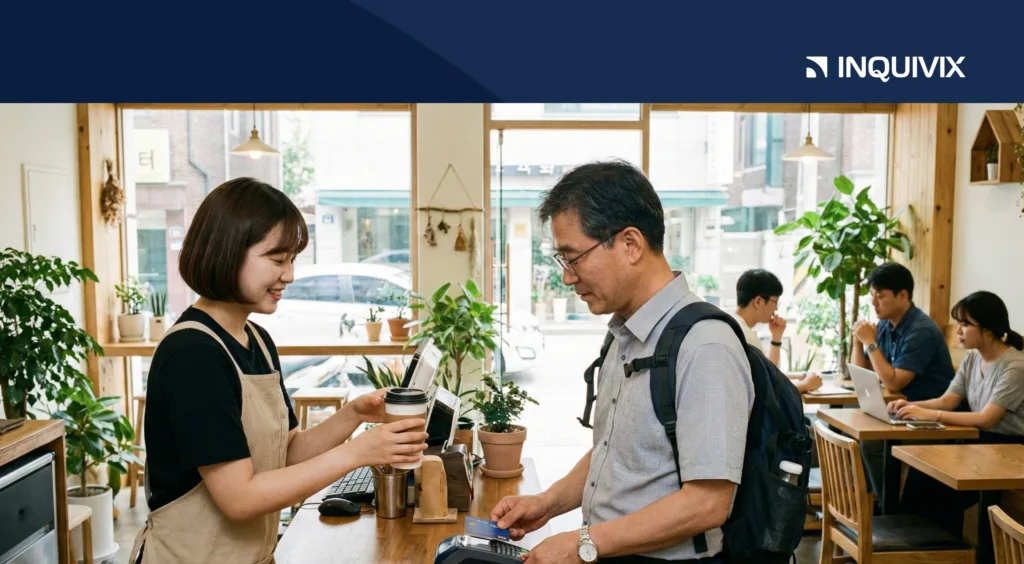
This sociological pressure creates a demand for cafes as an extension of the living room. When korean consumers choose cafes, they are effectively renting a specific amount of square footage for the price of an Americano.
The quality of the coffee is frequently a secondary consideration to the quality of the seating, the availability of power outlets, and the overall atmospheric “vibe” that allows for “healing” or relaxation. This explains why many independent cafes invest heavily in interior construction and high end furniture rather than the most expensive roasting equipment. They are selling a “vibe” that fulfills a domestic deficiency.
The Digital Verification Loop and the Power of Naver
In the current market, a cafe does not exist until it has been verified through the digital verification loop. The consumer journey is a strictly structured three step process, discovery, verification, and navigation. For any establishment, failing to appear or have positive social proof in any of these stages results in a total loss of the potential customer.
Discovery often begins on visual platforms like Instagram or TikTok, where an attractive photo or a viral “behind the scenes” clip creates interest. However, this interest is fragile. The most critical step is verification, which occurs almost exclusively on Naver. Unlike global markets where Google dominates, Naver SEO for cafes is the lifeline of the Korean industry. Consumers search for “Receipt Reviews” because these are linked to verified transactions, making them the most trusted form of social currency in the South Korea coffee market.
| Platform | Role in Cafe Selection | Key Feature |
| Visual Discovery | Reels, high quality photos, “vibe” hooks | |
| Naver Smart Place | Digital Verification | Receipt reviews, business hours, menu lists |
| Naver Blog | Detailed Research | Step by step visit logs, interior walkthroughs |
| KakaoMap | Final Navigation | Real time location, accessibility, and user ratings |
A cafe with world class specialty coffee but a poorly managed Naver Smart Place listing will struggle to attract the modern consumer. Conversely, a cafe with average coffee but an optimized digital presence, featuring keyword rich descriptions like “good atmosphere cafe” or “specialty coffee” in Korean, will consistently appear in search results and capture high intent traffic. This is why F&B marketing Korea requires a localized, platform specific approach that leverages the Naver ecosystem.
The Visual Economy and Proof Shot Culture
The rise of the MZ generation has introduced the phenomenon of the proof shot. This is a cultural obligation where consumers feel a need to photograph and share their experiences to maintain their social standing and participate in collective trends.
The psychological driver here is a combination of collectivism and the fear of missing out, or FOMO. Research indicates that in Korea’s competitive society, not having tried a trending dessert or visited a famous Instagrammable cafes Seoul location can create genuine social anxiety.
This has led to the emergence of cafes that prioritize “visual drama” over all else. From bird cafes and poop cafes to 2D designed interiors that look like a drawing, the goal is to provide a photogenic backdrop for the customer’s social media feed.
The actual taste of the menu items is often secondary. In fact, many visitors report that while the aesthetics were stunning, the tea cakes were dry or the drinks lacked depth. Yet, these cafes remain popular because they provide the social currency that the modern consumer craves.
The Lifecycle of Visual Trends
The speed of the Korea fast trend cycle is unprecedented. A single viral post can lead to searches on delivery apps increasing by over 1,500 times in a year. However, this virality is a double edged sword.
Once a trend reaches hyper saturation, the novelty wanes and consumers move on to the next visual novelty with ruthless speed. Businesses that scale solely on a single visual fad often face mass closures when the trend cycle resets, demonstrating that visual appeal without structural utility is unsustainable.
Cagong Culture: The Rise of the Study Tribe
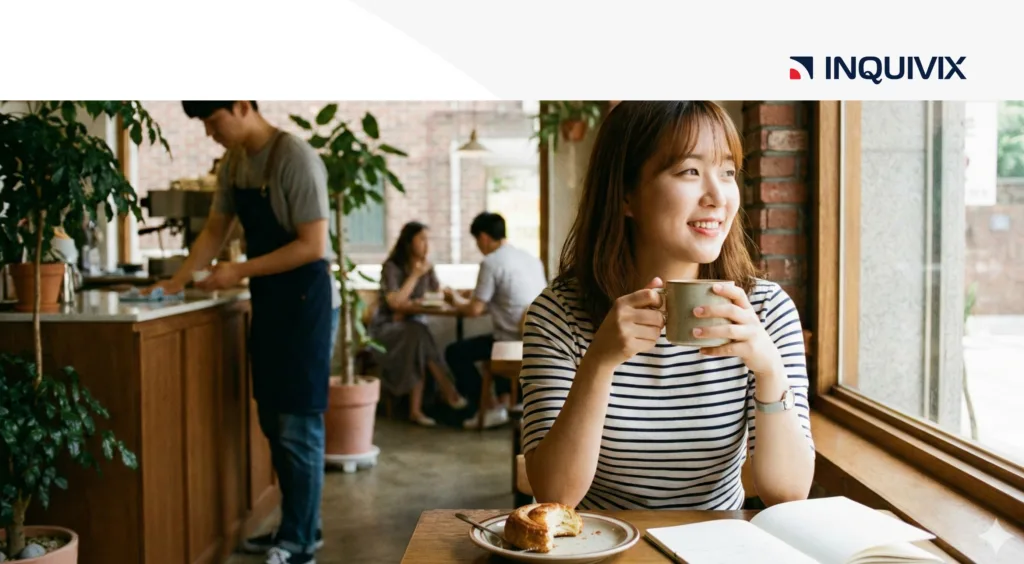
While visual cafes cater to the social media enthusiast, another segment of the market is driven by functional necessity, Cagong culture. This term refers to people who use cafes primarily for studying or working, a demographic known as the “cagongjok” or study tribe.
For these consumers, how korean consumers choose cafes is a purely rational decision based on infrastructure rather than coffee quality or visual drama.
According to research from Korea Research, the primary reasons for choosing a “cagong” location include a comfortable atmosphere, the availability of Wi-Fi and power outlets, and a tolerance for “appropriate noise” that allows for better focus than a rigid library environment.
As remote work and self improvement trends grow, this demographic has become a critical segment of the South Korea coffee market.
| Selection Criteria for Cagong | Percentage of Respondents |
| Comfortable Atmosphere | 45% |
| Lack of Alternative Private Space | 46% |
| Variety of Drinks and Snacks | 41% |
| Availability of Wi-Fi and Outlets | ~40% (Higher in older demographics) |
| Tolerance for Moderate Noise | 31% |
Source: Hankook Research
The acceptance of this culture varies. Some cafes have pivoted to discouraging “cagong” users by cutting off power outlets or implementing “no laptop” zones to increase table turnover. However, in a hyper competitive market, others have embraced the trend.
Starbucks Korea has led this shift by installing classroom style desks with dividers and power strips, recognizing that these long stay customers provide a reliable baseline of occupancy. For the consumer, the presence of these amenities is the primary filter in their selection process.
The Bakery Cafe Trends and Texture Preferences
Another significant shift in consumer behavior Korea is the transition from coffee shops to bakery cafes. Koreans are increasingly replacing traditional meals with bread and pastries, leading to a market where “visual drama” in baking is a strategic tool. When korean consumers choose cafes, they now look for signature desserts that offer unique textures.
Research shows that Korean diners value specific mouthfeels, such as “jjolgit” (chewy) or “basak” (crispy). A bakery cafe that masters these textures and presents them in a visually striking way will often overshadow a competitor that only offers superior coffee.
The dessert has become the main attraction, with the coffee serving as a necessary palate cleanser. This trend has fueled the growth of massive suburban bakery cafes where families drive long distances not for the roast, but for the Instagrammable cafes Seoul pastries and large scale architectural designs.
Operational Realities: The Rent Trap and Marketing Tax
The decision of how korean consumers choose cafes is also influenced by the sheer density of options. With over 1,500 cafes per million people, the industry is characterized by a “competitor clustering” strategy where new brands deliberately open directly next to established ones to capture existing foot traffic.
This saturation creates a situation where consumers have an oversupply of choice, leading to fierce price competition in the value coffee segment.
For the cafe owner, this translates to a high pressure environment defined by the “Rent Trap” and the “Marketing Tax”. While rent is a fixed burden, digital marketing has become a mandatory operational cost.
Successful cafes often allocate approximately 7% of their monthly gross revenue as a fixed fee to maintain search rankings and visibility on Naver. If a cafe stops this digital spending, it effectively disappears from the digital verification loop, regardless of how good its coffee might be.
This operational pressure is a primary reason why many foreign brands struggle to survive beyond the first 24 to 36 months.
Localization Strategies for Global Brands
For international entities eyeing the South Korea coffee market, the cost of opening a franchise cafe in Korea is often underestimated because it ignores the deep localization required.
Success is determined by the transition from “product discovery” to “digital verification”. Foreign brands that rely on their global prestige without integrating into the Naver ecosystem or adapting to local taste and texture preferences often fall into the “Baseline Trap”.
A localized social media marketing Korea strategy must include:
- Registration and optimization of Naver Smart Place with local keywords.
- Rapid menu rotation to align with seasonal produce and local trends, such as strawberry themes in the spring or spicy themes in the winter.
- Engagement with local communities through platforms like Naver Cafe or “Mom Cafes” to build organic trust.
- Implementation of local payment and delivery systems like Baemin or Coupang Eats, as well as queue management tools like CatchTable.
| Localization Element | Impact on Consumer Choice |
| Naver Smart Place Visibility | High (Primary verification tool) |
| Seasonal Menu Rotation | High (Maintains “fresh” brand image) |
| Digital Payment Integration | Moderate (Expected baseline convenience) |
| Local Influencer Endorsements | High (Drives initial discovery) |
The Future of Cafe Selection: Wellness and Tech
As we look toward 2026 and beyond, new factors are beginning to influence how korean consumers choose cafes. The “wellness” and “vegan” trends are moving from niche interests to mainstream selection criteria. Consumers are increasingly looking for healthy alternatives, leading to a surge in demand for non alcoholic options and low sugar formulations.
Furthermore, “food tech” is becoming a differentiator. From automated brewing systems that ensure consistency to AI driven hyper personalized recommendations, technology is being used to enhance the “efficiency” that the “ppalli-ppalli” (hurry-hurry) culture demands.
However, even as technology advances, the core driver remains the same, the cafe is a sanctuary. Whether it is through “eco friendly” practices or “healing” atmospheres, the modern Korean consumer chooses a cafe that offers a temporary escape from the pressures of a hyper competitive society.
Navigating the Saturated Market
For a business to thrive in this landscape, it must understand that coffee quality is a prerequisite, not a competitive advantage. The real battle is fought in the digital realm and the architectural space.
Consumers are looking for social currency and functional utility. They want a place that looks good on their feed, works well for their laptop, and is verified by their peers on Naver.
Operators who fail to adapt to these sociological and digital realities will find themselves among the high percentage of cafe franchise failures in Korea. The key to longevity is not found in the roasting room but in the strategic management of the digital verification loop and the constant innovation of the “third place” experience.
By bridging the gap between international brand ambition and local cultural realities, a cafe can move from being a temporary fad to a permanent fixture in the vibrant urban tapestry of South Korea.
The complexity of the South Korea coffee market requires a nuanced approach to social media marketing Korea. It is not enough to simply translate a global campaign. One must speak the language of the proof shot, respect the rules of the “cagong,” and master the algorithms of Naver.
In doing so, a brand can capture the hearts, and the social media feeds, of the world’s most sophisticated cafe consumers.
The Technicality of Naver SEO for cafes owners
To effectively capture the attention of consumers, a cafe must be technically optimized for the Naver search engine. This goes beyond simple keyword placement.
Naver SEO involves registering the website to Naver Search Advisor and managing the “Site Optimization Score”. Unlike Google, Naver requires manual submission of sitemaps and a heavy focus on user generated content hosted within its own ecosystem, such as Naver Blogs and Naver Cafes.
| Naver SEO Element | Best Practice for Cafes |
| Title Tag | Max 40 characters, must include location + “cafe” |
| Meta Description | Max 80 characters, focus on “atmosphere” and “menu” |
| Image ALT Text | Use keywords like “Instagrammable cafes Seoul” or “Bakery” |
| Content Freshness | Regular updates on Naver Blog are prioritized |
Owners must also manage their reputation on Naver Smart Place. This platform functions as a business listing, map pin, and SEO landing page all in one. If a cafe is not correctly registered with optimized keywords, it will not appear in the “Place” results when users search on Naver Maps, effectively rendering the physical location invisible to the local audience.
The Role of Influencers and the Proof Shot Economy
In the visual economy of South Korea, influencers play a pivotal role in the discovery phase of the consumer journey. Endorsements from K-pop stars can launch a product into the mainstream instantly. This is often accompanied by the proof shot culture, where consumers feel a social obligation to document their visit.
However, the trend cycle is ruthless. For example, the “Dubai chocolate” trend saw explosive growth followed by a sharp decline as the market reached hyper saturation.
To survive, a cafe must transition from being a “viral spot” to a “steady seller”. This requires building long term brand loyalty through consistent engagement on platforms like KakaoTalk, which has over 90% market penetration and serves as a direct channel for conversational marketing.
Cultural Dynamics and Consumer Behavior Korea
Understanding the psychology of the Korean consumer is essential for any F&B marketing Korea effort. Society is characterized by a balance between individual expression and a powerful desire for social consensus.
When a trend becomes popular, it is not merely because individuals find it appealing but because it has been validated by the collective.
This collective behavior is seen in the “Even if I freeze to death, iced Americano” trend, where drinking iced coffee in the depths of winter has become a cultural proverb. Theories for this popularity range from the “ppalli-ppalli” work culture to the stuffy atmosphere of modern offices.
For a cafe, understanding these cultural quirks is more important than perfecting a pour over technique. It is about aligning the brand with the behavioral rhythms of daily life.
Synthesis of the Selection Process
In summary, the way korean consumers choose cafes is a multi layered decision that prioritizes:
- Spatial Utility: The cafe as a third place theory application for social gathering or Cagong culture work.
- Visual Validation: The ability to capture a proof shot for social currency.
- Digital Trust: Verification through Naver Smart Place “Receipt Reviews” and search rankings.
- Convenience and Speed: Accessibility on KakaoMap and integration with delivery solutions like Baemin.
Coffee quality remains a baseline expectation, but it is the experience, the atmosphere, and the digital reputation that drive the final selection.
As the market continues to evolve toward 2026, those who master the “marketing tax” and the “verification loop” will be the ones who define the future of the Republic of Coffee. Success in the cafe business in Korea is not just about brewing the perfect cup. It is about building a sanctuary that resonates with the unique sociological and digital desires of the Korean consumer.